
We are living through a period when work can quickly become politicized. The pressure is especially visible in K–12 schools and higher education, but it is not confined to campuses or classrooms. Professionals in government, healthcare, law, business, philanthropy, technology, journalism, and the nonprofit sector are navigating many of the same tensions.
People may find their work judged not only by its quality, accuracy, or effectiveness, but also by how it fits a political narrative. A lesson may be taken out of context. A research finding may be reduced to a slogan. A training program may be attacked because of a few words in its title identified by an AI search. A public statement may be interpreted by administrators, boards, donors, elected officials, parents, clients, or online audiences who do not understand the work behind it. This reality creates a difficult question: How do we remain principled without becoming professionally vulnerable, and how do we remain strategic without becoming silent? The answer is not retreat. It is preparation.
Being strategic does not mean weakening our values and commitments. It means understanding the environment well enough to protect the integrity, reach, sustainability, and long-term influence of our work. The goal is not simply to endure a difficult climate. It is to continue doing work that matters while making it harder for others to distort, dismiss, or erase it.
1. Anchor Yourself in Professional Legitimacy
Your strongest protection is the demonstrated quality of your work. For example, in the case of university faculty, that means research that is methodologically sound, theoretically grounded, peer reviewed, and clearly connected to important conversations within the discipline. For K–12 educators, it means instruction aligned with professional standards, appropriate curriculum, credible research, and clearly identified student needs. In other fields, it may mean following accepted standards of evidence, ethics, safety, law, or professional practice.
Rigor does not prevent political attacks, but it changes the ground on which those attacks must occur. When your work is respected by knowledgeable peers and supported by credible evidence, it becomes harder to dismiss it as merely ideological. Professional recognition is therefore more than a career goal. In a contested environment, it can become a form of protection.
Evaluate your outcomes. Preserve evidence of effectiveness. Seek feedback from respected colleagues. Connect your work to the standards and obligations of your profession. The objective is not to make controversial subjects seem harmless. It is to make the intellectual and professional foundations of your work unmistakable.
2. Make Your Work Legible Across Audiences
One of the greatest vulnerabilities in a politicized climate is the gap between what professionals mean and what outside audiences hear. A scholar may use language that makes perfect sense within a field but sounds unfamiliar or threatening to a trustee or legislator. A teacher may design a lesson grounded in state standards, but a parent may encounter only a screenshot posted online. A healthcare professional may describe disparities using technical language that a public audience interprets as partisan. A corporate leader may launch an inclusion initiative without clearly explaining the organizational problem it is meant to address.
You should be able to explain three things plainly:
- What are you doing?
- Why does it matter?
- What evidence and professional standards support it?
Clarity is not capitulation. It is strategy. This does not necessariliy mean removing or changing the language of race, discrimination, power, identity, or inequality whenever those concepts are relevant. Euphemisms can weaken important work. It means ensuring that specialized language is accompanied by an explanation that ordinary people can understand.
Do not wait for a controversy to decide how to describe your work. Develop accurate, accessible explanations in advance. If your work can be easily mischaracterized, it becomes more vulnerable to people who benefit from mischaracterizing it.
3. Document Everything That Matters
In stable environments, informal agreements and professional norms often guide decisions. In contested environments, memory becomes selective and expectations can change without warning. Documentation is essential.
University faculty should maintain records of research, teaching, service, student outcomes, peer reviews, media engagement, community impact, and institutional assignments. K–12 educators should retain relevant lesson plans, standards, communications, evaluations, professional development records, and evidence of student learning. Professionals in other fields should document project expectations, approvals, outcomes, changes in direction, ethical concerns, and significant decisions.
Documentation should not become an obsession that interferes with the work itself. But important decisions, expectations, and accomplishments should not exist only in conversation. When possible, follow significant meetings with a short written summary. Save current policies and evaluation criteria. Keep copies of strong reviews, awards, letters, data, texts, and work products. Keep track of when expectations change and who authorized those changes. If a decision is later questioned, documentation helps ensure that your work is evaluated through evidence rather than a newly constructed narrative.
4. Build Networks Before You Need Them
No educator, scholar, administrator, or professional should navigate a politicized environment alone. Build relationships within your immediate workplace, across your institution, and throughout your broader professional community. Seek mentors who understand both your work and the organizational terrain. Maintain relationships with collaborators, professional associations, community leaders, former colleagues, and respected experts beyond your institution.
For K–12 educators, this may include trusted colleagues, instructional leaders, parents, union representatives, subject-area organizations, and community partners. For higher education faculty, it may include departmental colleagues, external scholars, disciplinary associations, faculty governance bodies, and mentors at other universities. Professionals in other sectors may need relationships across departments, industries, professional organizations, and community networks.
Networks provide more than encouragement. They provide perspective. They can help you determine whether an experience is isolated or part of a larger pattern. They can identify options that are difficult to see when you are under pressure. They can provide independent validation when an institution attempts to redefine your work. In serious moments, they can also provide advocacy and public support. The worst time to begin building a network is after a crisis has already begun.
5. Engage the Public Intentionally
Public engagement matters. Educators and experts cannot afford to abandon public conversation to the loudest or least informed voices. But visibility carries both opportunity and risk. If you write publicly, speak to the media, post on social platforms, testify, organize, or participate in community debates, do so intentionally. Think about the audience, platform, timing, tone, and likely interpretation of your words.
Ask yourself:
- What is the central point I want people to understand?
- What evidence supports it?
- Which phrases might be removed from context?
Am I speaking for myself or could others reasonably believe I represent my organization? Is this the right platform for the complexity of the issue? What response am I prepared to make if the work draws attention?
Being intentional does not mean avoiding difficult subjects. It means refusing to communicate carelessly about important ones. Institutions are highly sensitive to optics in the current political environment. Understanding that reality allows you to prepare for it without allowing institutional anxiety to determine your values. Effective public scholarship and professional advocacy combine moral clarity with disciplined communication.
6. Understand How Your Institution Actually Works
Every organization has a formal structure and an informal system of power. You need to understand both. For example, in higher education, faculty work may be reviewed by departments, chairs, deans, provosts, presidents, governing boards, and outside stakeholders. In K–12 education, teachers and administrators operate within systems involving principals, central offices, superintendents, school boards, parents, unions, state agencies, and elected officials. In businesses and nonprofits, decisions may be influenced by executives, boards, funders, clients, regulators, communications teams, and legal counsel.
Fair policies matter, but policies do not implement themselves. Decisions are made by everyday leaders, people operating within political, financial, and institutional pressures. Pay attention to leadership messages, policy revisions, budget decisions, personnel changes, board discussions, and shifting institutional language. Learn where decisions are formally authorized, where they are informally shaped, and what appeal or review processes exist.
Awareness is not cynicism. It is preparation. Popular culture captures this tension in the Netflix show The Chair, where faculty decisions quickly become entangled with public relations, donor concerns, student activism, social media, and administrative pressure. The show is dramatized, but its central insight applies far beyond universities: professional work never exists entirely outside its institutional context. Understanding that context helps you distinguish between a genuine disagreement about quality and a decision driven by politics, reputation, money, or fear.
7. Stay Grounded in Purpose
Politicized environments encourage people to become reactive. Every criticism can begin to feel urgent. Every misleading statement can seem to demand a response. Every institutional signal can produce anxiety. Return regularly to the foundational question: Why does your work matter?
Perhaps you work in healthcare because disparities carry consequences for life and death. Perhaps you lead organizational change in a non-profit because institutions cannot serve changing communities with outdated assumptions. Perhaps you teach history because students deserve an honest understanding of the world they have inherited. Perhaps you research inequality because public decisions should be informed by evidence rather than mythology and opinion. Perhaps you advocate for inclusion because talent is too often overlooked when opportunity is distributed through narrow networks.
Knowing your purpose helps you decide which conflicts require engagement and which are distractions. Work concerning inequality, culture, identity, power, and public institutions is often contested precisely because it challenges established narratives and arrangements. Opposition does not automatically prove that the work is correct, but neither does controversy prove that it is illegitimate. Purpose should be paired with evidence, reflection, and accountability. It should also provide the moral endurance and courage needed to continue when meaningful work becomes difficult.
8. Protect Your Well-Being and Long-Term Capacity
Constant scrutiny, hostility, uncertainty, or misrepresentation can exhaust even the most committed professional. Burnout does not advance justice, improve teaching, strengthen research, or build durable institutions. Protecting your capacity is therefore not separate from the work. It is part of sustaining it. Set boundaries around your time and availability. Decide which public disputes merit a response. Use available professional, legal, union, counseling, or employee resources when appropriate.
Not every accusation deserves a lengthy defense. It is important not to get caught up in commenting on every post. Not all online arguments deserve your attention. Not every institutional battle must be fought by the same person, some can be delegated and pursued by others. Strategy requires choosing where your presence can make a difference and where disengagement protects your ability to contribute over the long term. Rest is not surrender. Boundaries are not indifference. Preserving your health and capacity is part of preserving the work.
The Bottom Line
Action in this moment does not belong only to presidents, deans, executives, principals, or people with impressive titles. It belongs to the teacher who refuses to abandon a student, the nurse who speaks up when a patient is overlooked, the researcher who protects the integrity of the evidence, the employee who asks the difficult question, and the colleague who makes room for someone else to be heard. Everyday leadership begins whenever a person chooses responsibility over indifference and uses whatever influence they possess in service of something larger than themselves.
But courage does not mean being unafraid. Many people are afraid of losing their jobs, damaging their reputations, disappointing their families, or becoming targets themselves. Those fears are real, and no one should be shamed for feeling them. Courage may look like speaking publicly, but it can also mean documenting what happened, checking on someone who has been isolated, asking a careful question in a meeting, supporting a colleague privately, or finding trusted people with whom to act collectively. Not everyone must take the same risk, and no one should have to carry the risk alone. As James Baldwin reminded us, “Not everything that is faced can be changed, but nothing can be changed until it is faced.”
The future of our schools, universities, hospitals, businesses, newsrooms, public agencies, and communities will not be determined by prominent leaders. It will be shaped by thousands of ordinary decisions made by people who may never receive recognition for them. The political climate may explain feelings of fear, but it does not have to define our choices. When people lead from wherever they stand, build trust across differences, protect one another, and act with both courage and care, they do more than survive a difficult moment. They expand what their institutions, their professions, and their communities can become.
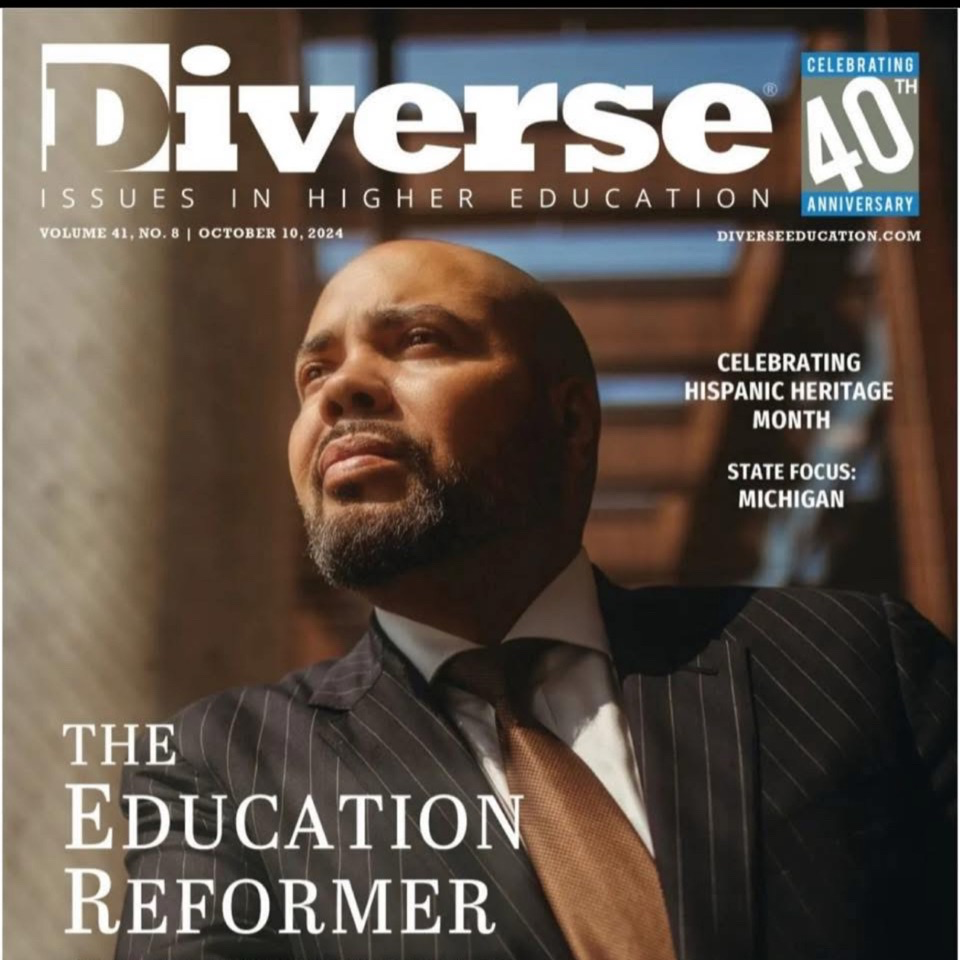
Julian Vasquez Heilig is a nationally recognized public scholar, commentator, and civil rights advocate. He has appeared on major national platforms including Democracy Now!, MSNBC, Al Jazeera, NBC News, PBS, and Univision. His media work reflects a longstanding commitment to making complex policy issues accessible, urgent, and meaningful for the public.





Leave a Reply