The warning signs are no longer theoretical. Schools are closing. Colleges are preparing layoffs. Faculty buyouts are spreading. Academic programs are disappearing. Dorm beds are sitting empty. Classrooms are thinning out. Tax revenue is weakening. State appropriations are uncertain. Consultants are being hired and paid millions to identify “efficiencies.” Boards are quietly discussing mergers and closures. American education is entering a period of deep instability.
This is not only a crisis for presidents and superintendents. It is a crisis for communities. When a school closes, a neighborhood loses more than a building. When a college cuts faculty and staff, a region loses jobs and opportunity. When families question whether education is worth the price, the consequences ripple through local economies and democracy itself.
In this article, I first define the problem. Enrollment pressure, funding instability, demographic change, and political attacks are converging across K-12 and higher education. These pressures are already producing closures and painful restructuring. But this is not only a warning. At the end, I turn to what communities can do through politics, public pressure, local organizing, accountability, and leadership selection before the choices become narrower.
The Warning Signs Are Already Here
At my own institution, public projections suggest new student enrollment could decline somewhere between 3 and 5 percent this year. If those projections hold, that would mark a return to consecutive enrollment declines after the gains achieved during my years as provost. During that period, we reversed an almost decade-long enrollment slide.
That is alarming because this moment was supposed to be the “high water mark” before the demographic cliff. WICHE projects that the total number of high school graduates will peak around 2026 and then decline steadily through 2041. Universities were supposed to be maximizing enrollment now. Instead, some are struggling while the student pool remains historically large.
In many ways, education is being pushed into an arena where resources are shrinking and the odds are being rewritten before many institutions understand the rules.
The Old Survival Strategies Are Running Out
Much of higher education survived the past several years through strategies that are becoming unsustainable. Institutions poured millions into financial aid discounting. They leaned harder into full-pay families. They expanded retention offices and predictive analytics systems. They built student success centers and advising infrastructure. They spent heavily on marketing and enrollment staff.
Ironically, retention and enrollment strategy helped save some institutions from earlier financial pressure. During my time in executive leadership, we understood that higher education had entered a new era of competition. Universities were no longer competing only over prestige. They were competing over affordability and survival.
Financial aid, student success infrastructure, and community partnerships became essential tools. Institutions that moved aggressively like Arizona State and Georgia State often stabilized themselves. Institutions that remained complacent fell further behind.
But even enrollment growth stories now face new threats. Federal research funding is unstable. State appropriations remain uncertain. Inflation is pressuring budgets. Some states like Michigan have seen stronger FAFSA activity. Yet many families are questioning the value of higher education. Political attacks have also weakened public trust while threatening research capacity and institutional autonomy.
Temple and Syracuse Are Warnings
This is not just a problem for small or obscure institutions. The warning signs are visible at major universities with name recognition and alumni networks.
Temple University offers one of the clearest examples. The Philadelphia Inquirer reported that Temple lost 27 percent of its U.S. enrollment over eight years. It fell from more than 40,000 students in 2017 to fewer than 30,000 in 2025. The same reporting noted more than $200 million in lost annual revenue. Temple later projected a $60 million structural deficit for fiscal year 2026.
Syracuse University is another warning. Its chancellor acknowledged that the university would not meet its undergraduate enrollment target. Higher Ed Dive reported that Syracuse enrollment had fallen about 3.5 percent year over year. International undergraduates fell from 12 percent of the entering class to 5 percent in just two years. Syracuse also announced plans to eliminate 93 academic programs with low or no enrollment.
Temple and Syracuse are not marginal institutions. If visible universities face enrollment shortfalls and program eliminations, the warning for less-resourced institutions is unmistakable.
The K-12 Pipeline Is Shrinking Too
The crisis is not limited to higher education. In many places, kindergarten cohorts are much smaller than graduating senior classes. That means major shocks are coming for school personnel and district budgets.
A California K-12 leader told me that LA County schools lost around 33,000 students in one year. They also noted that Long Beach is losing about 1,250 students per year. Every lost student takes funding with them. Their warning was blunt: higher education loses if colleges only fight over a declining pool of students.
That is not a minor adjustment. It is a structural shock. When districts lose students, they lose funding and staffing stability. Buildings do not shrink because enrollment declines. Transportation costs do not disappear. Special education responsibilities do not vanish.
Higher education leaders should pay attention. Today’s smaller kindergarten cohorts become tomorrow’s smaller college applicant pools. The education pipeline is one interconnected public ecosystem under stress.
The Crisis Will Not Be Evenly Distributed
These trends are already known behind closed doors. Consultants are being paid millions to assess efficiencies. Boards are discussing restructuring. Senior teams are running budget cut models. Buyouts are becoming part of the conversation.
At my own institution, discussions about retirement incentives for faculty with ten years of service and age sixty or older signal that leaders are preparing for hard choices. Universities do not explore large-scale buyouts unless substantial pressure is approaching.
Faculty at Michigan State University have privately described budget cuts approaching ten percent in some areas. This is one of the most recognizable public research universities in the country. When institutions with billion-dollar endowments are cutting, smaller institutions should be deeply concerned.
At the same time, the strongest institutions are consolidating their dominance. The University of Michigan’s Ann Arbor campus received more than 115,000 undergraduate applications for fall 2026. The University of Texas at Austin received a record 90,690 freshman applications for fall 2025. Michigan also approved the $60 million purchase of Concordia University’s Ann Arbor campus.
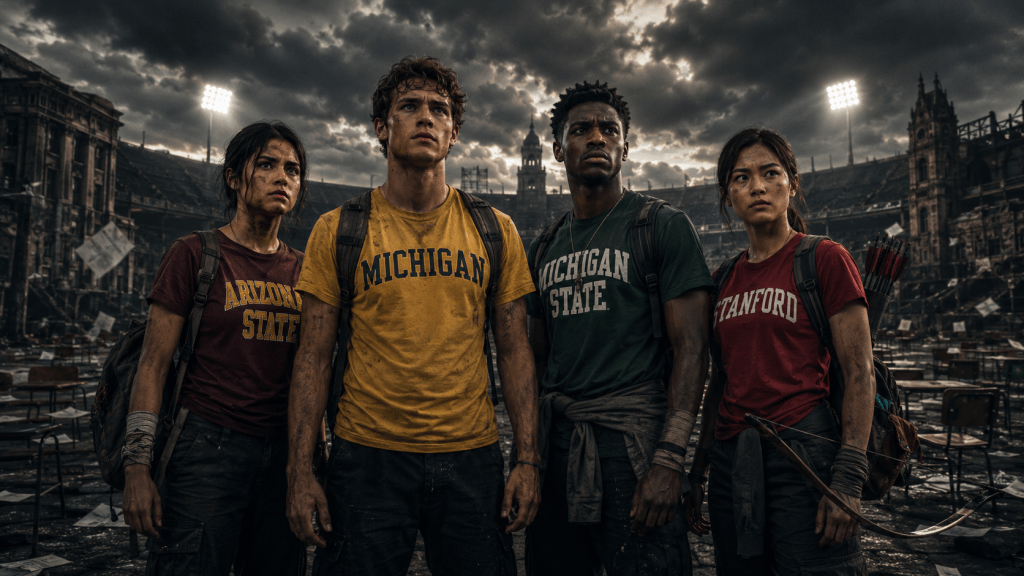
In Hunger Games terms, some institutions enter the arena with sponsors and weapons. Others enter with mission and community trust. The coming crisis will not hurt every institution equally.
The Trap: Fighting Over Scraps
The usual response will be to compete harder over a shrinking pool of traditional students. Colleges will increase marketing. They will expand merit aid. They will chase the same applicants. They will try to out-discount one another.
That may help some institutions temporarily make a class. But it does not solve the structural problem. It is the educational version of rushing the Cornucopia. Everyone charges toward the same limited pile of students and aid dollars while larger opportunities remain underdeveloped.
The better strategy is to reach students higher education has failed to serve. NCES data show that in 2022 about 45 percent of high school completers immediately enrolled in four-year institutions. Another 17 percent enrolled in two-year institutions. That means roughly 38 percent did not immediately enroll in either.
Those students are not abstractions. They are working students and first-generation students. They are rural students and urban students. They are young parents and adult learners. They need affordable pathways and institutions that meet them with urgency.
That was the logic behind the work I advanced at WMU. I insisted we treat enrollment as an institutional strategy. It was connected to affordability, advising, student success, transfer pathways, belonging, workforce relevance, community engagement, and public mission.
What Communities Can Do Now
This moment cannot be left only to administrators and consultants. Communities have power if they choose to use it. Parents, students, alumni, faculty, staff, unions, business leaders, clergy, philanthropies, and elected officials all have a stake.
Communities should demand transparency before the crisis becomes irreversible. What are the enrollment projections? What programs are at risk? What buildings may close? What students are being lost? What is the plan beyond cuts?
Communities should also use politics differently. School boards, county commissions, state legislatures, governors, and Congress shape funding formulas and public trust. Communities that want strong schools and colleges must vote like education is infrastructure. Because it is. Education is the infrastructure of democracy.
But the goal cannot be nostalgia. Communities should push institutions to build new pathways for students who have been left out. That means dual enrollment, transfer guarantees, apprenticeships, adult degree completion, childcare supports, transportation solutions, and emergency aid.
Choosing Leaders for the Era Ahead
The coming years will test whether communities choose leaders who understand this moment. Many educational leaders were selected for a different era. That world is gone.
The next era requires leaders who can tell the truth to stakeholders and build new, creative models. Communities must choose leaders with imagination and courage. They must choose leaders who can redesign programs around real student needs and invest in student success as a survival strategy.
Education is entering a Hunger Games survival era. But communities are not powerless. They can organize before the closures. They can demand transparency before the cuts. They can vote before the damage is irreversible. The leaders who matter now are those who can help communities build institutions worthy of the future.
Please share.
NEW: If you’d like to hear me read the post, you can find the audio version on my Substack here.
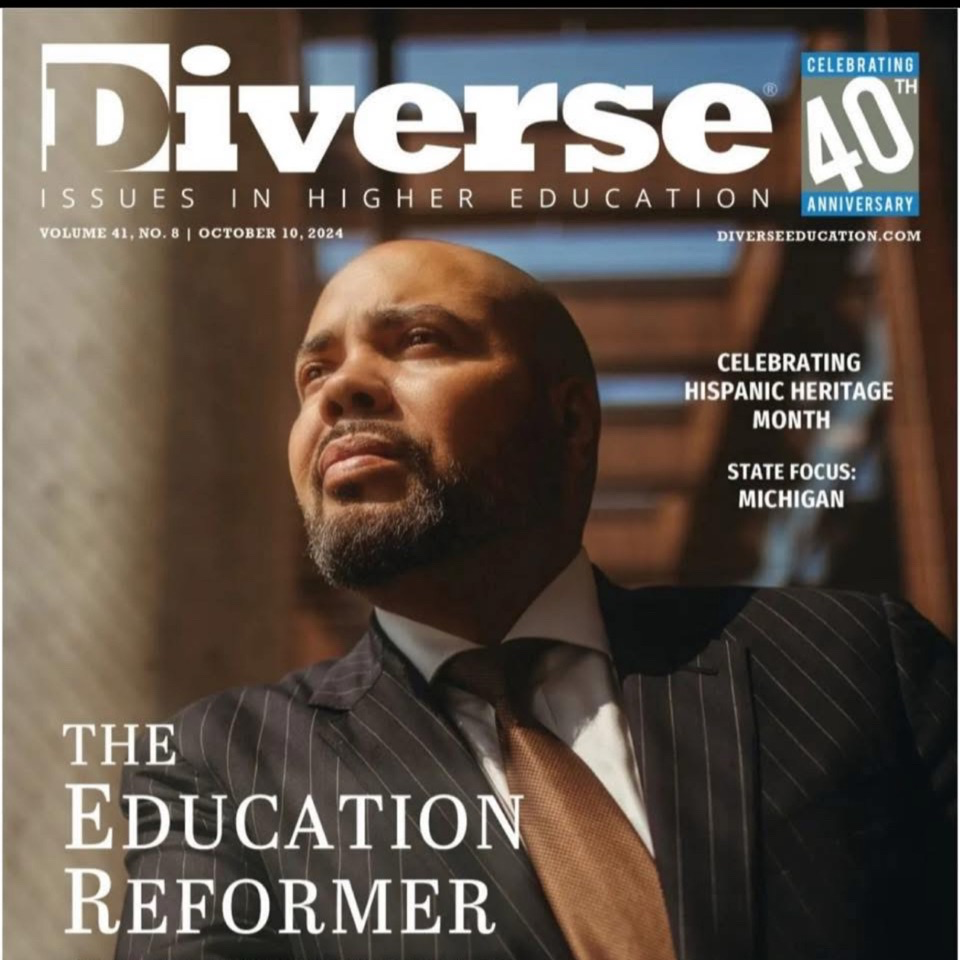
Julian Vasquez Heilig is a nationally recognized public scholar, commentator, and civil rights advocate. He has appeared on major media platforms including Democracy Now!, MSNBC, Al Jazeera, NBC News, PBS, and Univision. His media work reflects a longstanding commitment to making complex policy and leadership issues accessible, urgent, and meaningful.





Leave a comment