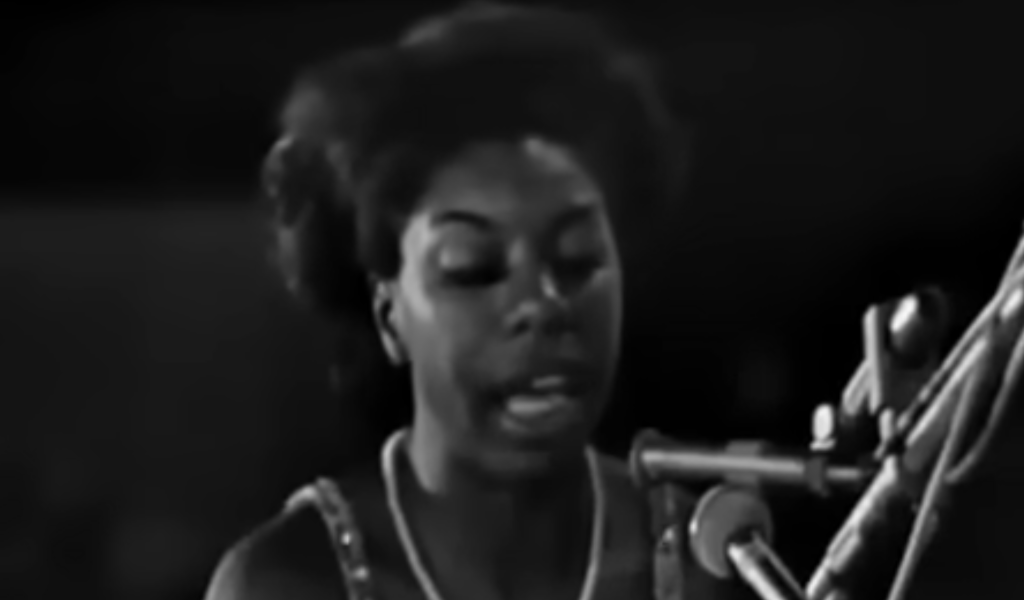
The voices we remember most clearly are often the ones power tried hardest to silence.
I recently watched the 2015 Netflix documentary about Nina Simone. Simone was one of the most gifted artists of the twentieth century, but she refused to separate her art from the struggle for justice. She understood that music could comfort people, but it could also confront power, expose hypocrisy, and demand accountability. She paid a tremendous personal and professional price for refusing to remain silent during one of America’s turbulent political eras. One sentence from the documentary has remained with me ever since:
“I’ll tell you what freedom is to me: no fear.”
This essay is part of my ongoing Uppity Minority series, which examines people who refused to remain within the boundaries that power prescribed for them. “Uppity” has long been used as a reprimand against marginalized people who speak too confidently, question authority, or refuse to accept their assigned place. It is intended to remind people who society believes has the right to speak and who is expected to remain silent. Nina Simone embodied precisely the kind of defiance that the word was designed to punish. She did not ask permission to connect her artistry to freedom, and she did not soften her convictions to preserve the comfort of her audiences.
The more I thought about Simone’s seven words, the more I realized that they describe something much deeper than a lyric. We often define freedom through constitutions, elections, court decisions, and legal rights. Those institutions matter because they establish the formal rules of democracy. But Simone challenged us to think beyond legal protections toward something more fundamental. A nation can guarantee freedom on constitutional paper while making its citizens afraid to exercise it.
Fear Is a Political Tool
Fear has always been one of the oldest instruments of political power. Governments do not always have to imprison critics or formally outlaw dissent if enough citizens begin censoring themselves. Political scientists Steven Levitsky and Daniel Ziblatt argue in How Democracies Die that democratic erosion often occurs gradually as democratic norms weaken before democratic institutions collapse. Historian Timothy Snyder similarly warns that authoritarianism succeeds when citizens surrender democratic habits before governments formally remove democratic rights. Democracies rarely disappear overnight because they first weaken when fear convinces ordinary people that remaining silent is safer than speaking honestly.
This is also why the accusation of being “uppity” has been such an effective tool of social control. It does not merely criticize what someone has said. It questions whether that person had the standing to speak at all. When Black people, women, immigrants, workers, students, or other marginalized groups challenge authority, they are frequently described as angry, ungrateful, divisive, disorganized, or disrespectful. We are still routinely told to “go back to our own country.” As soon to be former Congresswoman Nancy Mace recently put it, “Go back to that country, is all I have to say. Go back to that country of origin.” It doesn’t need to be here.” on CNN. The message beneath all this is unmistakable: know your place, moderate your voice, and remember who is permitted to define reality.
The Politics of Self-Censorship
That is why Nina Simone’s words feel remarkably relevant today. Across American public life, many people increasingly calculate what they can safely say before deciding what they actually believe. In the current political environment, journalists are harassed for reporting inconvenient facts, election officials receive threats for administering elections, and judges become targets when their decisions disappoint political movements. Public servants, artists, nonprofit leaders, educators, scientists, and business executives often weigh political consequences before speaking publicly (e.g. Dr. Fauci). Whether the pressure comes from elected officials, political activists, online mobs, donors, or powerful interest groups, the effect is remarkably similar: fear narrows public discourse.
My Uppity Minority series is fundamentally concerned with people who reject that narrowing. Its subjects are not necessarily fearless, because courage does not require the absence of fear. They are people who understand the possible consequences and choose to speak anyway. Their refusal becomes especially threatening when society expects gratitude, deference, or silence from them. Power can often tolerate disagreement from familiar sources, but it reacts differently when the challenge comes from someone it does not believe should possess a public voice or role.
Political economist Albert Hirschman described democratic participation as a choice between “voice” and “exit.” Healthy democracies encourage citizens to exercise their voices when institutions fail them. Fear changes that calculation by making withdrawal appear safer than participation. Instead of confronting injustice, people quietly adapt to it. The supposedly “uppity” person disrupts that pattern by refusing to retreat, refusing to disappear, and insisting on being heard. This helps explain why ICE agents respond with threats, intimidation, or force when people lawfully and constitutionally challenge their authority. Such resistance exposes a central truth: power accustomed to compliance tries to treat accountability as illegality.
Nina Simone’s Refusal
Nina Simone refused to organize her life around expectations of compliance. Songs such as Mississippi Goddam were not merely performances; they were acts of democratic participation. She recognized that artists possess responsibilities beyond entertaining audiences. She believed conscience should guide creativity, even when doing so carried enormous personal and professional costs. In the language historically used to police outspoken Black people, Simone was unapologetically uppity.
That description should be understood as an indictment of the society that demanded her silence, not of Simone herself. What exactly was her offense that drew so much criticism? She named racial violence, rejected gradualism, challenged hypocrisy, and insisted that Black people were entitled to freedom immediately. She used the platform she possessed to say what many people were afraid to say. The problem was never that Nina Simone failed to understand her place; the problem was that she understood the place America assigned to her and rejected it.
The Freedom Democracy Requires
Every generation inherits its own democratic tests. Previous generations confronted slavery, segregation, McCarthyism, the denial of women’s rights, and countless other struggles over the meaning of American democracy. Our generation faces different technologies, endless war, corrupt institutions, accelerating educational inequality and cultish political coalitions… but the central question remains unchanged. Will we organize our democracy around fear or around freedom? Will we honor those who challenge power, or will we continue finding new words to tell them to know their place?
This is not a partisan question. Conservatives, liberals, independents, and those who reject political labels all have a stake in preserving a society where disagreement is answered with evidence rather than intimidation. Democracies become stronger when journalists investigate those in power without fear, judges decide cases according to law rather than political pressure, artists challenge cultural assumptions, and citizens protest peacefully. We become stronger when neighbors can disagree without treating one another as enemies. Freedom is not measured only by what governments permit; it is also measured by whether citizens can exercise their rights without fear of retaliation.
My Uppity Minority series reclaims a phrase that was intended to reduce people to silence. To be “uppity” in this tradition is to refuse the idea that courage, authority, and public voice belong only to certain people. It is to ask questions that make institutions uncomfortable and to challenge the social arrangements that others have declared permanent. It is to reject respectability when respectability requires complicity. Nina Simone’s life reminds us that many freedoms we celebrate today exist because someone once behaved in a way that power considered unacceptable.
Nina Simone left us with more than unforgettable music. She left us with one of the clearest democratic challenges ever expressed: “I’ll tell you what freedom is to me: no fear.” More than half a century later, her words remain painfully relevant in this political moment. Freedom does not disappear only when constitutions are rewritten or elections are canceled or ICE and the Justice Department acts without accountability. It also disappears when fear persuades citizens to surrender their voices before anyone has formally taken them away.
The question, then, is not whether many admire Nina Simone’s courage. The real question is whether we are willing to practice it. I increasingly understand this as the role I am being called to embrace in this moment: using my scholarship, leadership experience, and public voice to tell the truth plainly, especially when remaining silent would be more typical, easier, or professionally comfortable. Democracy has always depended upon ordinary people who choose principle over comfort, truth over convenience, and courage over fear. Those people are frequently criticized as difficult, disruptive, ungrateful, or uppity before history recognizes that they were right. If we hope to preserve a free society, we will need more people willing to accept those labels. I intend to be one of them, defending our freedom and our Constitution.
Please share.
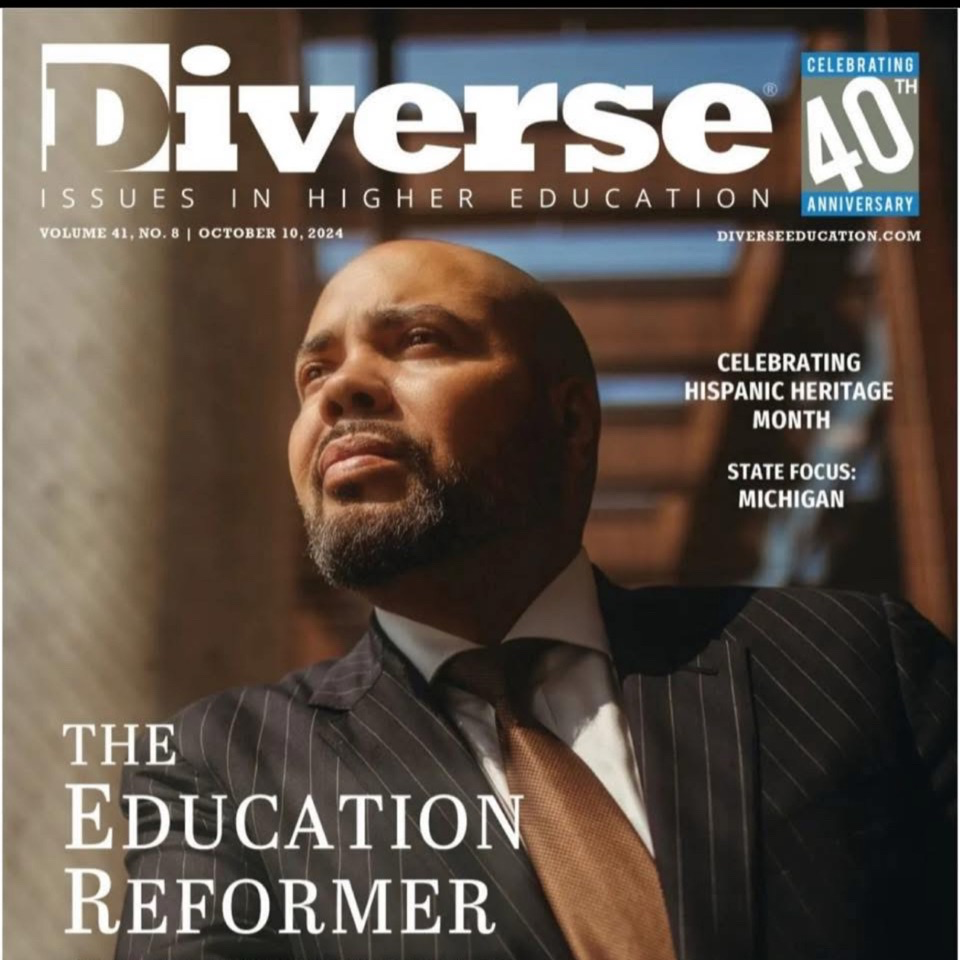
Julian Vasquez Heilig is a nationally recognized public scholar, commentator, and civil rights advocate. He has appeared on major national platforms including Democracy Now!, MSNBC, Al Jazeera, NBC News, PBS, and Univision. His media work reflects a longstanding commitment to making complex policy issues accessible, urgent, and meaningful for the public.



Leave a comment