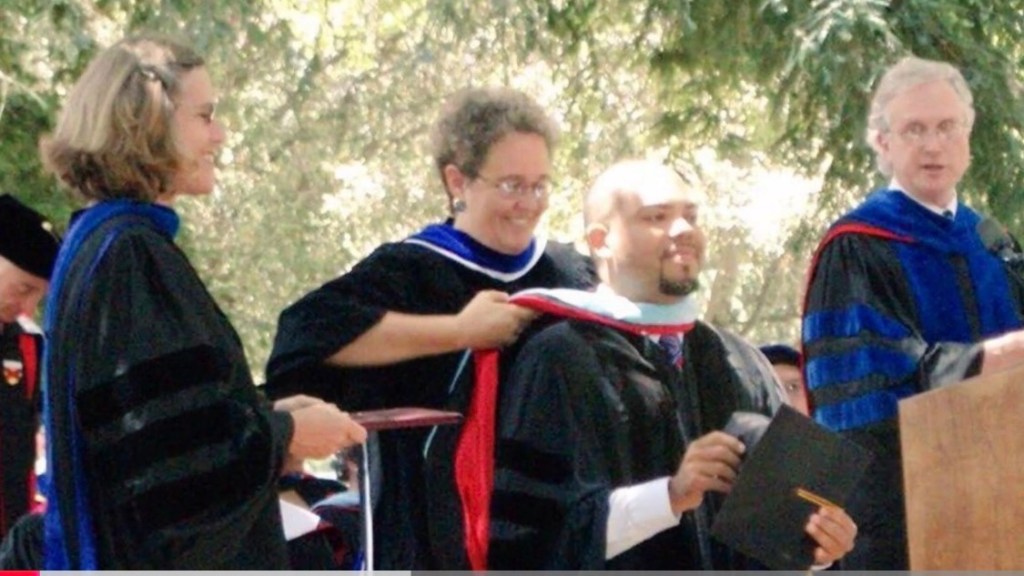
Today, Stanford Graduate School of Education announced that I will receive its 2026 Alumni Excellence in Education Award. The award recognizes alumni whose research, teaching, leadership, and entrepreneurship have advanced education and strengthened communities. I am deeply humbled that my former doctoral advisor, Professor Linda Darling-Hammond, nominated me and that Stanford selected me for this honor.
But when I learned about the award, I did not want simply to make an announcement. I wanted to tell the story of the journey.
So I made a video.
The video brings together members of my family, friends, former professors, colleagues, and others who have walked alongside me at different points in my life. Their presence makes visible something that a curriculum vitae, biography, or award announcement can easily obscure: no meaningful journey is completed alone.
Long Before Stanford
My educational journey did not begin at Stanford. It began in a family and community that taught me that education should be used in service of others.
I was born at the University of Michigan Hospital and raised in Lansing. I inherited stories of librarianship, organized labor, public education, civil rights, and community leadership. Members of my family were teachers, school board members, union workers, and public servants. One attended the 1963 March on Washington. Others opened doors that they themselves had once been denied permission to enter.
They taught me that education was never merely about individual advancement. Learning created an obligation. If education helped you gain access to a room, you were expected to hold the door open, challenge what was happening inside, and create opportunities for others to enter.
That understanding eventually carried me from the University of Michigan to Stanford. Yet even reaching Stanford was not an individual accomplishment. Professors saw possibilities in me that I could not always see in myself. Mentors helped me interpret institutions whose unwritten rules were unfamiliar. Family members offered encouragement, sacrifice, prayer, honesty, and love.
The diploma and award may bear one person’s name. The journey never does.
The People Who Help Us Become
Stanford transformed the way I understood scholarship, policy, and educational leadership. It gave me the intellectual tools to investigate how power moves through educational systems and how policy decisions distribute opportunity. It also placed me in a community of scholars who believed rigorous research should matter beyond the walls of a university.
Linda Darling-Hammond challenged me to connect evidence with purpose. She modeled scholarship that was analytically rigorous, publicly engaged, and unapologetically concerned with the lives of students. Other professors and classmates sharpened my thinking, questioned my assumptions, and helped me understand that educational inequality is not accidental. It is produced through political choices, institutional structures, historical exclusions, and decisions about whose knowledge and futures matter.
But our education comes from more than professors.
Students have taught me. Teachers have taught me. Community organizers have taught me. Faculty and staff colleagues have taught me. Parents fighting for their children have taught me. People ready to disagree with me have taught me. My family has continually reminded me who I am and why the work matters.
We become ourselves through encounters with other people. Someone offers us an opportunity. Someone tells us the truth. Someone challenges us to aim higher. Someone stands beside us when doing so is inconvenient. Someone reminds us of our purpose when ambition, disappointment, or institutional politics threaten to make us forget.
The people in this video represent that community for me.
A Journey Through Institutions and Communities
My career has taken me to the University of Texas at Austin, California State University, Sacramento, the University of Kentucky, Western Michigan University, and communities throughout the country and around the world. Along the way, I have been privileged to serve as a professor, program director, dean, and provost. I have researched accountability, school finance, segregation, school choice, civil rights, governance, and the relationship between educational policy and democratic life.
The positions changed, but the central question remained: How can we use education and institutional authority to expand opportunity rather than reproduce inequality?
That question has guided my scholarship. It has shaped my teaching and mentorship. It has informed my public testimony, media work, and writing on Cloaking Inequity and Without Fear or Favor. It has also influenced the choices I have made when leadership became difficult and when protecting people, academic freedom, shared governance, and educational opportunity carried a career cost.
Still, none of this work belongs to me alone.
Research is strengthened by collaborators. Teaching becomes meaningful through students. Leadership depends upon faculty and staff members who transform aspirations into reality. Public scholarship matters because communities contribute knowledge, ask difficult questions, and insist that universities remain accountable to the people they exist to serve.
Even courage is communal. We often find the strength to stand because someone once stood for us.
The Journey Is About Community
I am grateful to Linda Darling-Hammond for the nomination and for her mentorship across the years. I am grateful to Stanford GSE for an education that fundamentally changed my life and for recognizing a body of work centered on educational opportunity, equity, and democratic governance. I am honored to receive the award alongside Suzanne Grant Lewis and Mike Taubman, whose careers demonstrate the many ways educators can change institutions and improve lives.
Most of all, I am grateful for the community represented in this video and for many others who could not possibly fit within its running time.
This recognition invites me to look backward with gratitude, but it also calls me forward with renewed responsibility. The purpose of being given an opportunity is to create opportunities for others. The purpose of entering influential spaces is to make those spaces more just, humane, and accessible. The purpose of acquiring knowledge is to place it in service of people and communities.
Our individual lives are brief, but the good we create together can travel across generations. That may be the most important lesson of this journey. We are shaped by people whose names will never appear beside ours. We carry lessons that began before we arrived. We open doors through which we may never see others walk. We plant seeds whose full growth we may never witness.
On October 16, I will accept Stanford GSE’s Alumni Excellence in Education Award in Palo Alto. I will do so with profound gratitude and with the knowledge that I will not be standing there alone.
My family will be there.
My friends will be there.
My teachers, mentors, students, and colleagues will be there.
The communities that trusted me and the generations that made my journey possible will be there.
Because the journey was never mine alone.
We do this work together. The journey is about community.
Please share.
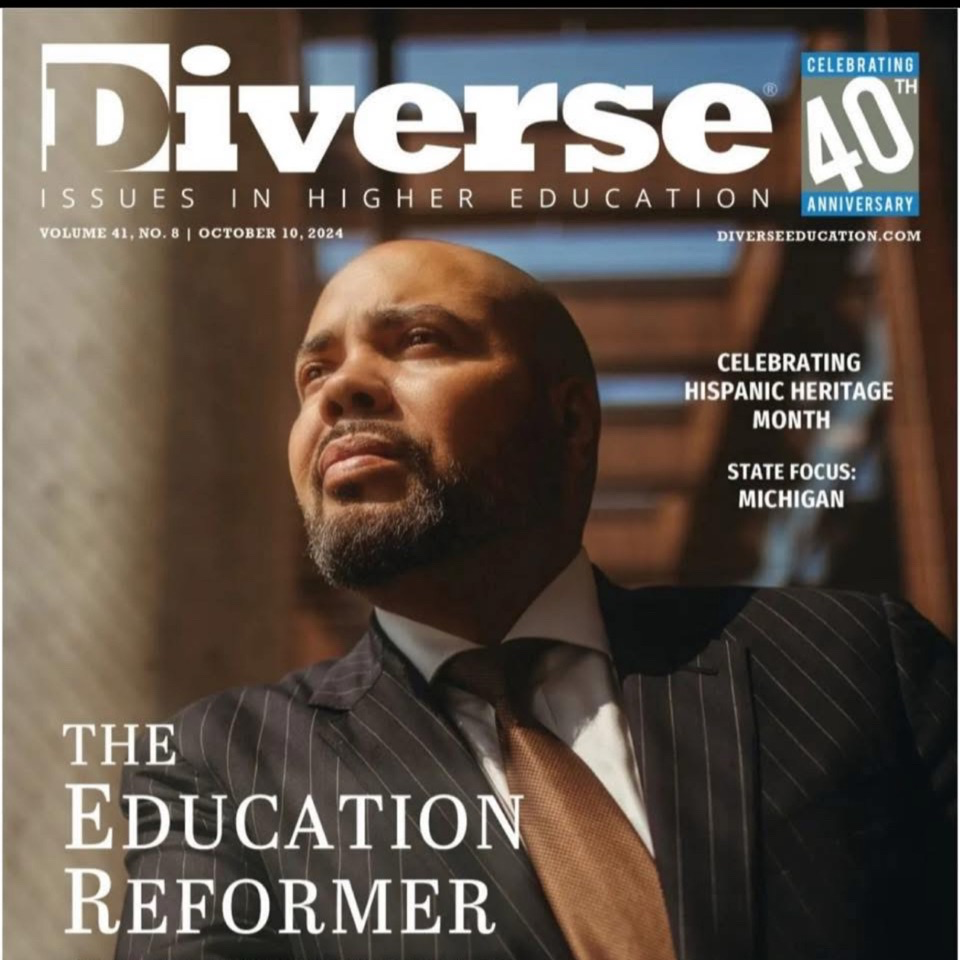
Julian Vasquez Heilig is a nationally recognized public scholar, commentator, and civil rights advocate. He has appeared on major national platforms including Democracy Now!, MSNBC, Al Jazeera, NBC News, PBS, and Univision. His media work reflects a longstanding commitment to making complex policy issues accessible, urgent, and meaningful for the public.






 Cloaking Inequity
Leave a comment