The people knew the assignment. Three memorials. Two cities. Hundreds of “I Voted” stickers.
In Minneapolis, voters left stickers at memorials for Renee Good and Alex Pretti, killed by federal agents in January. In Houston, they did the same for Lorenzo Salgado Araujo, a construction worker and father of three killed by an ICE officer. Imagine carrying the evidence of your vote to a place where someone’s life ended. Democracy became an act of remembrance.
Across America, voters made consequential choices. And the results were extraordinary and in some case surprising. Here are ten things I cannot stop thinking about.
1. Americans changed Washington.
Democrats won control of the House and Senate, flipping seven Republican-held Senate seats (so far) and dozens of House districts.
But behind the voting were families struggling with groceries, rent, health insurance, and their children’s futures. The Associated Press Voter Poll found that approximately nine in ten voters considered the cost of living important. People weren’t voting about an abstract economy. They were voting about their lives.
Notably, a large Democratic Senate majority also reduces the leverage of individual senators who relish breaking with “their” party, including John Fetterman.
2. Kansas, Iowa, and Maine reminded us that history isn’t destiny.
Kansas elected its first Democratic senator since 1932. Iowa elected Josh Turek and Governor Rob Sand. Yeah, that didn’t seem possible a week ago. Maine elected Troy Jackson after decades of Susan Collins’ escapes and not my faults.
And Iowa gave us an extraordinary human story.Democrat Eric Armstrong suspended his legislative campaign for Iowa House of Representatives election in the 20th district because of serious health problems. Yet voters elected him anyway. His victory reminds us that elections are ultimately about human beings, not simply political predictions. I wish him strength and recovery.
3. The South shifted. Were the closing Trump stores an early warning?
Election maps showed substantial movement toward Democrats across most Southern counties, even where Republicans continued winning overall. Louisiana’s parish-level shifts were especially striking.
And remember those media stories about Trump merchandise stores closing or seeing dramatic drops in sales? Retail sales aren’t an election forecast, but I wonder whether those empty storefronts offered an early glimpse of changing enthusiasm.
South Carolina elected Annie Andrews to the U.S. Senate. Wait. What?! And in Mississippi, Scott Colom’s still-undecided race carries extraordinary historical significance: a victory would make him the state’s first Black U.S. senator since Reconstruction, when Mississippi sent Hiram Revels—the first Black senator in American history—to Washington. More than 150 years later, history could be made again.
4. Black women made history. Seventeen women will govern states.
Keisha Lance Bottoms became America’s first Black woman elected governor. Ever. Georgia also elected Black women to many other statewide executive offices.
A record 17 women will serve as governors: Katie Hobbs, Sarah Huckabee Sanders, Keisha Lance Bottoms, Hannah Pingree, Maura Healey, Jocelyn Benson, Amy Klobuchar, Mikie Sherrill, Deb Haaland, Kelly Ayotte, Kathy Hochul, Amy Acton, Tina Kotek, Helena Buonanno Foulkes, Marsha Blackburn, Gina Hinojosa, and Abigail Spanberger.
Imagine the little girls watching in these states. Yes, I’m a girl dad.
Five Black governors will also serve simultaneously, including Florida Republican Byron Donalds. History is changing what leadership looks like to the next generation.
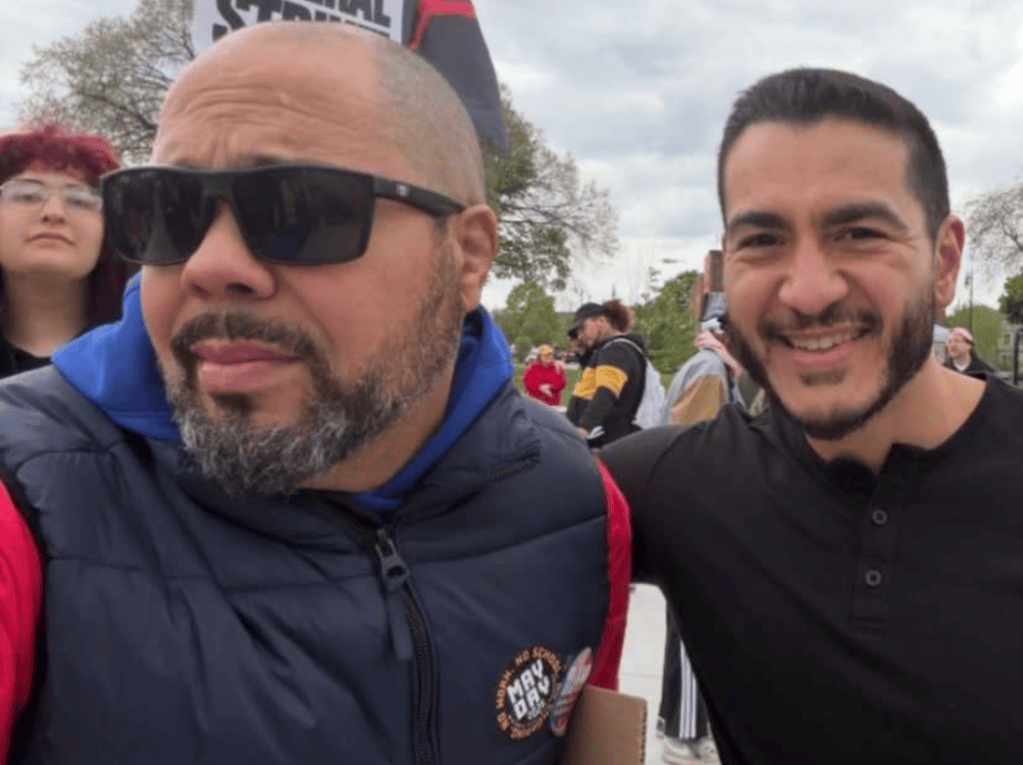
5. Michigan challenged conventional wisdom about progressives.
Abdul El-Sayed won Michigan’s Senate race and will become America’s first Muslim senator.
His campaign emphasized affordability, health care, and economic security.
His results were striking. For example, approximately 92% in Detroit and 82% in Dearborn which were improvements over recent moderate Democratic performances. One election cannot settle the debate about progressive and moderate candidates. But it raises an important question.
Perhaps voters care less about ideological labels than whether candidates understand the cost of groceries, housing, and health care.
6. Black women, Gen Z, and the “no sabo” generation made themselves heard.
Early voter surveys estimated Democratic support at 92% among Black women, 85% among Black men, 66% among Latina women, and 56% among Latino men.
Tufts CIRCLE initially estimated that 71% of voters ages 18–29 supported Democratic House candidates.
I particularly loved hearing about the young Latino no sabo voters. Young people navigating two languages and cultures, sometimes teased for imperfect Spanish, yet profoundly connected to their families and culture.
The final turnout data are still arriving. There is much more to learn.
7. Texas turned blue. By extraordinary margins. And Beto deserves his flowers.
Gina Hinojosa became Texas’s first Latina governor-elect. James Talarico won a United States Senate seat. Democrats captured the Texas House.
But look at the actual numbers. WHAT?! More than 700,000+ votes gap for Hinojosa. Nearly 1.2 MILLION vote gap for Talarico! In Texas!
These were not razor-thin victories. The margins were enormous.
And this momentum didn’t appear overnight.
Beto O’Rourke’s Powered by People reported reaching more than 250,000 eligible voters and directly engaging over 110,000 new and young voters with registration assistance and follow-up. It was so effective that Attorney General Paxton came for it with a lawsuit.
Beto has sometimes been treated as a punch line because he lost prominent statewide races. But losing an election doesn’t erase years of organizing. Beto was a foundation builder. And foundation builders deserve their flowers. So do the thousands of volunteers from this election whose names never appeared on a ballot.
8. Bobby Pulido won, and Monica De La Cruz gave him an unforgettable campaign idea.
I didn’t mention this before the election, but I once spent a weekend with Bobby Pulido. A mutual friend brought us together. I spent time backstage at his concerts around Dallas. We laughed, talked about life, and argued politics until three in the morning. We even attended a Lions–Cowboys game together. Wonderful memories.
Incumbent Congresswoman Monica De La Cruz, his Republican opponent, mocked his background as a performer, comparing electing a congressman to choosing someone to sing at a quinceañera. Bobby turned that criticism into a campaign strategy, showing up at quinceañeras throughout South Texas. By late October, he’d performed at around 80 celebrations. He went on to defeat De La Cruz by a substantial margin.
Oh, here’s something fun. Brazilians have noticed that talarico is their slang for someone who pursues another person’s romantic partner. James Talarico didn’t steal anybody’s girlfriend. But he certainly took Texas from the Republicans!
9. State government changed, and Texas education could be next.
Democrats gained Governor, House, and Senate trifectas in Michigan, Minnesota, Nevada, Pennsylvania, and Wisconsin. Republican trifectas were broken in several states, and Florida Republicans lost legislative supermajorities.
Texas’s State Board of Education also saw substantial Democratic gains. Consider what the board approved just in September. For example, it rewrote social studies standards to poorly characterized Muhammad and Islam. Muslim Texans and expert curriculum advisers questioned the accuracy of the historical framing. These decisions follow years of controversy over religious curriculum, climate-science textbooks, and civil rights history. See our Harvard Educational Review paper entitled Illusion of Inclusion.
And this is deeply personal note. After eight years as a professor at UT Austin, I had reached a point where I couldn’t consider returning to work in Texas education or at a Texas university. The political environment, especially its implications for scholars and leaders of color worried me.
I had loved Texas, homeland of the Vasquez, but I wondered whether I could do my best work there again after living in both Houston and Austin. Now, with new possibilities for the Texas Education Agency and university governance, I find myself reconsidering. For everything Texas gave me, I would be honored to give something back. And for the first time in years, my ringer is on for the 512, 713, 281 etc.
10. Florida remained red, but the margins told another story.
Byron Donalds won Florida’s governorship, becoming its first Black governor. Yet the margin tells an extraordinary story. Ron DeSantis won Florida by 19.4 percentage points in 2022. Byron Donalds won by just 1.3 points in 2026! That’s an astonishing 18.1-point narrowing of the Republican victory margin in just four years.
Democrats gained 15 Florida House seats, breaking the Republican supermajority, while Miami-Dade moved back toward Democrats. Across the South, many communities shifted toward Democrats without necessarily changing which party won. A political map can stay the same color while the voters underneath it are changing their minds.
These Are Not Ordinary Times. “Democrats Don’t F It Up.”
And so I think about what happens next. The Lincoln Project, an organization founded by Republicans opposing Donald Trump, offered Democrats a blunt message after the election:
“Don’t f it up, Dems.”
That warning resonates with me. Yes, it does. But I have another SERIOUS concern. I worry that Democrats will elect leaders to the House and Senate who are experts at managing the status quo and then expect them to deliver transformational change. I worry that those newly elected officials will turn around and appoint people whose careers have been built on preserving existing systems rather than producing innovative, meaningful, community-engaged change. I have watched this happen in universities and public education for years. Institutions repeatedly elevate leaders who know how to maintain the machinery, navigate the politics, and protect the status quo, then express surprise when nothing fundamentally changes. Managing an institution and transforming one require different skill sets. If voters demanded change, why would we entrust that mandate to people whose greatest expertise is keeping things exactly as they are?
Institutions love to hire leaders who know how to preserve existing structures, manage political relationships, and minimize disruption. Those are legitimate skills. Sometimes institutions need them. But they are not the same skills required to transform an organization or lead a seachange.
Change agents who solve big problems and purveyors of the status quo are NOT interchangeable.
One knows how to maintain a system. The other knows how to challenge its assumptions, confront entrenched interests, build new coalitions, and create something different. That distinction matters enormously in education. And it matters just as much in government.
You cannot simply demand innovation and bold change and results from leaders whose professional identities and careers have been built around avoiding it.
If voters are demanding transformation, elected officials must be prepared to lead it and choose people for their team that can actually accomplish it. I hope Democrats understand that. Because these are not ordinary times.
People did not carry their grief to memorials, stand in long voting lines, and demand political change simply to watch another round of speeches, fundraising texts, incremental adjustments, and excuses. They want affordable lives, strong public schools, safe communities, constitutional protections, liberty, and a government that recognizes their humanity. They want their children to inherit something better than fear and division.
The election was not the fulfillment of those hopes. It was an opportunity to begin realizing them. And that requires more than changing who occupies an office. It requires changing how institutions operate, whose voices matter, and what government actually delivers. The people knew the assignment. Now those elected need to prove they understood it and can actually manage change. Democrats, don’t f it up.
Please share.
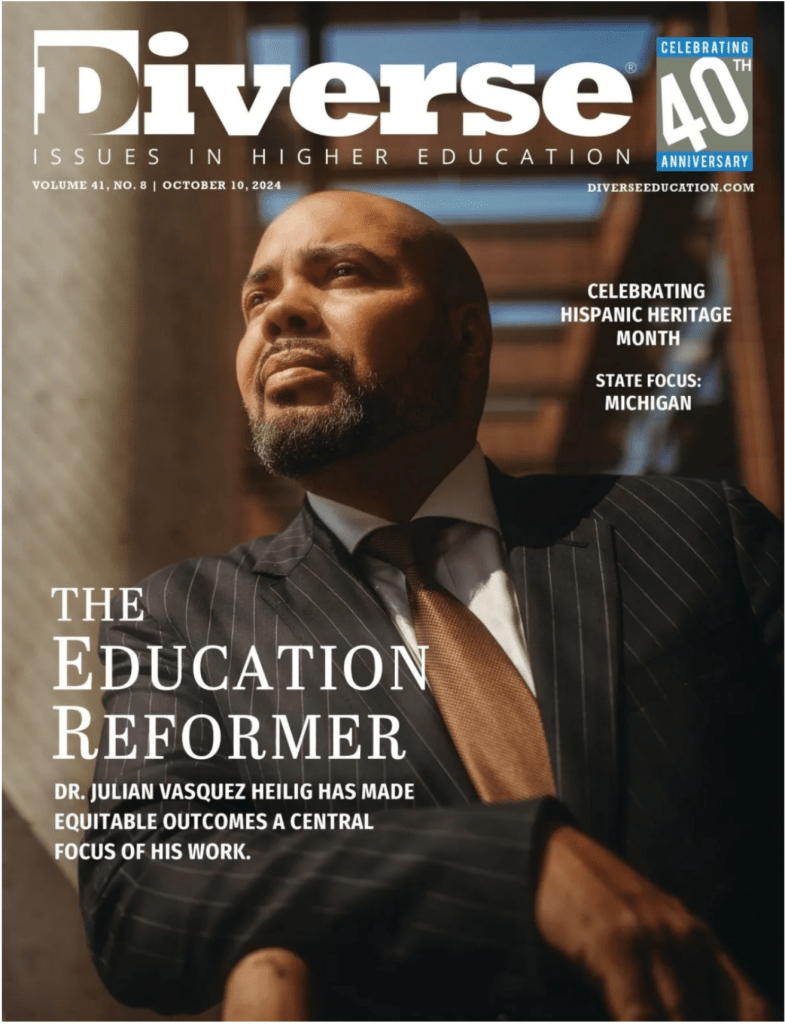
Julian Vasquez Heilig is a nationally recognized education policy scholar, civil rights leader, and experienced university executive. A Stanford-trained scholar and change agent, he has led educational innovation, improved student outcomes, and strengthened educator preparation across four states. His expertise spans education governance, community accountability, and institutional transformation. Contact him at jvh@alumni.stanford.edu.



Leave a Reply