
The classic line from the Spider-Man show was, “Lookout! Here comes the Spider-Man.” And so, Spider-Man punched a white supremacist. Fist to cheese.
For some exhausted by racism and intimidation, the image probably felt satisfying. But there is a problem that extends beyond superheroes and comic books. The white supremacist wants the punch. He wants to steal a page from the civil rights movement’s playbook while serving the opposite cause. Disingenuously, he wants the video, the outrage, and the opportunity to claim victimhood. He wants people debating Spider-Man’s behavior instead of confronting the white supremacy that provoked the encounter. Across education and politics, the same tactic appears repeatedly: people advancing discriminatory agendas provoke their opponents into responding exactly as expected. The violent confrontation becomes their reward.
Refusing that trap does not mean surrendering or pretending every act of white supremacist intimidation is protected speech. It means protecting people, documenting harm, and choosing strategies that deny provocateurs the spectacle they seek. Courage is not measured by how quickly someone throws a punch. Sometimes courage means refusing to fight on someone else’s terms. As The Art of War teaches, the strongest strategy attacks an opponent’s plans rather than confronting them where they are strongest. With that principle in mind, here are several ways communities can resist provocation, protect one another, and shift the terrain without surrendering the fight.
Slow the Tempo
Some political actors rely on speed as a weapon. They announce sweeping changes, manufacture controversy, and demand immediate compliance. Before communities can understand one proposal, another crisis they prepared appears. The pace produces confusion and exhaustion. That exhaustion is part of the strategy. For example, this was the strategy Elon Musk used with Doge and is often the strategy used with budget cuts in education.
The answer is to slow the process by engaging the community when haste threatens the people affected. Demand public hearings, legal reviews, fiscal analyses, and explanations of who benefits or gets hurt. Ask institutions to document decisions before eliminating programs or laying off individuals. Require evidence rather than accepting manufactured urgency. Give communities time to understand, organize, and respond.
This does not mean simply creating bureaucratic obstacles. It means preventing powerful actors from using rushed procedures to avoid accountability for bad decisions. A strategist who relies on speed can become impatient when required to explain the consequences. That impatience may expose contradictions or unsupported claims. Slowing the tempo protects the voices of the people who would otherwise be left behind.
Change the Argument and Reveal the Full Picture
Provocateurs arrive with questions designed to produce familiar confrontations. They want a debate about DEI, whether racism exists, whether students deserve support, or whether universities have become too inclusive. Accepting their framing gives them control of the conversation. Even a strong rebuttal can reinforce the assumptions built into the original question. Sometimes the argument itself is the trap.
Change the terrain instead. Ask which students lose opportunities, which communities lose representation, and which institutions abandon their responsibilities. Ground the conversation in human consequences, public trust, relationships, and democratic values. Shift attention from ideological performance to the people affected. Make the provocateur defend the actual consequences of the proposed policy.
Also reveal the complexity hidden beneath simplistic slogans. Eliminating a program affects budgets, staffing, student support, legal obligations, and community relationships. Restrictions on academic freedom influence research, recruitment, and institutional credibility. Raise the competing responsibilities that easy answers conveniently ignore. When the full picture becomes visible to the public, a strategy built on oversimplification begins to unravel for those wielding the most power.
Protect People Before Protecting Appearances
Too many institutions treat controversy as a communications problem rather than a human problem. Their first concern becomes whether the university, school district, or organization appears calm. They encourage silence, urge patience, and ask vulnerable people not to make anyone uncomfortable. The result is often a polished statement that protects the institution while leaving students and employees exposed. That is not strategy; it is abandonment.
As a dean at the University of Kentucky, I received what I perceived to be a death threat through the mail. The message arrived in a letter pasted together from pieces of newspaper, the kind of thing that makes you seriously wonder whether someone intends to harm you. The university reviewed the letter and told me it did not believe it constituted a threat. My team and I saw it differently, and the experience was sobering and scary. It was especially unsettling because, as I understood it, a previous dean of color had also faced a death threat while serving in the role. The distance between protecting appearances and protecting people suddenly became painfully clear.
Institutions should take reported threats seriously, preserve evidence, assess risk, and support affected individuals. Students and employees should not have to guess whether their university will stand beside them. Faculty should not face coordinated harassment alone. Protecting people requires more than reassurance designed to make controversy disappear. Safety must matter more than institutional optics.
Keep the Receipts and Turn Speed Against Them
Provocateurs and powerful institutions often move quickly because they want their version of events established first. A clipped video begins after the harassment. An official statement portrays the harmed person as the aggressor. An accusation circulates before anyone verifies what happened. Speed becomes a substitute for truth.
We have seen this pattern in encounters involving Immigration and Customs Enforcement. Accounts provided to police, the media, and the public have been contradicted by video evidence. American citizens have faced detention or charges that were unsustainable once footage emerges. Video can help secure someone’s release, prompt charges to be dropped, or support prosecutions of officers for unlawful action. Without documentation, the official version might remain the only story anyone hears.
Their haste can also become their vulnerability. Preserve footage, establish timelines, compare statements, and examine whether early accusations match the available evidence. I recognized the anxiety surrounding documentation when someone asked whether I was recording executive cabinet conversations. I have never recorded my colleagues, and I found the question very strange at the time. Now I understand why the possibility concerned them: an accurate record can expose the distance between what officials say privately and what they claim publicly. I do not recommend secretly recording colleagues because it undermines the trust essential to working relationships. However, I understand that, where legally permitted, people facing discrimination, retaliation, or serious violations of their rights may decide with their lawyer that documentation is necessary to protect themselves. Public situations and meetings are different still. In each case, the goal should not be to manufacture confusion or mislead anyone, but to ensure that the facts can expose the consequences of deception.
Build Coalitions and Refuse Predictability
Attacks on equity become more effective when one person is isolated. A professor speaks up, a student protests, or an administrator defends an inclusive program, and suddenly that individual becomes the target. Critics portray the person as divisive, unstable, or motivated by personal grievance. The underlying issue disappears behind an argument about one individual’s character. Isolation turns a shared concern into somebody else’s problem.
Coalitions change that balance. Students, parents, educators, alumni, researchers, and community organizations can coordinate their responses. Colleagues can accompany one another to meetings, share accurate information, and insist on fair treatment. Collective action distributes responsibility and protects people with fewer institutional safeguards. Networks are often stronger than individuals standing alone. For example, I wrote about standing together against Charlie Kirk’s professor target list months before he became a national headline for his murder in the post Apply Here for the Watchlist: Academia’s New Mark of Courage @TPUSA #ProfessorWatchMe.
Provocateurs also tend to assume their opponents will behave predictably. They expect angry exchanges, defensive statements, institutional retreat, or footage they can manipulate. Respond differently by organizing families to make statements, publishing available evidence widely online, building new and unexpected partnerships with community organizations, or bringing the voice of affected communities directly into the conversation in the media. Overconfidence becomes a weakness when the anticipated confrontation never arrives. The most effective response is the one opponents did not prepare to counter.
Winning Is Not the Same as Landing the Punch
Anger at racism and intimidation is justified. People facing discrimination do not owe anybody the performance of emotional comfort that was forced on them throughout history. The problem is that provocateurs try to convert legitimate anger into evidence against the people they harmed. Recognizing that tactic allows communities to resist without surrendering their dignity and courage. It also keeps attention focused on the original injustice.
The strategic principles I am proposing today are straightforward.
- Slow the tempo when powerful actors manufacture urgency.
- Reframe the argument and reveal the consequences hidden behind simplistic narratives.
- Build coalitions, refuse predictable reactions, and document contradictions created by rushed accusations.
Above all, protect your community before protecting appearances.
Spider-Man’s fist to cheese might make an unforgettable picture. But the white supremacist wants that picture because it allows him to exchange his ideology for victimhood. We should confront the racism, support the people targeted, and refuse to let the aggressor rewrite the story. The strongest response is neither silence nor surrender. It is disciplined solidarity that protects our communities and changes the terrain.
Please share.
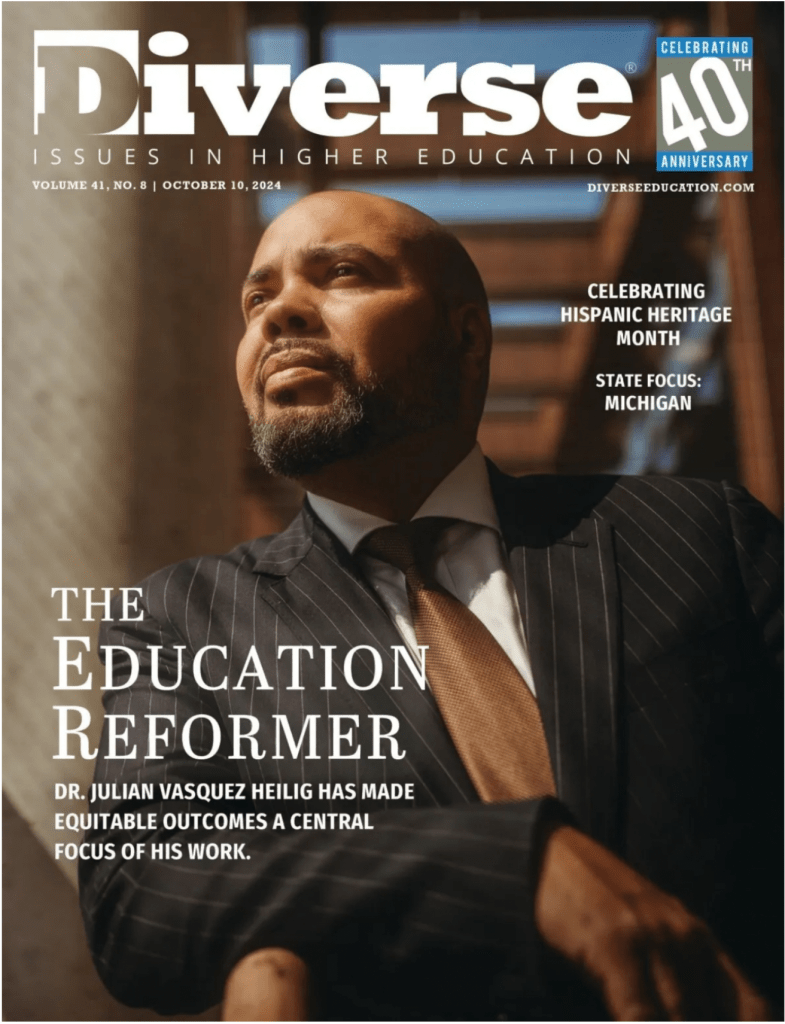
Julian Vasquez Heilig is a nationally recognized public scholar, commentator, and civil rights advocate whose work has appeared on Democracy Now!, MSNBC, Al Jazeera, NBC News, PBS, and Univision. He brings clarity, urgency, and public relevance to complex issues in education, policy, and leadership. For consulting, speaking opportunities, and collaborations, contact jvh@alumni.stanford.edu.


Leave a Reply