In college, my Uncle Terry came to pick me up in his old school van so I could move out of my dorm room at the University of Michigan. It was not fancy. It was not pretty. It was rusted. It rattled a little. Its paint color was from another era. We loaded everything in, shut the doors, and started heading down I-94.
We were moving slow. Painfully slow. Cars were flying past us. I remember looking over at him and saying something about it, half joking, half annoyed. Why are we going so slow? He did not speed up. He did not seem bothered at all. He just looked straight ahead and said something that stayed with me for the rest of my life. He said, the journey is more important than the destination. At the time, I heard it. But I did not feel it yet. Not really. Not in a way that changed how I saw the world. That came later. And it hit me like bricks. Because I started seeing that same truth everywhere.
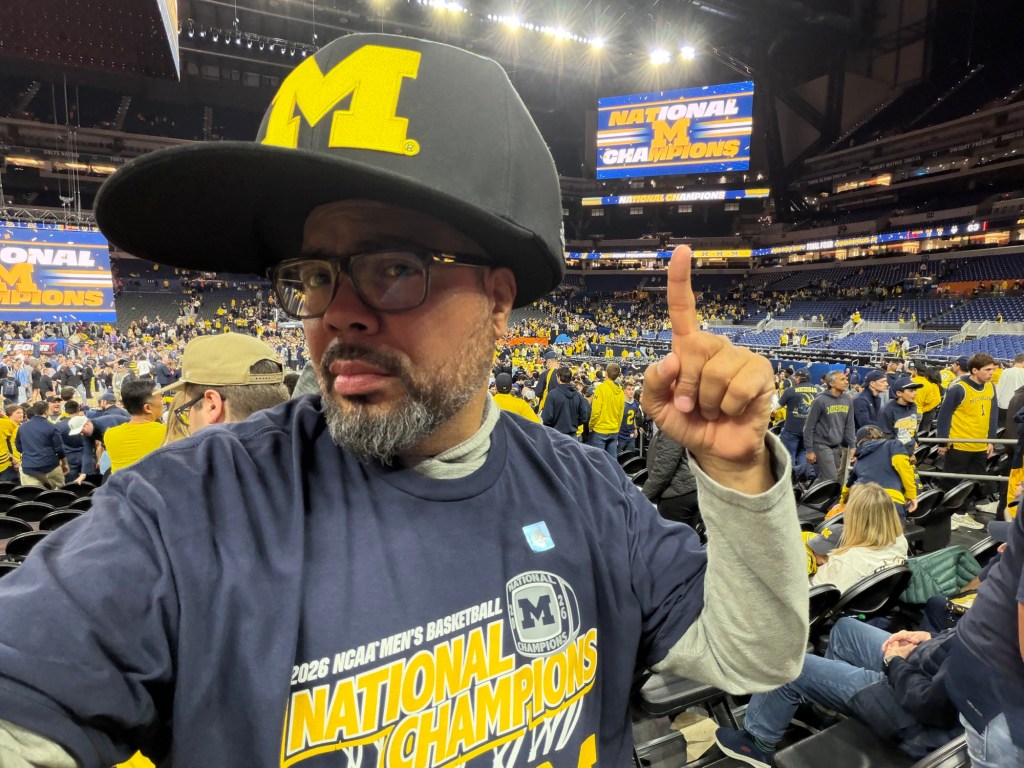
I found myself in Indianapolis last week. It was my third Final Four watching the University of Michigan men’s basketball team in person, and from the outside it started to finally feel like everything was lining up for a second national championship for the Wolverines. The big wins kept coming. The confidence kept building. People started telling the story as if it was meant to be.
But I have lived enough life to know something deeper. Nothing is meant to be in the moment. Everything is earned in the moment. Everything is fragile in the moment.
Before any of this, I think about running a race. There is a stillness at the starting line before a road race. Thousands of runners. Months of preparation. And yet, standing there, you feel uncertainty more than anything else. You do not know how your body will respond. You do not know where the pain will begin. You do not know what kind of race you are about to run.
And when the race starts, all of that preparation does not guarantee anything. You still have to run. You still have to push. You still have to decide, over and over again, that you are not going to stop. That is where the race really begins. Not at the starting line. But in the moment when it hurts. In the moment when your legs feel heavy and your mind starts asking why. In the moment when quitting becomes an option. That is where you find out who you are.
And even at the highest level, the lesson is the same. This year in Los Angeles, Nathan Martin chased down Michael Kimani Kamau in the final stretch. After 26.2 miles, it came down to a fraction of a second. A race that looked finished was not finished. A moment that felt secure was not secure. The difference was finishing.
Then it happened again this week at the Delaware Marathon. Carson Mello thought he had won. He raised his arms. He celebrated. After everything it took to get there, he allowed himself to believe it was over. But it was not over. Joshua Jackson kept running. He kept pushing. He finished through the line. And in the final seconds, less than one second after nearly three hours of running, he passed him and won . Think about that. Twenty six miles. And the difference is less than a second. That is life. You cannot celebrate before the finish line. You have to run through it.
That lesson stayed with me as I watched this Michigan basketball team. Led by Dusty May, there was something different about this group. It was not loud. It was not performative. It was steady. It showed up when the game got tight. It showed up when things could have gone the other way. From the outside, it started to feel inevitable. But inevitability is something we create in our memory after the fact. In the moment, everything is uncertain.
I was there in the first Final Four game against Arizona when Yaxel Lendeborg went down. The crowd gasped. You could feel it. Not just concern, but fear. Real fear. The kind of fear that hits when you realize everything can change in a second. He rolled his ankle. He injured his knee. You could see the pain on his face. You could see the uncertainty in his movement . And in that moment, the question was not about basketball. The question was the same one life asks all of us. What are you going to do now?
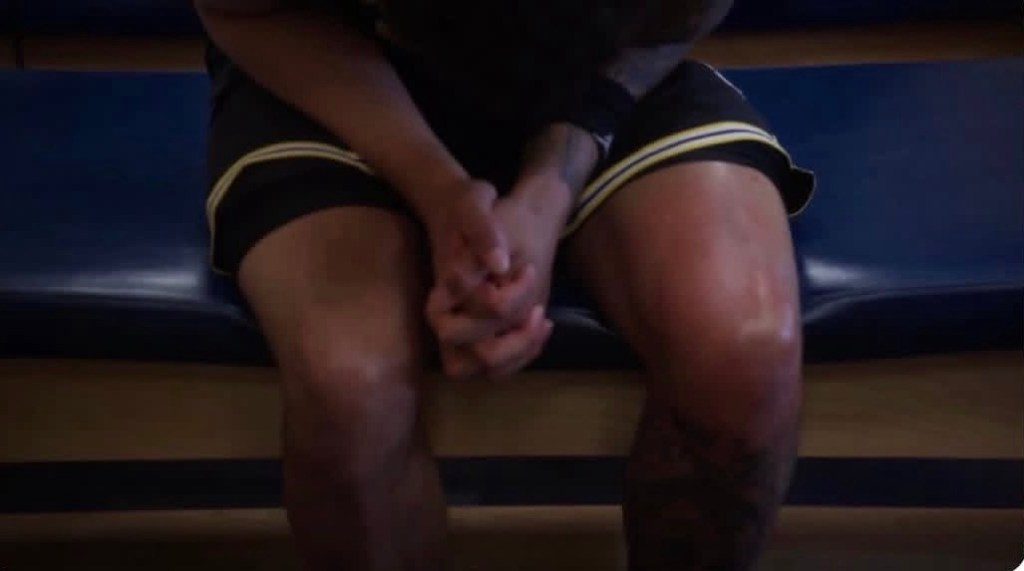
Because we all have that moment. The unexpected phone call. The setback you did not see coming. The moment when everything you have worked for feels like it might disappear. What defines you is not whether those moments come. What defines you is what you do when they do.
And if you understand Yaxel Lendeborg, you understand that moment differently. This is someone who was not always here. This is someone who almost lost everything before he ever had anything. A kid struggling in school. Barely passing. Not even allowed to play basketball because his grades were too low. A kid whose mother had to take everything out of his room. No television. No games. No distractions. Not even a door. Just emptiness. Just truth. A kid sitting in a minivan while his mother cried in front of him. Telling him that his life had to change. And in that moment, something shifted.
He made a decision. Not a guarantee. Not a promise. A decision. To be different. To do the work. To become the person his mother believed he could be . Everything that came after that moment came from that decision. The long nights. The classes. The sacrifices. Leaving home. Starting over. Becoming something no one could see yet. That is the journey. That is the work no one celebrates.
And now, people see the result. They see Yaxel Lendeborg as an NCAA national champion, a consensus All-American, and the Big Ten Player of the Year. They see the accolades. They see the success. But those are not the story. They are the outcome. The story is everything it took to become that person.
So when you see him on that court, hurt, trying to stand, trying to stay engaged, cheering his teammates, refusing to let go even when his body is breaking down, you are not just watching an athlete. You are watching a life. You are watching someone who has already decided who he is. A champion.
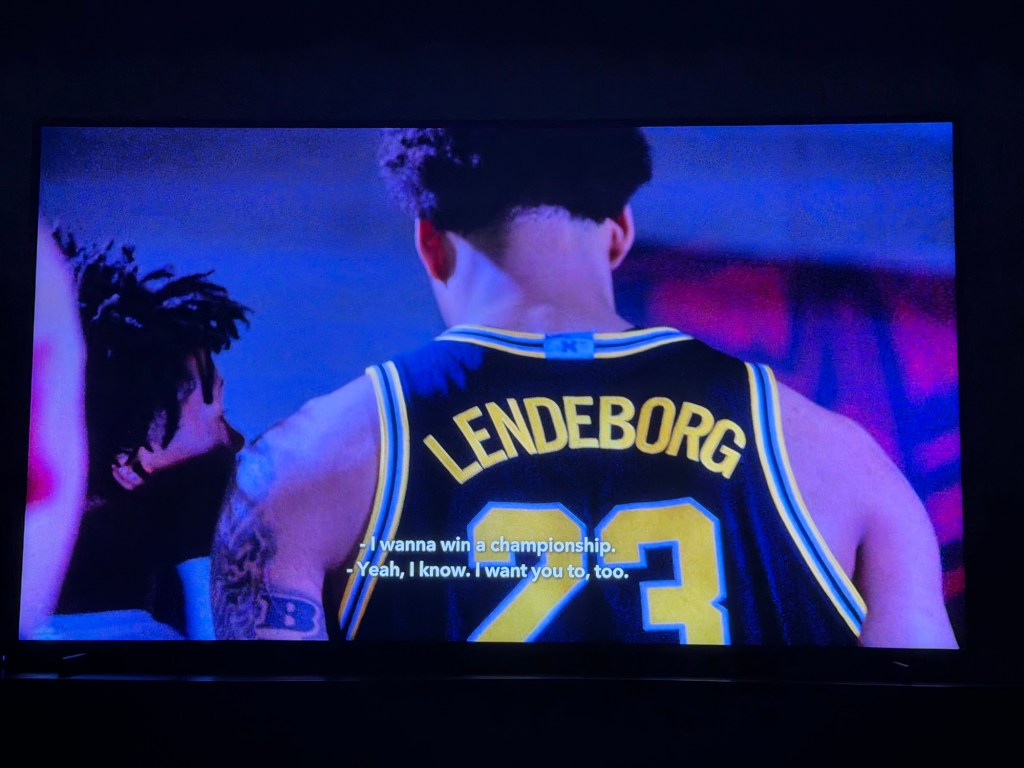
And then there is the moment that brings everything together. In Made in March on Paramount +, there is a scene where he is walking down a hallway. He is in pain. You can see it in every step. But he is not broken. He talks to his teammate who had already torn his ACL earlier in the year and could not play in the NCAA Tournament. And he says, “I wanna win a championship.” I cried watching that. Because that moment was not about basketball. It was about everything that came before it and a mother who refused to give up on her son. It was about a son who decided to become someone worthy of that belief and sacrifice. It was about love and purpose.
And then, at the very end, as the nets are being cut down, Dusty May says something that captures everything.
“I always heard that when you get to the top of the mountain and you look around and say this is it… I think the reward is the journey.”
That is it. That is the lesson. We spend our lives chasing the top of the mountain. The finish line. The championship. The moment where everything is supposed to feel complete. But when you get there, it passes. It always passes. What stays with you is what it took to get there. The mornings when you did not want to get up. The nights when you questioned everything. The setbacks that made you stronger. The people who believed in you and loved on you when you did not believe in yourself. The moments when you could have stopped but chose to keep going.
That is the reward.
That is the journey.
That is life.
Running the race to the end teaches you that. Yaxel Lendeborg lived it. And life demands it. Nothing is promised. Not the race. Not the finish line. Not the championship. But you always have a choice to keep going. To stay focused and finish. Because in the end, it is not about whether it was inevitable. It is about whether you kept going when it was uncertain.
It is about whether you ran through the line.
It is about whether you became who you needed to become along the way.
It is about the journey. And that is the reward.
Julian Vasquez Heilig is a professor of educational leadership, policy scholar, and public intellectual committed to transformative power of education. A Michigan native and Detroit resident, his work bridges research, policy, and public engagement, translating complex ideas into accessible insights for educators, policymakers, and communities. Despite a lifelong love of sports, his championship record is very modest—the only titles he ever won came in intramural football and soccer at the University of Michigan—and he primarily made varsity as a sophomore in high school not for athletic dominance, but because he helped raise the team’s GPA, a detail that says as much about his priorities as any accolade.



Leave a Reply