
Maybe you are not crazy. Maybe you are not “difficult.” Maybe you are not “too intense,” “too ambitious,” “too direct,” or “not a team player.” Maybe it’s something else entirely.
Luis Velasquez’s recent Harvard Business Review article, “Why Effective Leaders Get Branded as Problems,” inspired me to blog about this dynamic because his thesis captures something many people experience but struggle to name. He argues that organizations often misdiagnose effective leaders as the problem when the real issue is the system resisting the friction created by effectiveness. I think he is right on the money. But I also want to extend his argument in two ways: this pattern becomes especially dangerous in declining organizations, and it does not only happen to leaders. It also happens to high-performing employees.
In declining organizations, high-performing people often become threatening precisely because they expose what others have learned to tolerate. Their results reveal weak execution. Their urgency reveals drift. Their questions reveal avoidance. Their standards reveal how low expectations have become. That does not mean every criticism is wrong or that every strong performer is misunderstood. But if you are producing results and still being treated like the problem, it may be time to ask a harder question: are you actually failing, or are you exposing the failure around you?
This is one of the painful artifacts of declining organizations. They often misdiagnose the people trying to improve the place because those people disrupt the emotional comfort of decline. Understanding that does not make the experience easier, but it can make it clearer. Sometimes the problem is not that you are a threat to the mission. Sometimes the problem is that you are a threat to an organization’s ability to pretend everything is fine in a low standards environment.
When High Performance Becomes A Threat
In declining organizations, the people who create momentum can become threatening precisely because they reveal how much drift others have normalized. A leader who moves quickly exposes slow decision-making. An employee who consistently delivers exposes weak execution. A manager who uses data exposes a culture built on anecdotes, lofty talk, and politics. A faculty member, staff member, or team member who refuses to accept mediocrity exposes how long the organization has rewarded comfort over performance. Velasquez writes that “decisiveness didn’t create friction. It exposed it.” The same is true far beyond the executive level. Strong employees are the mirror, revealing the problems and dysfunction the organization has spent years refusing to face.
This is why declining organizations often become dangerous places for their best people. The loudest critics of change are usually not the highest performers. People who have spent years inside low-performing systems can become deeply invested in protecting the norms, rhythms, and informal power structures that allowed them to remain comfortable and in power despite weak outcomes. When a new leader or employee arrives and begins demanding accountability, speed, execution, strategic prioritization, or measurable improvement, those expectations change the environment. Suddenly meetings are more inclusive. Decisions are faster. Data matters more. Delays and excuses become harder to justify. Average and below average performance becomes more visible. What previously blended into institutional ambiguity becomes exposed through clearer standards and heightened expectations.
Culture That Protects Familiarity, Not Results
High-performing employees recognize this contradiction. They look around the organization and quietly wonder how individuals associated with years of stagnation, missed opportunities, declining enrollment, weak execution, or operational drift somehow become the loudest voices defining whether an organization is “effective” or whether change is “healthy.” They watch employees who produce measurable gains endure constant criticism while people tied to long-term underperformance maintain cultural credibility because they are perceived as familiar, collegial, safe, or politically connected.
That is where Velasquez’s argument in the Harvard Business Review about leadership becomes even more powerful when we extend it to employees. He writes that “the feedback stays the same; the narrative stays the same.” In a declining organization, narratives harden around employees who push the system because they are a threat to the status quo. Once a high-performing person is labeled as difficult, every action is filtered through that story. Their urgency becomes impatience. Their clarity becomes arrogance. Their questions become resistance. Their standards become negativity. Their refusal to participate in institutional theater becomes evidence that they are not collaborative or team players. Meanwhile, the people who helped normalize decline are often described as steady, loyal, and collegial. The organization confuses familiarity with value.
Decline Creates Its Own Defenders
This is especially important because in declining organizations, strong new employees often become the early warning system. They notice the gap between public messaging and internal reality. An established member of the community may diagnosis it publicly as a “morale problem.” But what is really happening is that employees see which initiatives are performative. They clearly know which meetings are designed to delay rather than decide. They also know which strategic initiatives are just rearranged deck chairs on the Titanic. They notice when consultants are hired to bless decisions already made. They know when people are fired or offices are closed as a panacea while the deeper failure culture remains untouched. Because strong employees are close enough to the work to see what is actually happening, their honesty can become uncomfortable to those invested in the official narrative and its misdiagnosis as a morale problem.
The most revealing part of Velasquez’s article may be his discussion of “organizational drift,” when systems rely on outdated narratives instead of current evidence. In struggling institutions, reputations often harden into permanent labels. Here’s what I’ve seen happen: A leader who made one unpopular decision years ago is forever “political.” An employee who once challenged a weak process in a meeting is forever whispered to be “negative.” A faculty member who asks hard questions in Senate is forever “difficult.” A staff member who pushes for accountability for an initiative led by administrator out of their depth is forever “not collegial.” Velasquez warns that “stakeholders rely on memory, not evidence,” and in declining organizations, memory often becomes a weapon against the people trying to improve the place.
Velasquez writes that “the leaders most likely to fall into this cultural trap are not underperformers. They are often the ones the organization depends on most.” That insight also applies to employees. The people most likely to be branded as problems are not usually the weakest performers. They are often the people the organization depends on to keep things moving. They are the ones who fix broken processes, mentor others, generate results, solve problems after hours, or rescue projects from failure. But because they are effective, they also reveal the inefficiency around them. Their competence creates contrast. Their output makes excuses harder to sustain. Their standards embarrass a culture that has learned to survive without meeting them. After this happens, they leave, I’ve seen it happened.
Velasquez also writes that “strong effective leaders are asked to ‘tone down’ rather than scale their impact.” The same thing happens to strong employees. They are asked to soften their language, slow their pace, be more patient, read the room, stop pushing so hard, or understand “how things work here.” Sometimes that advice is appropriate. Emotional intelligence matters. Relationships matter. But in declining organizations, “tone” often becomes a way to avoid accountability. The organization focuses on how the problem was named because it does not want to confront the problem itself.
Conclusion: The Real Cost Is Losing the People Who Care Enough to Push
That may be the most dangerous consequence of misdiagnosis that Velasquez writes about. The organization does not only lose its best people. It sends a message of low expectations. High-performing people begin watching what happens to those who push hardest for improvement. They learn which behaviors generate resistance. They learn that it is safer to attend the meeting, say the acceptable thing, preserve the relationship, and quietly disengage than it is to keep fighting for faculty or students or customers. Once that lesson becomes embedded culturally, decline accelerates because the organization gradually teaches its strongest people to suppress urgency, ambition, candor, and innovation in order to survive.
After nearly 20 years in leadership roles, this is one of the hardest lessons I have learned: declining organizations often do not decline because they lack talented people. They decline because they teach talented people that telling the truth, moving with urgency, producing results, and refusing to normalize mediocrity will make them targets. Velasquez is right on the money about how effective humans get misdiagnosed as problems. In those places, comfort becomes more protected than performance, emotional equilibrium becomes more valued than effectiveness, and survival inside the system becomes confused with actual leadership or contribution.
When a friend who recently resigned from an executive position in the health industry texted me Velasquez’s Harvard Business Review article, a light bulb went on because I immediately understood why it resonated so deeply. I also felt for her because too many leaders and employees who care enough to push for something better are eventually forced to decide whether they can keep giving their energy to a system more committed to protecting itself than changing itself. That is the tragedy of organizational decline. By the time an organization finally admits how much trouble they are in, they have already exhausted, alienated, or driven away the very people who had the courage, competence, and clarity to help save them. This post is dedicated to her, and to every leader or employee who has ever been treated as the problem simply because they refused to pretend that decline was normal, acceptable, or satisfactory under their watch.
Please share.
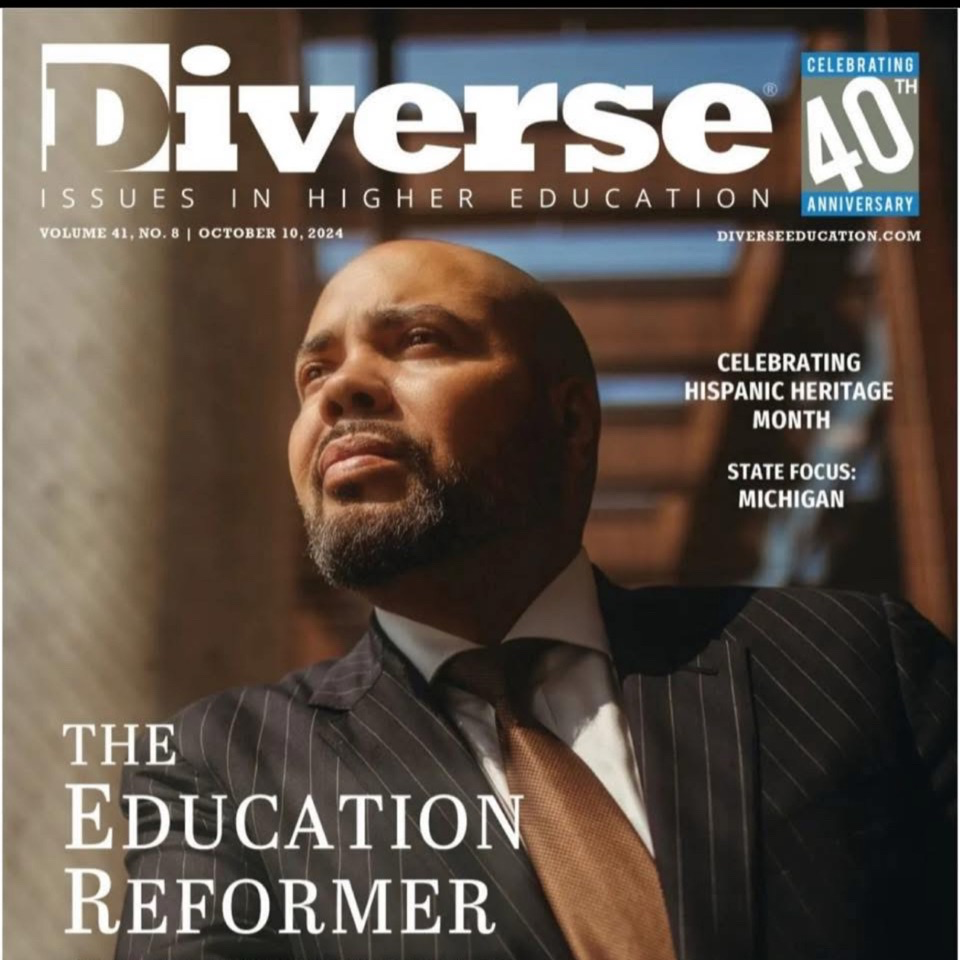
Julian Vasquez Heilig is a nationally recognized public scholar, commentator, and civil rights advocate. He has appeared on major media platforms including Democracy Now!, MSNBC, Al Jazeera, NBC News, PBS, and Univision. His media work reflects a longstanding commitment to making complex policy and leadership issues accessible, urgent, and meaningful.







Leave a comment