
There is an uncomfortable question that creeps into the mind at certain points in a career: Have I already peaked?
The internal debate can arrive after a major award. It can arrive after a title change. It can arrive after leaving a high-profile role. Maybe you won a championship. It can arrive at a certain age. It can arrive when the applause gets quieter and the calendar no longer feels as full.
I think this is what we used to call a midlife crisis. I remember my great-uncle reaching that point in life back in the 1980s. The story I was told was that he decided to buy a new family sedan. He went to the dealership intending to purchase a practical car and came home with a Camaro. Then he bought a boat. At the time, my family chuckled and said he was having a midlife crisis, but there was something deeper going on.
I believe he was asking the same question many of us eventually ask in quieter ways. Is this all there is? Is the best part behind me? Or is there still another version of life waiting for me? That question does not always show up as a sports car or a boat. Sometimes it shows up as restlessness. Sometimes it shows up as ambition. Sometimes it shows up as grief over a season that has ended.
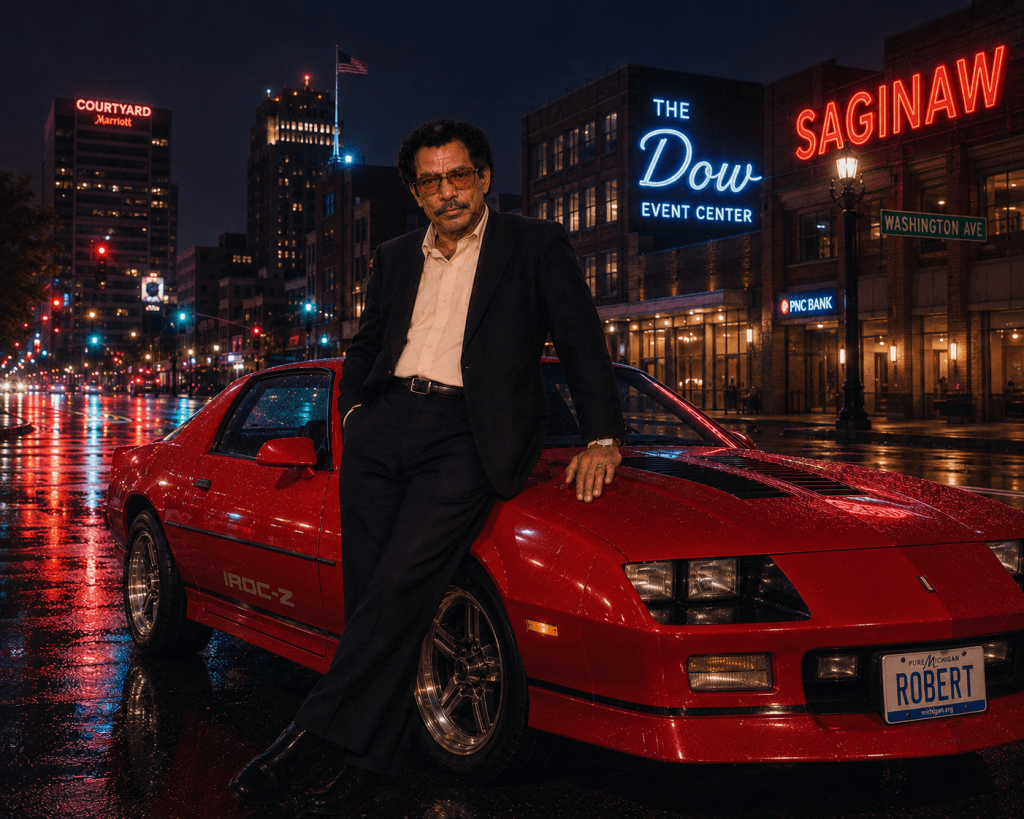
It can also arrive when you are tired. Sometimes we confuse fatigue with finality. Sometimes we think we have reached the mountaintop when we have only reached a place where we can finally see the mountain range of possibilities. That is why I have been thinking about the difference between a career peak and a career peek.
A peak suggests the highest point. It is the summit, the top, the place beyond which everything else is assumed to be decline. A peak career assumes there is one defining moment when your influence, title, visibility, or opportunity reaches its highest level. It is a familiar way to think about work because we love rankings, announcements, promotions, and the mythology of arrival.
A career peek is different. A peek suggests a glimpse of something out of view. Perhaps, what we call a career peak is actually only the vista for a career peek. The moment we thought was the top was simply a 360° view into what we are capable of going next. Seeing that possibility can change perspective for those still climbing. Many people mistake visibility for peak. They assume the season where the view is vast is automatically the season when they are doing their best work. But visibility and value are not the same thing.
Some people have the most visibility when they are least fulfilled. Some people experience the biggest accomplishment of their lives while feeling disconnected from their deeper purpose. That is why the question cannot simply be, “Was that my highest accomplishment?” The better question is, “Was that my deepest contribution?”
The Quiet After the Climb
There are many people who reach a peak such as a major role, elected office or athletic championship and then later wonder whether the best part of their professional life is behind them. A former elected official may miss the energy of public office. A retired executive may miss the intensity of high-stakes decisions. An athlete may miss the camaraderie of being the last team standing. A former CEO, superintendent, president, principal, or nonprofit leader may miss the feeling of being in the center of the action.
That feeling is real. It should not be dismissed. There is a pace to career that can become part of how people understand themselves. There is meaning in being needed, trusted, consulted, and responsible for something larger than your own work. But sometimes what people miss is not the peak itself. Sometimes they miss the noise that surrounded it. They miss the public urgency. They miss the structure that made their importance visible. They miss the constant motion, even when that motion was exhausting them.
When people are in peak roles, they often cannot talk openly about the full complexity of the work. They are not only speaking for themselves. They are representing institutions, communities, staff members, students, boards, voters, donors, families, fans, teams, colleagues and more. Every word carries weight beyond personal reflection.
That means much of what we experience in a career has to be carried quietly while we are still in the arena. We may understand the complexity of a decision, but cannot explain every piece of it publicly. We may see resistance forming, but cannot always name it in real time. We may know that change is necessary, but also know that organizations often punish the people who make the need for change visible. This is why the season after a peak role can matter so much. It can become a season with a kind of honesty that was not possible in the middle of the storm. It can become a moment to turn experience into wisdom for others.
A Politician From Houston
I was reminded of this in a conversation with a former politician from Houston. She told me she sometimes feels like she has already been at her peak. She misses the busyness, the packed schedule, and the feeling that every day placed her in the middle of something important. That kind of public life has an energy to it.
What struck me, though, was that she was not describing her current life as a failure. She was describing a transition. She is now in a role that may be less visible and perhaps less formally influential than elected office, but it still carries important meaning. She still has relationships, wisdom, access, and a voice that matters behind the scenes.
That conversation stayed with me because it highlighted the connection between a peak and a peek. In public office, she stood at a peak. People could see her influence. They could see her title. What they could not always see were the constraints that came with it. Peak roles often require careful words, strategic silence, and an awareness that every statement carries consequences.
Her current season offers something different. It provides a peek behind the curtain. She sees things that others do not. She has access to conversations, relationships, and perspectives that are less politics but still important. Yet peek roles also come with constraints. Trust, confidentiality, and responsibility mean you cannot always say everything you know.
I think she reached a peak in one form of public influence. But her current season is giving her a peek into a different kind of contribution. One that is quieter, less frantic, and still incredibly meaningful. Sometimes influence is not measured by how many people are watching. Sometimes it is measured by what you are able to see, understand, and shape when no one is watching at all.
The Journey After the Peak
This also connects to something I wrote recently in a post titled The Journey is the Reward. In that piece, I reflected on the lesson my Uncle Terry gave me years ago when he told me that “the journey is more important than the destination.” I did not fully understand it at the time, but life has a way of teaching us the meaning of words long after we first hear them. That lesson feels even more true when I think about careers, leadership, titles, transitions, and the question of whether we have already reached our peak.
I believe the peak was never the point. The title, the office, the election, the appointment, the platform, the championship trophy, or the public recognition was only part of the journey. In that earlier post, I wrote that when we get to the top of the mountain, the moment passes, but what stays with us is what it took to get there. The mornings when we did not want to get up still matter. The nights when we questioned everything still matter. The people who believed in us when we struggled to believe in ourselves still matter.
That is why the difference between a peak career and a peek career matters. A peak tells us to look backward and measure what we had. A peek invites us to look forward and imagine what is still possible. The journey is not over simply because one role ended, one season changed, or one form of visibility faded.
The Peak Preparation
Life is not always linear. The most interesting lives often move through seasons of building, leading, recovering, learning, returning, and reinventing. Some seasons are public. Some are private. Some are about formal authority. Others are about deeper freedom.
That is why “Have I peaked?” can be such a dangerous question to ask yourself. It assumes we know the full shape of our future from the limited vantage point of the present. It assumes today’s uncertainty is tomorrow’s destiny. It assumes one institution, one role, one election, one appointment, one championship, or one role gets to decide the arc of our lives.
Maybe the peak was not the title. The peak was the preparation. The office was training. The conflict was training. The pressure was training. The season you thought had diminished you was actually sharpening you for a contribution that could not have happened earlier.
A better question than “Have I peaked?” may be, “Am I still becoming?” That question opens the door to a more honest inventory. Are you still learning? Are you still curious? Are you still courageous? Are you still building something that matters? If the answer is yes, then you have not peaked. You are simply growing.
So What’s Next?
Our future is simply waiting for us in a form we do not expect. Sometimes the next chapter is not about climbing higher inside the same system. Sometimes it is about becoming freer, wiser, more courageous, and more fully yourself. Sometimes the next season of life is less about proving your value and more about discovering how much value you already carry within yourself.
We must not confuse one summit with the entire mountain range. Or confuse one closed door with the end of our purpose. We cannot confuse a lost title with a lost calling. The people who make the greatest difference in the world are often the people who kept evolving and moving forward. That may be the most hopeful truth of all. We are still here… learning… growing. We are still capable of new work… new influence… new purpose… and new joy. The mountain peak left behind may have been beautiful, but there are still horizons ahead we have not yet seen. 😀
Please share.
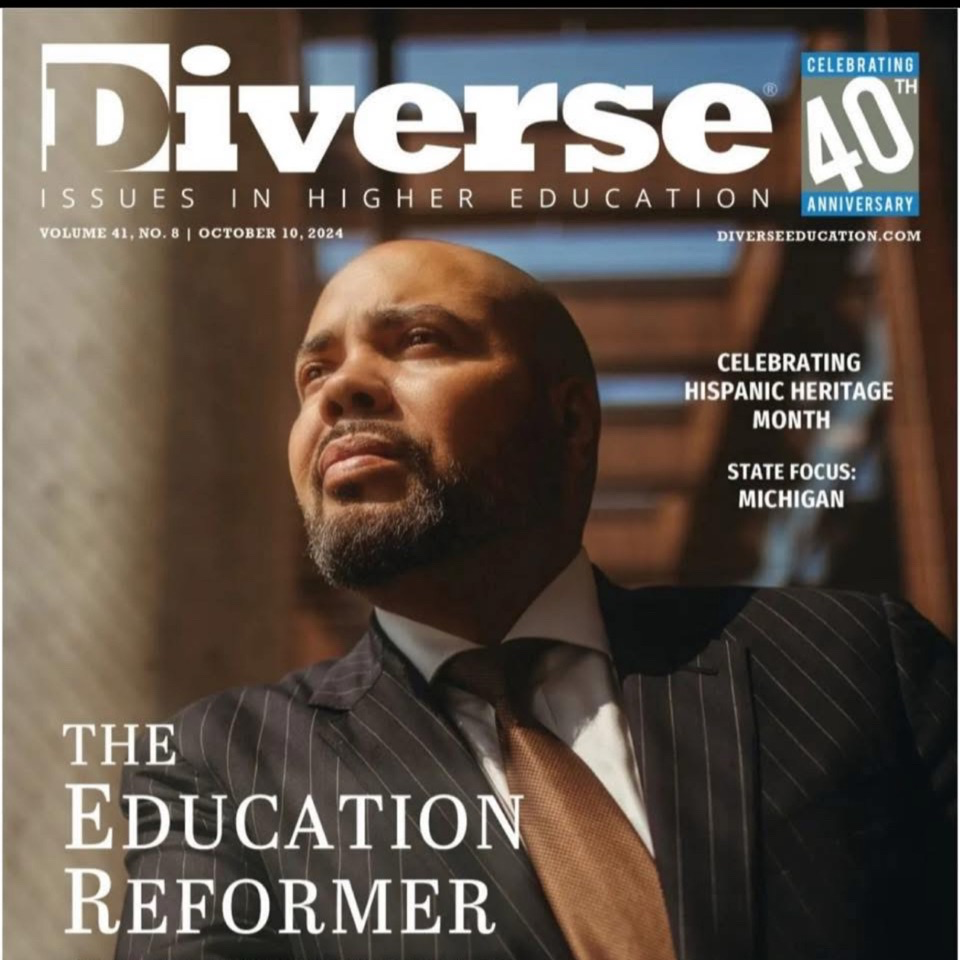
Julian Vasquez Heilig is a nationally recognized public scholar, commentator, and civil rights advocate. He has appeared on major media platforms including Democracy Now!, MSNBC, Al Jazeera, NBC News, PBS, and Univision. His media work reflects a longstanding commitment to making complex policy and leadership issues accessible, urgent, and meaningful.




Leave a Reply