The University of Texas tried to intimidate me as an untenured professor because my research challenged one of Texas’s most politically protected education policies.
That is not an exaggeration. It is what happened. Long before today’s escalating political fights over DEI, curriculum bans, and ideological loyalty in higher education, I experienced firsthand how political pressure quietly enters universities when scholarship threatens powerful interests.
It was my second year on the faculty at the University of Texas at Austin. I had co-authored a peer-reviewed article with Linda Darling-Hammond titled “Accountability Texas-Style: The Progress and Learning of Urban Minority Students in a High-Stakes Testing Context,” published in Educational Evaluation and Policy Analysis in 2008. The article critically examined Texas-style high-stakes testing accountability systems and showed that the state’s celebrated test-and-punish reforms were not actually improving educational outcomes for urban students of color. At the time, Texas testing and accountability systems were politically sacred. Criticizing them publicly was not viewed merely as scholarly disagreement. It was interpreted by Texas politicians as unacceptable perspective.
That scholarship made powerful people uncomfortable. Complaints reportedly came in to the university and my college from conservative politicians upset about the article and its conclusions. I was required to meet with my department chair and the university’s vice president for diversity regarding the publication. One faculty member described the situation to me as being “called into the principal’s office.” Fortunately, they were both fully supportive of my scholarship regardless of the attack from above.
Nobody explicitly threatened me. Nobody formally censored me. Nobody ordered me to stop researching Texas accountability policy. They did not have to. The point was to rattle my cage. The point was to remind a young, untenured faculty member of color that some research topics and perspectives would carry political consequences.
What made the experience especially revealing was how subtle the pressure was. Universities rarely begin by openly purging faculty or banning scholarship outright. Political intimidation usually starts administratively and psychologically. Institutions create uncertainty. They cultivate fear. They allow junior faculty to understand that powerful people are paying attention and are unhappy. Once that message is received, much of the censorship becomes self-imposed because faculty begin calculating political risk before pursuing certain questions.
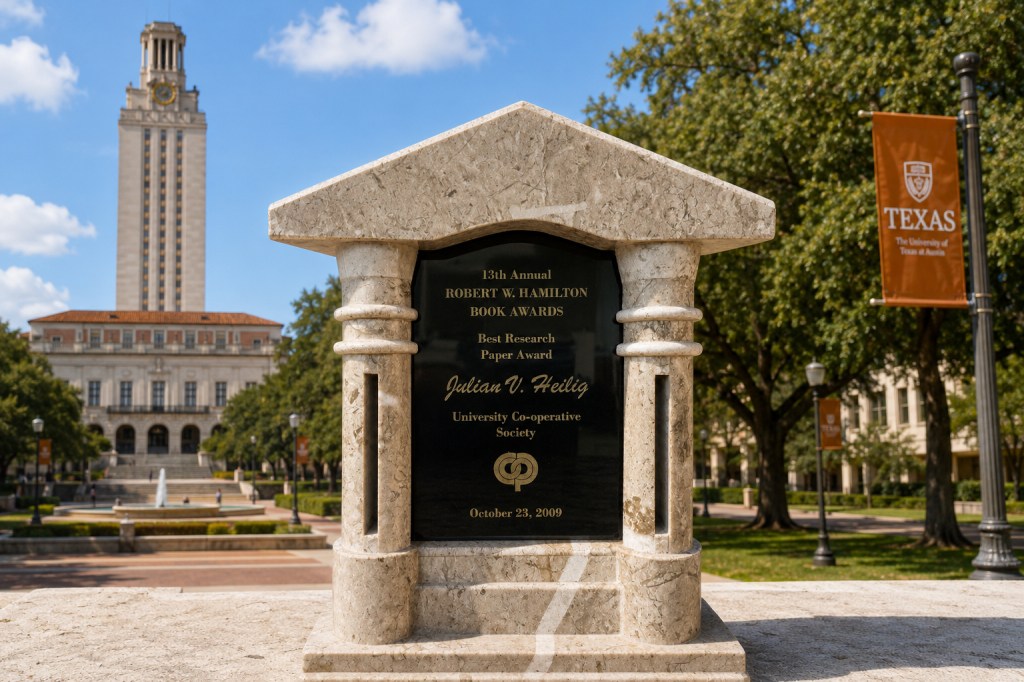
The irony is that the exact article generating political discomfort later won the 2009 University of Texas at Austin Co-op Hamilton Award for Best Research Paper. My peers reaffirmed the scholarship even after policymakers objected to it. I became the first junior faculty member, the first person of color, and the first faculty member from the College of Education to receive the award. The same scholarship that prompted institutional scrutiny was later celebrated as the university’s best research contribution. That contradiction captures the central tension now consuming higher education across America.
The New Policies Are About Much More Than Efficiency
Recently, the University of Texas System Board of Regents approved policy changes making it easier for university presidents to close programs and fire faculty. According to reporting in Inside Higher Ed, presidents can now shutter programs under vaguely defined “extraordinary circumstances” requiring “accelerated program closure due to regulatory requirements.” The revised policy also reportedly allows faculty positions to be eliminated for “bona fide academic reasons,” including “misalignment with the institution’s mission,” “failure to meet student or societal needs,” or “redundancy” with other programs.
Those phrases sound administrative and harmless on the surface. But anyone who has experienced political scrutiny inside higher education understands how vague institutional language becomes dangerous during periods of ideological conflict. Who determines what qualifies as “societal needs”? Who decides whether scholarship aligns with an institution’s “mission”? Who determines which forms of inquiry are politically acceptable? Those questions matter because history repeatedly shows that broad administrative discretion becomes highly selective when outside political pressure intensifies.
Faculty at the University of Texas at Austin are not imagining hypothetical risks. The university has already consolidated several departments associated with race, gender, sexuality, and inequality into broader administrative structures. Earlier this year, UT Austin announced that African and African Diaspora Studies, Mexican American and Latina/o Studies, Women’s, Gender and Sexuality Studies, and American Studies would all be folded into a new Department of Social and Cultural Analysis Studies. University leaders understand that organizational structure is power. Once politically targeted departments lose independent status, they often lose autonomy, visibility, hiring authority, budget leverage, and long-term institutional security.
The concern is that universities are reorganizing themselves around politics. Programs associated with race, inequality, gender, and social critique increasingly face heightened scrutiny while politically favored degree programs receive institutional expansion and financial support. To many faculty observers, the restructuring process had already begun. Texas structured the new rules in a way that allowed decisions to be framed as neutral administrative actions rather than openly political choices, even though the underlying motivations and consequences are deeply political.
Florida and Texas Are Funding Alternative Ideological Universities Inside Public Universities
Most Americans hear phrases like “civic education,” “classical learning,” or “curriculum reform” and assume universities are merely debating ideas. That framing completely misses what is actually unfolding across parts of the United States. What is happening is not a normal academic disagreement. It is a struggle over who gets to decide what counts as legitimate knowledge in a democracy. Increasingly, state governments are not simply criticizing universities. They are politically restructuring them to limit the right to learn.
At the University of Florida, nearly 500 courses reportedly lost general education eligibility after Florida’s higher education law targeted courses perceived as teaching “identity politics” or presenting systemic racism and sexism as embedded within American institutions. Women’s Studies and African American Studies courses reportedly disappeared from the approved list. Sociology courses focused on inequality reportedly no longer satisfy graduation requirements. At the same time, Florida dramatically expanded funding for the Hamilton School for Classical and Civic Education through startup funding, annual appropriations, and support for major facilities expansion.
That is not budget neutrality. It is redistribution of intellectual power. States are not merely defunding certain academic perspectives. They are simultaneously building alternative academic infrastructures centered on politically preferred interpretations of citizenship, history, governance, and democracy. In other words, they are creating ideologically favored universities within public universities themselves. Right wing intellectual frameworks are not simply being allowed to compete in the marketplace of ideas. They are increasingly receiving direct structural protection, administrative backing, financial investment, and mandatory student enrollment pipelines.
Texas is moving in similar directions. Across several Republican-led states, new “civic education” and “classical education” centers are rapidly expanding with missions centered around Western civilization and traditions. The issue is not whether those subjects deserve study. They absolutely do. Students can engage deeply with Plato, Aristotle, Locke, Madison, Tocqueville, constitutionalism, and the intellectual traditions that shaped western governance.
The problem emerges when political leaders use state power to elevate one intellectual framework while systematically weakening competing perspectives, particularly when those efforts are intentionally reframed as neutral administrative decisions rather than ideological projects, much like autocratic systems often do to conceal political control beneath the language of efficiency, order, and institutional management.
The Real Goal Is Anticipatory Conformity
What worries many faculty is not merely the possibility of a direct attack like I experienced at the University of Texas at Austin. The deeper concern is anticipatory conformity. Faculty begin asking themselves whether certain research agendas are worth the institutional risk. Junior professors become more cautious about public scholarship. Departments self-police to avoid attracting political scrutiny. Administrators increasingly calculate political optics alongside scholarly merit. Over time, entire intellectual ecosystems reorganize themselves around political incentives rather than academic discovery.
That is how freedom erodes in practice. It rarely begins with mass firings. It begins with fear. It begins with signaling. It begins with enough visible examples that faculty no longer need direct instructions to understand where the boundaries are located. Once scholars begin editing themselves before research is even conducted, formal censorship becomes unnecessary because institutional culture itself produces silence.
Ironically, the article that generated concern about me years ago has largely been validated by subsequent research and national conversations regarding the unintended consequences of high-stakes accountability systems that begat the national No Child Left Behind education law. The peer-review process worked. Scholarly debate worked. Academic inquiry worked exactly as universities claim it should. Yet the political response to the scholarship revealed how uncomfortable institutions can become when research challenges dominant policy narratives supported by powerful political interests.
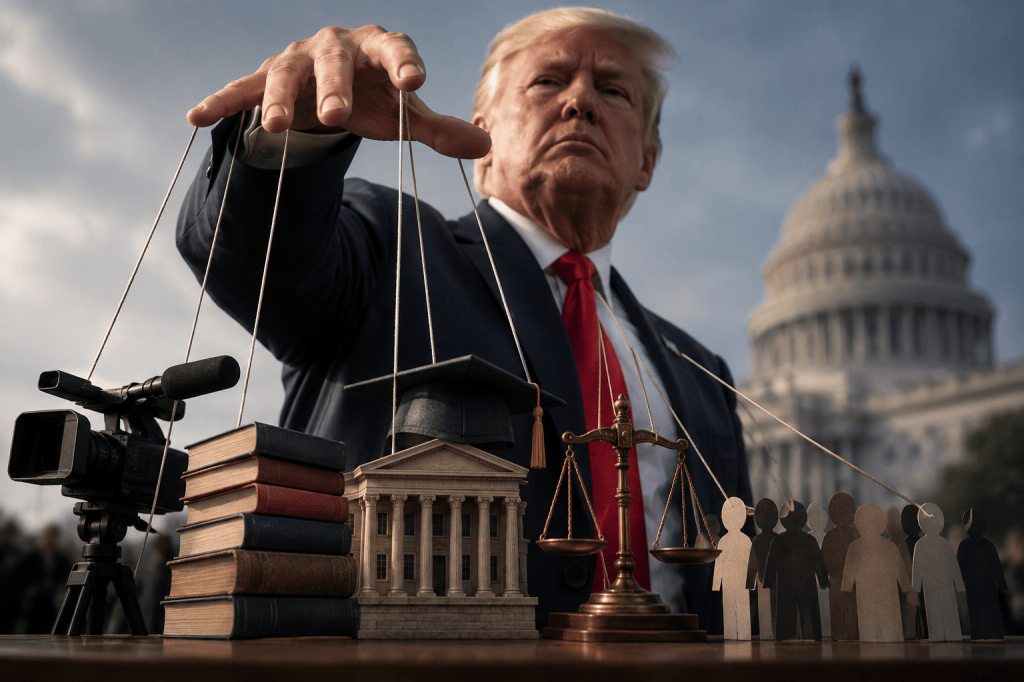
That is why this moment matters far beyond Texas or Florida. Once politicians successfully establish authority over determining which ideas deserve institutional protection and which do not, the temptation to expand that authority becomes difficult to resist. Today the targets are scholarship on race, gender, inequality, climate science, and social critique. Tomorrow it could become scholarly inquiry into labor history, economic inequality research, immigration, religion, public health, or political dissent itself. The underlying principle becomes normalized: political power determines legitimate knowledge.
Universities cannot simultaneously claim to value intellectual freedom while reorganizing themselves around ideological management. The purpose of higher education is not to protect politicians’ comfort. The purpose is to pursue inquiry, evidence, critique, and discovery even when conclusions make powerful people uncomfortable. Actually, especially when they make powerful people uncomfortable. I know because I lived through a political attack almost two decades ago at the University of Texas at Austin. What is happening now is simply much larger, more coordinated, and far more determined than before.
Please share.
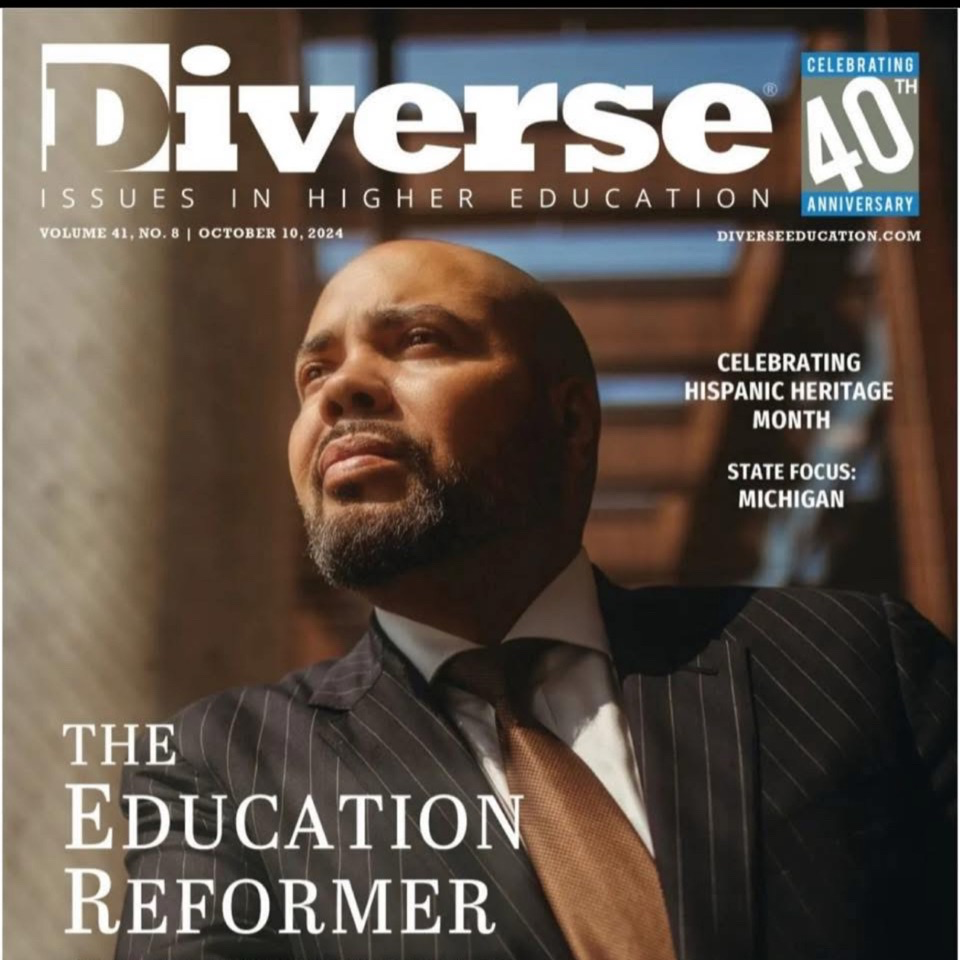
Julian Vasquez Heilig is a nationally recognized public scholar, commentator, and civil rights advocate. He has appeared on major media platforms including Democracy Now!, MSNBC, Al Jazeera, NBC News, PBS, and Univision. His media work reflects a longstanding commitment to making complex policy and leadership issues accessible, urgent, and meaningful.





Leave a comment