
It’s 2:45 am and I had to send this. Jason Arday, former Cambridge professor, is dead at forty-one.
He died before the investigations publicly concluded, before the public learned the difference between accusation and finding, and before the noise had a chance to subside. Police have described his death as unexpected but not suspicious, and its cause has not been publicly established. This article is about what should have happened in the weeks before then. This article is also about what universities, scholars, search firms, lawyers, and public spectators do to people once scandal gives everyone permission to stop seeing the human being.
Arday faced serious questions about his scholarship and public record. Those questions deserved serious investigation. Avoiding using other people’s work without credit matters because the credibility of our research depends upon it. But accountability is not the same as annihilation, and an allegation should not become a public death sentence. We have procedures in higher education because truth requires more than a pile-on.
I cannot stop thinking that there was another job for Jason Arday. There was another university, another classroom, another book, and another group of students. There was another dew-filled fall morning when his name would not have been a headline. Cambridge was a job, not the measure of his humanity and not the limit of his future. Whatever the investigations ultimately found, his life was larger than the worst accusation made against him. I should have told him that because I’ve lived attacks.
I Was Thirty-One When the University Came for Me
I know what it feels like when a university turns its machinery toward you. I was not forty-one when it happened to me. I was closer to thirty-one, a young professor at the University of Texas trying to build a career and conduct research that mattered. Administrators did not come after me because I had plagiarized or committed research misconduct. They came after me because my scholarship criticized public policy in Texas.
That distinction matters, but it did not make the experience less frightening. Universities celebrate courageous scholarship in public and regularly punish it behind closed doors. They put academic freedom in mission statements, faculty handbooks, and presidential speeches. Then someone powerful complains, an administrator becomes nervous, and the scholar suddenly becomes the problem. The institution does not have to fire you to make the message clear. It can isolate you, scrutinize you, question your judgment, and make you wonder whether telling the truth was worth the cost.
My experience was not Jason Arday’s experience. But I recognize what it means to feel the walls moving inward, and I also know what it means when people refuse to let those walls close around you. I did not have to survive that period alone. My department colleagues stood up for me, as did my department chair, Walter Bumphus, and the vice president for diversity, Greg Vincent. They knew my work, they knew my character, and they understood what was really happening. When they were required to meet with me as part of the process, we talked about golf instead. That conversation was its own form of resistance. They were telling me that the political attack would not redefine our relationship or persuade them to see me through the administration’s eyes. Their support reminds me why we must contact colleagues when the institution comes for them, because sometimes the most powerful thing we can say is, “I know you, and I am still here.”
What Really Lands on a Provost’s Desk
What happens behind the scenes at universities would shock most people. As provost at Western Michigan University, nearly half of what reached my desk consisted of problems that were not solved before they reached me. The chair did not solve the problem. The dean did not solve it. Sometimes my own team did not solve it. Then the president was calling me, and I had to figure out what had happened, who had been heard, and what policy and fairness required.
The things people did were wild. I saw conduct that would stun those who imagine universities as calm communities governed by reason, evidence, and collegiality. Faculty members harassed one another, administrators made bad decisions, nude photos were sent, and personal grievances were dressed in the language of institutional principle. People who lectured others about ethics could become remarkably flexible when their own interests were involved. People who demanded compassion for themselves could become merciless when judging somebody else.
What surprised me most was how little universities sometimes did about any of it. General counsel and other leaders often preferred delay because delay protected the institution from having to take a position. They waited for people to retire, resign, become exhausted, lose credibility, or simply go away. The subtext was patience, process, or risk management. The strategy was often attrition. Universities can wait longer than most human beings can endure.
Universities Create Grace When They Want To
Here is something else I’ve learned: universities create grace when they want to create grace. I witnessed a negative tenure vote in my own department, and the person still received tenure. The negative vote did not automatically become the final word. Someone examined the evidence, considered the context, looked beyond one decision, and found a path forward. The university decided that one adverse judgment did not have to destroy a career.
That is not necessarily institutional weakness. Sometimes it is institutional wisdom. Human beings make mistakes, committees make mistakes, and even carefully constructed procedures can produce incomplete or unfair results. Universities can slow down, reconsider evidence, seek additional information, and distinguish a correctable problem from the unforgivable offense. They can see the whole person. The real question is why they extend that grace to some people while denying it to others.
Grace becomes especially scarce when a Black scholar has been converted into a symbol. Arday was not simply a Cambridge professor. He was celebrated internationally as Cambridge’s youngest Black professor, which meant his success carried racial meaning before the allegations ever arrived. Once the story changed, the appetite for his downfall also carried racial meaning. I do not believe a person of a different demographic facing the same allegations would have generated the same international spectacle. The institution that once benefited from the laudable symbol seemed much less prepared to protect the human being trapped inside it.
Machines, Accusations, and Manufactured Certainty
We should also be much humbler about the tools used to declare academic guilt. I recently submitted my dissertation, written between 2004 and 2006, to an artificial intelligence detector. It announced that twenty percent of it had been written by AI! Unless artificial intelligence traveled backward through time to help me write my dissertation at Stanford, that result is impossible. The machine was wrong, but it delivered its conclusion with the confidence of a tech bro.
That experience would be funny if the consequences were not so serious. I have encountered similar questions with my own students, and my first response has not been to treat a software-generated percentage as a verdict. I talk with the student. I try to understand what happened. When appropriate, I engage the people in their support network so we can help them understand the seriousness of the situation and get back on the right path before initiating a formal plagiarism process. Grace does not mean ignoring misconduct. It means recognizing the difference between a mistake that can be corrected, a student who needs guidance, and deliberate deception that warrants institutional action.
I am not arguing that every plagiarism allegation is false or that academic misconduct should be excused. I am arguing that institutions must do the work. They must examine sources, context, intent, conventions, chronology, and the difference between error and deception. They must allow the accused person to see and answer the evidence. They must remember that detection software identifies possible similarities, not moral character. No machine should be allowed to turn suspicion into a verdict simply because administrators are afraid to exercise judgment and fairness.
When an Open Door Became an Attack
As provost, I maintained an open-door policy because I wanted people to believe they could bring difficult concerns directly to me. One day, a faculty member I had never met walked into my office and requested a unilateral retirement package. In exchange, she offered to sign a “nondisparagement agreement protecting the university.” I found the proposal peculiar, but she seemed pleasant and our conversation was cordial. I enjoyed meeting her, particularly because she had a history of involvement with the AAUP.
I did not dismiss her request or treat her disrespectfully. I took her proposal to the president because I wanted to determine whether such an arrangement had been requested before. He asserted that we could not unilaterally offer an individual retirement package for that purpose. The trustees would have to consider the broader implications, including whether a similar opportunity would need to be offered to others. I relayed that decision to her in writing. I told her respectfully that I lacked the authority to give her what she wanted.
About a year later, her attack came. She demanded my resignation and circulated a letter to multiple people in the administration building accusing me of hiring someone who had committed plagiarism. A hiring committee had previously gathered the available information and reviewed credentials, and I assured her that a committee process had occurred. I cannot publicly discuss confidential details or claim to know every motive behind her attack. But I learned something I will never forget. A person can smile in your office, accept your explanation, and return later with a pitchfork.
The Blacklists Nobody Admits Exist
A similar problem appeared during a staff search. The search firm told me that a particular candidate had been essentially blackballed by their firm because of a plagiarism allegation involving a journal article. I want to be precise about that word. By blackballed, I mean the firm had placed this person on a list of candidates not to interview. They screen and disqualify resumes before they even reach a committee. The accusation was not merely a concern for further investigation. It had become a hidden barrier following the candidate from search to search.
I contacted the editor of the special issue because I had known her for years. She explained that the issue simply involved a vigorous disagreement between two scholars over the article’s title and the use of a Martin Luther King Jr. quotation in the title. I was shocked. The search firm had not done that basic due diligence before placing the candidate on its blackball list. This firm was being paid tens of thousands of dollars to conduct the search. It had accepted an allegation powerful enough to damage a career without making the telephone call necessary to understand it.
I will not identify the firm publicly here, but if you see me in person, I will tell you which firm did this. I will tell you so that your university does not hire them and repeat my mistake. Hire a reputable firm such as Greenwood Asher & Associates instead. If you are on the hiring side of the table, ask a potential search firm whether it has internal do-not-hire lists, how candidates are placed on them, and whether candidates can challenge the information. If you repeatedly fail to advance in searches involving one firm, understand that an invisible accusation may be entering the room before you do. You may have been rejected before the committee ever reads your materials.
The Pitchforks Usually Come From People Who Know You
One of the things that moved me most after Arday’s death was the grace shown on social media by scholars who had experienced difficult seasons themselves. I noticed they refused to reduce his entire life to the allegations against him. I noticed they understood that accountability and humanity can occupy the same sentence. Those colleagues were not necessarily dismissing the questions surrounding his work. They were refusing to participate in the erasure of a person.
A nationally renowned scholar who experienced a “scandal” once told me that the people closest to you are often the first to arrive with pitchforks. Sometimes they resent your success. Sometimes they have been carrying a grievance you did not even know existed. Sometimes the controversy simply gives them permission to settle a score while pretending that they are defending a principle. They may know enough about you to recognize that the public story is incomplete, but instead of calling, asking a question, or offering support, they join the crowd. At some point, every colleague must decide whether to raise the pitchfork, quietly step aside while others do it, or reach toward the human being at the center.
I remember facing severe criticism online for my management of a Facebook group. Yes, the management of a Facebook group. I watched people I thought I knew criticize me mercilessly on Facebook without ever contacting me to ask what had happened. They did not know what was unfolding behind the scenes, what information I had and what competing responsibilities I was trying to manage that day. None of that uncertainty slowed them down. The public version was easier, the crowd was already assembled, and joining it apparently required less courage than calling me.
This is where scholarly community must mean more than conferences, citations, and congratulatory social media posts. Community matters most when association with someone becomes inconvenient in the moment. When the scandal comes, call your colleague. Tell them that you know who they are beyond the headline. Supporting someone does not require declaring them innocent. It requires refusing to let an allegation become their only identity.
The Email I Did Not Send
I first heard about Jason Arday’s situation last week, and I regret that I did not email him. I thought about the controversy, but I did not think urgently enough about the person. I could have told him that scandal is a season, not a life sentence. I could have told him that Cambridge was one institution and one job. I could have told him that there was still a life beyond what was happening to him.
There was another job for Jason Arday. There was another classroom in which his experience might have made him a forever teacher. There was another book he might have written about failure, pressure, redemption, and the brutal conditions under which Black scholars are expected to represent entire communities. There were students who would have understood him differently after this season. There were people who would have hired him. There was another syllabus.
We cannot send that message to Jason now. But we can send it to the next colleague before the crowd with pitchforks decides that cruelty is accountability. We can say, “I know you. I see more than this allegation. I will stand beside you while the truth is determined.” Universities will continue to protect themselves, general counsel will continue to manage risk, and search firms will continue to have a blackball list that candidates never see. Our responsibility is to stand close enough that, even when an institution tries to turn a terrible season into the final sentence of someone’s life, they can still hear us say: This is not the end of your story.
Please share.
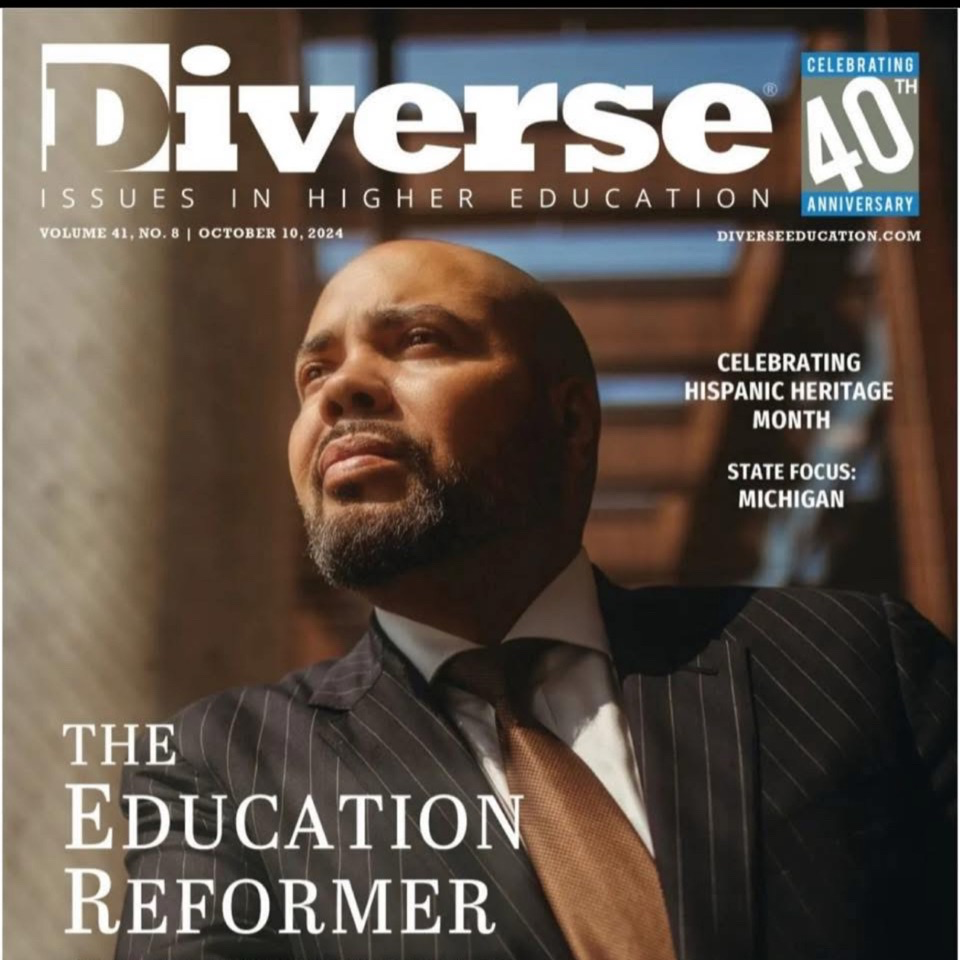
Julian Vasquez Heilig is a nationally recognized public scholar, commentator, and civil rights advocate. He has appeared on major media platforms including Democracy Now!, MSNBC, Al Jazeera, NBC News, PBS, and Univision. His media work reflects a longstanding commitment to making complex policy and leadership issues accessible, urgent, and meaningful.






Leave a comment