Have you ever spent months looking forward to something?
A vacation. A long-awaited trip. A graduation. A championship game. A reunion with people you love. You think about it constantly. You imagine how it will feel. You count down the days on the calendar. Then suddenly it arrives. Before you know it, the moment has passed and you are driving home, unpacking your suitcase, scrolling through photos, uploading to social media, and wondering where the time went.
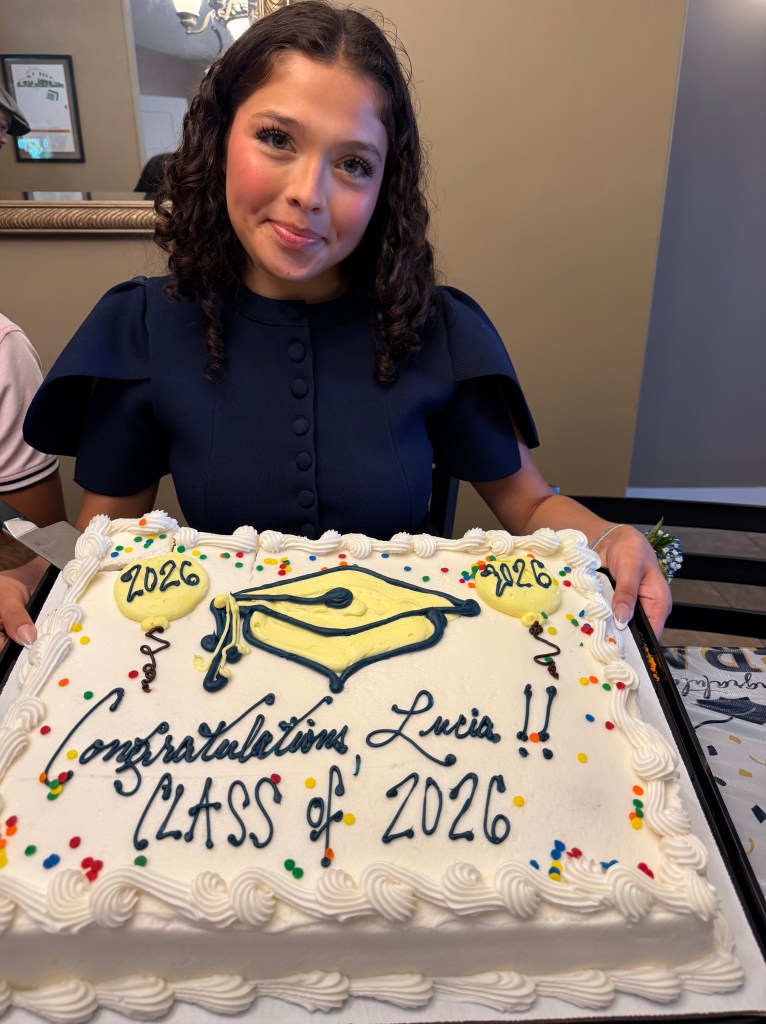
I experienced that feeling just last week at my daughter’s high school graduation. For months I had been preparing. There were invitations to send, decorations to buy, food to plan, relatives traveling from different states, and countless details that seemed important at the time. The party itself was wonderful. Friends, family, teachers, and people who had been part of her journey gathered to celebrate a milestone I had been anticipating for years. It was one of those rare days when everything seemed to come together exactly as you hoped.
Then it was over.
The next morning the tables were being folded and stacked away. Decorations came down. Leftover Mexican food was packed into containers. Guests returned to airports and highways. The Airbnb I rented became quiet again. What had occupied my thoughts and calendar for months suddenly existed only in photographs and memories. I found myself scrolling through pictures and wishing I could revisit a few moments that had passed too quickly. The anticipation that had filled my life for so long was suddenly gone.
I have always been flummoxed by that feeling. It often arrives after some of life’s happiest moments. You finally reach the destination that occupied your imagination for months, sometimes years, and discover that part of the experience was the anticipation itself. The planning mattered. The expectation mattered. The possibility mattered. When the moment ends, there is often an emptiness that follows. It is the realization that something important has now moved from the future into the past.
As Boyz II Men sang more than thirty years ago, “It’s so hard to say goodbye to yesterday.” That lyric also stayed with me this week as I attended my final board meeting of the Schott Foundation after six years of service.
Lost in Reflection
I knew this meeting was coming. It had been on my calendar for months. I knew my board term was ending. Yet knowing an ending is approaching and actually experiencing it are two very different things. The meeting itself was excellent. The conversations were thoughtful. The mission remained as compelling as ever. The future of the Schott Foundation looks bright. At one point during the meeting, I became so absorbed in reflection that I missed a vote. Someone had to bring me mentally back into the room.
I laughed when it happened, but it revealed something important about where my mind was that day. While everyone else was discussing the future of the organization, I found myself wandering through six years of memories. I was thinking about my first board meeting. I was remembering conversations that challenged my assumptions and expanded my understanding of educational justice. I was remembering people who once occupied seats around that table and whose wisdom helped shape not only the organization but my own leadership.
As I reflect afterward, I realize that important endings often create this experience. You are sitting in today’s meeting while simultaneously revisiting meetings from years ago. You are listening to new voices while remembering voices that are no longer in the room. You are focused on the future while feeling grateful for the past. The present and the past seem to occupy the same space.
The older I get, the more I realize that many meaningful chapters end this way. There is rarely a dramatic conclusion. Most endings arrive quietly. One day you simply realize that something which has been a regular part of your life has become part of your history. The realization can catch you off guard.
What Makes Schott Different
The Schott Foundation occupies a unique place in American philanthropy. They’ve understood that educational justice could not be achieved through top-down reform. The foundation invested in parents, students, community leaders, organizers, and grassroots movements. It understood that meaningful educational change must be built with communities rather than delivered to them from above. That philosophy has shaped the organization’s work for decades.
Today it is common to hear people discuss the importance of community voice. It is common to hear organizations speak about partnerships and engagement. When Schott was championing those ideas, they were far less common. Much of philanthropy operated from the assumption that expertise resided primarily within institutions. Solutions were often designed far from the communities most affected by them. The people living closest to challenges were frequently the last to be consulted.
Schott challenged that approach. The foundation has consistently elevated the wisdom of communities. It recognized that lived experience is a form of expertise. It understood that parents, students, educators, and community leaders possess knowledge that cannot be found in policy briefs or consulting reports. It encouraged philanthropy to listen more carefully and partner more authentically. It reminded the field that sustainable change requires trust, relationships, and shared ownership.
The People Around the Table
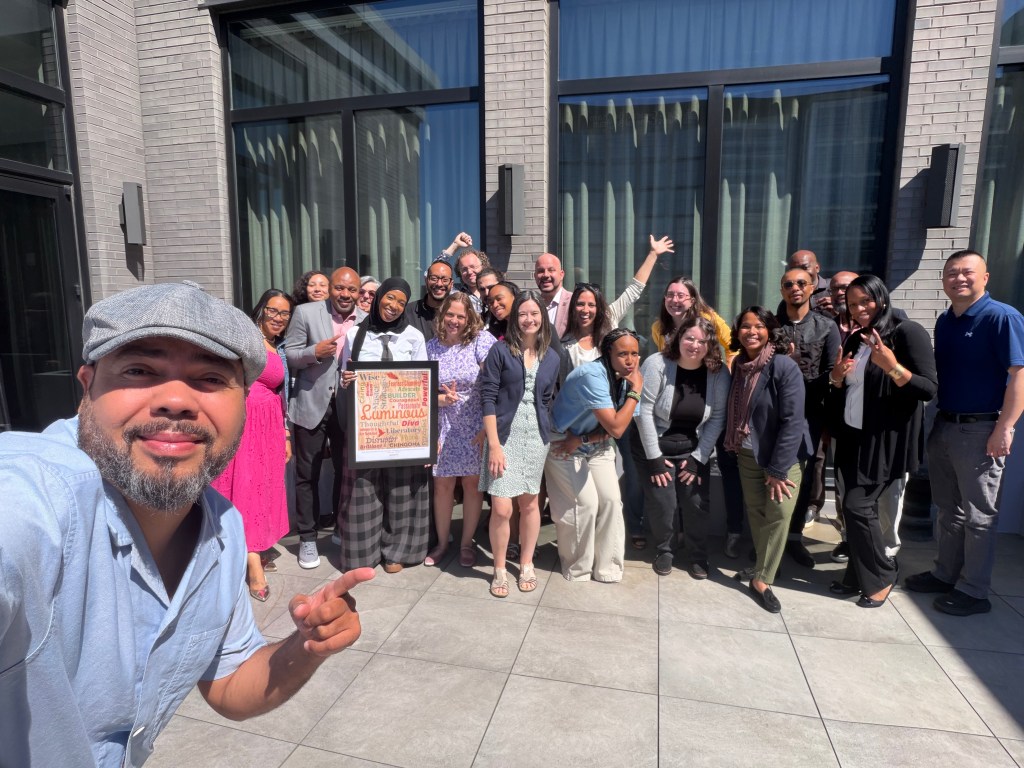
As meaningful as the mission has been, what I will remember most are the people. Board service is often viewed through the lens of governance, strategy, budgets, and organizational oversight. Those responsibilities matter. Yet the most important lessons rarely emerge from spreadsheets or board binders. They emerge from relationships. They emerge from conversations with people whose experiences differ from your own. They emerge from listening, debating, learning, and growing together over time.
Years ago, I had the privilege of serving on the board of the NEA Foundation for seven years. Sitting in my final Schott board meeting brought many of those memories rushing back. I found myself thinking about people I have not seen in years. I remembered conversations that influenced my leadership and challenged my assumptions. I remembered how much learning takes place when thoughtful people gather around a common purpose.
One of the privileges of growing older is accumulating relationships with remarkable people. One of the challenges is realizing how many of those relationships eventually become memories. Yet those memories remain valuable because they continue teaching us. I still hear certain voices when I face difficult decisions. I still remember lessons shared years ago around conference tables and during conversations between meetings. Those people remain part of my story.
Conclusion: A Gift and a Reminder
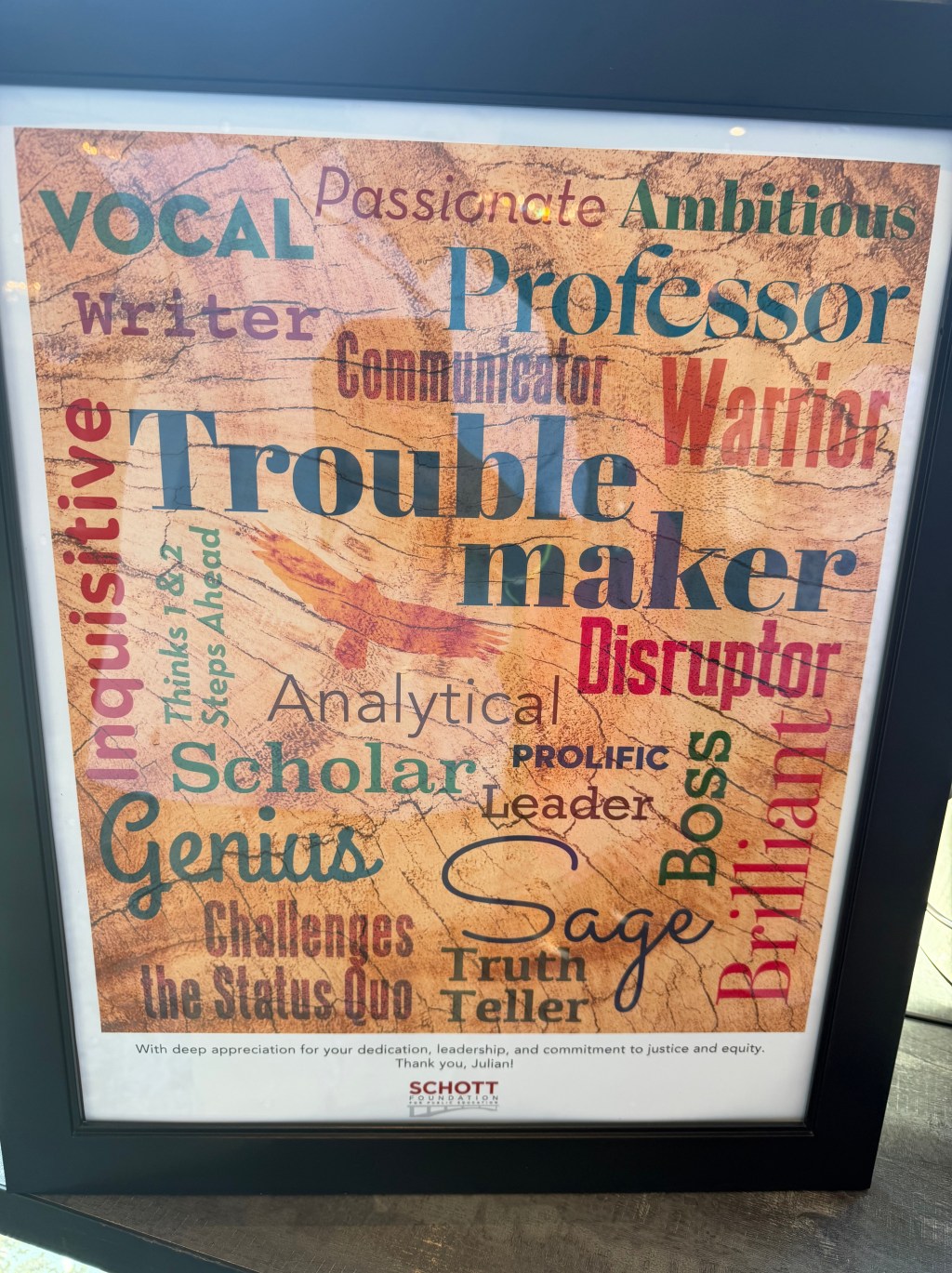
At the conclusion of the meeting, the board presented me with a framed commemorative piece recognizing my six years of service. I’ve spent a long time studying it and reflecting afterward.
Across the image were words chosen by board colleagues and friends who had shared this journey with me. Words like “Truth Teller,” “Scholar,” “Professor,” “Communicator,” “Leader,” “Warrior,” “Disruptor,” “Troublemaker,” “Brilliant,” and “Challenges the Status Quo” filled the frame. Each word represented how someone else experienced my contributions over the years. Each word reflected a relationship, a conversation, or a shared experience.
What struck me most was not any particular word. What struck me was the realization that none of us writes our own legacy alone. We may spend years focused on the next challenge, the next meeting, the next project, and the next problem to solve. But so rarely do we stop and consider how others have experienced our presence along the way. Sometimes it takes the end of a chapter for others to hand you a mirror.
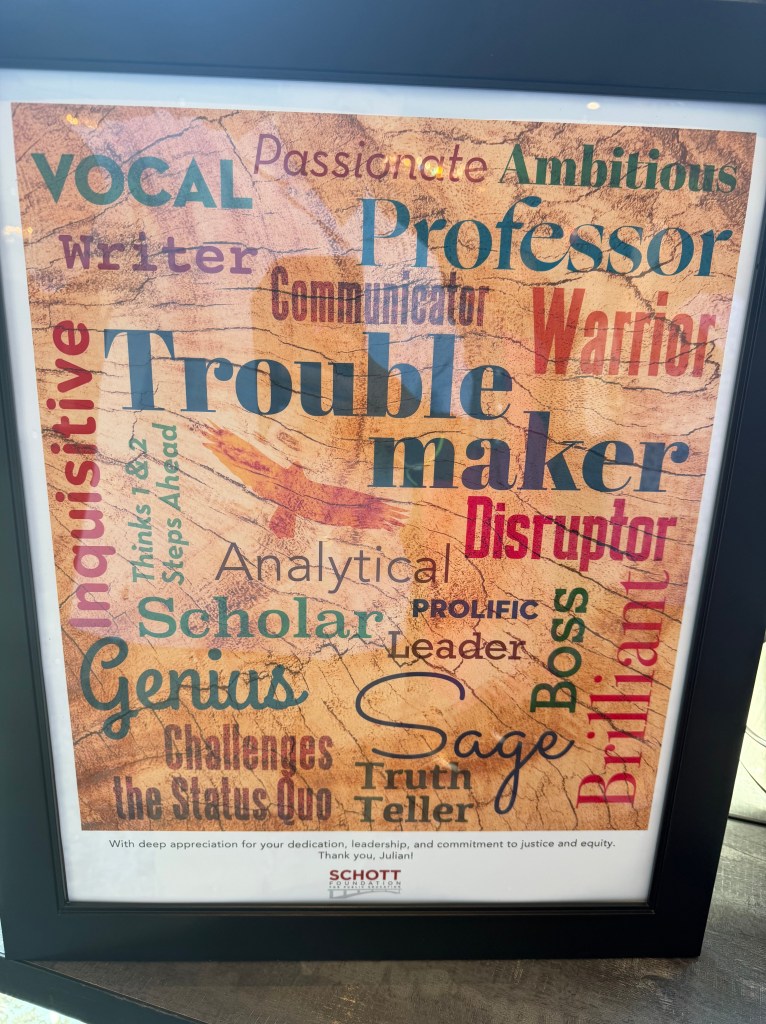
As I looked at the plaque, I thought less about the words and more about the people behind them. I thought about the conversations, the disagreements, the laughter, the learning, and the shared commitment to educational justice that brought us together. Even conversations about basketball, aliens, and investing over dinner. The gift was meaningful because it represented relationships. It represented trust. It represented six years of shared work and collective purpose.
The work matters. The mission matters. But the people matter most. Programs evolve. Board terms conclude. Meetings adjourn. Graduation parties are cleaned up. Vacations come to an end. What endures are the relationships we build, the lives we touch, and the lessons we carry forward from one chapter to the next. Long after we forget the details, we remember the moments that challenged us to think differently, encouraged us when the path was uncertain, and inspired us to become better versions of ourselves. The true measure of a life is not the milestones we achieve, but in the positive imprint we leave on others. And perhaps that is why it is so hard to say goodbye to yesterday. Yesterday is where those relationships were forged, where those lessons were learned, and where those memories were made. I proffer the best way to honor yesterday is not to hold onto it, but to carry its wisdom forward into tomorrow.
Please share.
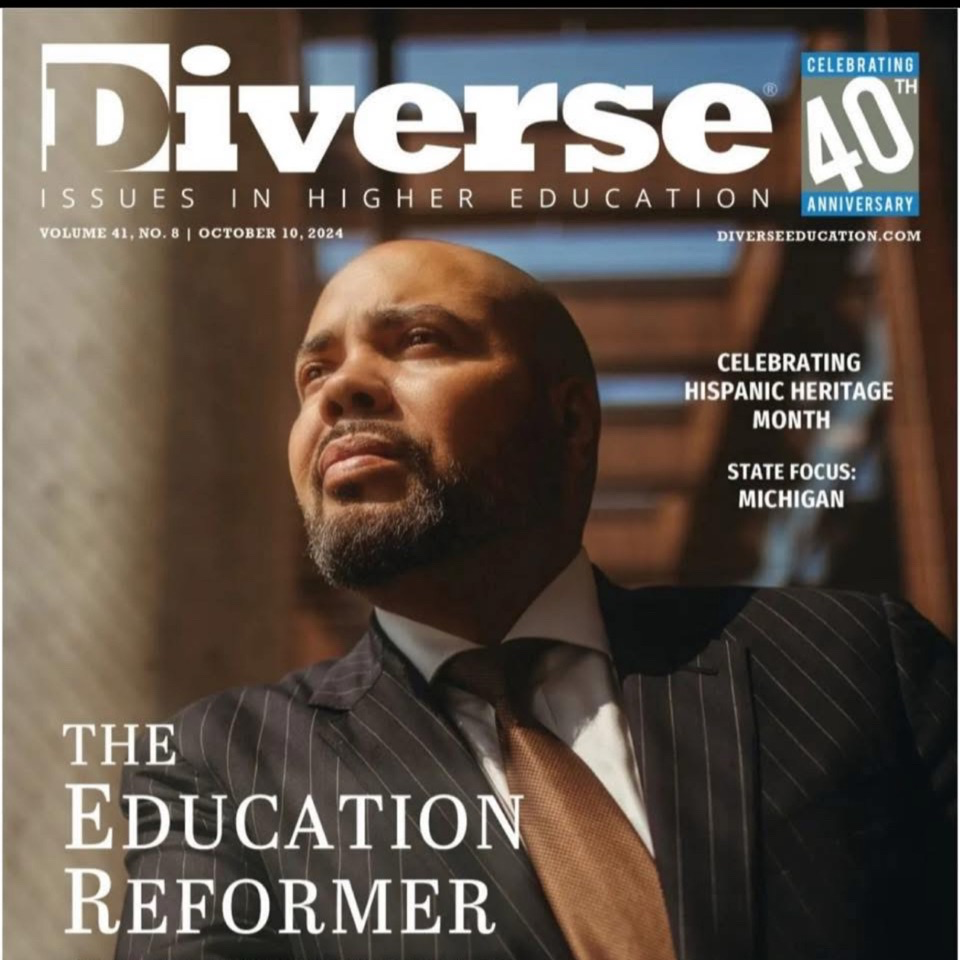
Julian Vasquez Heilig is a nationally recognized public scholar, commentator, and civil rights advocate. He has appeared on major media platforms including Democracy Now!, MSNBC, Al Jazeera, NBC News, PBS, and Univision. His media work reflects a longstanding commitment to making complex policy and leadership issues accessible, urgent, and meaningful.




Leave a Reply