Gillian Hayes recently wrote an essay titled “On Leading People Who Don’t Want to Be Led,” for Inside Higher Ed and much of it resonated deeply with my own experiences in leadership over the past 20 years. But I also think the issue she describes extends far beyond educational institutions. In many ways, higher education simply exposes more visibly a contradiction entrenched across much of American industries and life.
Universities are unusual organizations because faculty governance makes tension unavoidable and public. The ongoing conflict between leadership, autonomy, institutional direction, and organizational survival plays out behind the scenes and openly in meetings, senates, strategic plans, committees, and governance structures. But versions of this same conflict also exists across schools, hospitals, nonprofits, corporations, media organizations, government agencies and more.
Purpose, Pressure, and Institutional Reality
Many organizations today say they want innovation, creativity, collaboration, and entrepreneurial thinking. They seek highly educated, mission-driven leaders and tell them their expertise matters. But when it comes time to hire a leader, they usually opt for “safe” managers who operate through compliance systems, metrics, liability management, procedural oversight, dashboards, consultants, and centralized administrative structures. The result is that many professionals feel disconnected from the work they originally imagined themselves doing because they are managed rather than truly led.
That is especially true in education. Many educators entered the profession because they wanted to shape lives, mentor students, create knowledge, strengthen communities, and contribute to society. Professors imagined scholarship and intellectual discovery. Teachers imagined inspiring young people. School leaders imagined building cultures of learning and opportunity. Yet many now spend enormous amounts of time navigating compliance systems, reporting structures, technological platforms, assessment mechanisms, reimbursement procedures, accreditation documentation, politics and much more.
And I think that emotional disconnect matters more than many Americans realize. People can often tolerate difficult work when they feel connected to purpose. What becomes psychologically exhausting is not simply workload itself, but the feeling that your daily reality no longer resembles the professional identity that brought you into your career in the first place. I believe that is one main reasons why morale has deteriorated across so many American institutions.
At the same time, I also understand the pressures leaders face because I have sat in those rooms. Presidents, provosts, deans, superintendents, and cabinet members et al. are operating under immense pressure from boards, legislators, accreditors, donors, political actors, rankings systems, enrollment realities, financial constraints, lawsuits, public scrutiny, and rapidly changing social expectations. In many cases, leadership teams feel enormous urgency to move institutions in their desired directions because they believe their jobs and institutional survival depends on it.
Direction, Resistance, and Trust
That is where the contradiction begins. For example, educators will often say institutions lack direction, urgency, or coherence. Conversations emerge criticizing leadership drift, weak decision-making, bureaucratic paralysis, problematic financial priorities, or the inability to adapt to changing realities. But then something predictable happens. The moment leaders establish strategic direction, especially if employees believe they were not truly involved in shaping it, resistance intensifies rapidly. The conversation shifts almost overnight. What was once criticism about a lack of leadership becomes criticism about centralized control, managerialism, top-down governance, or predetermined agendas disguised as collaboration.
I have seen this cycle repeatedly. Listening tours happen. Consultants are hired and paid millions. Surveys are conducted. Strategic planning sessions are held. Faculty and staff provide feedback. Reports are produced. Yet many employees quietly conclude that leadership ultimately intended to pursue many of the same priorities from the beginning anyway. Even when leaders genuinely believe or pretend they are listening, people often feel consultation has become performative rather than transformative. That perception becomes incredibly damaging because trust is the real currency of institutional leadership.
Going back to the higher education example, once employees believe decisions are already made before consultation begins, cynicism grows quickly. People stop seeing governance processes as authentic opportunities for shared problem-solving and instead begin viewing them as mechanisms designed to legitimize predetermined outcomes. And honestly, many leaders underestimate how much institutional memory shapes these reactions.
Faculty remain while administrators cycle through institutions. Professors, teachers, and long-term staff have watched decades of strategic plans, consultants, branding initiatives, reorganizations, task forces, leadership slogans, banners on buildings, and “transformational visions” come and go. They have seen presidents, provosts, deans, and executives arrive with urgency and certainty only to leave just a few years or months later, voluntarily or involuntarily (e.g. Ohio State).
That permanence fundamentally changes the balance of power. Educators and staff know they are the enduring institution. Administrators are temporary. The faculty senate, departments, disciplines, and institutional culture will likely outlast the current leadership team. That reality shapes how people interpret change initiatives whether we openly acknowledged or not.
So leaders frequently discover they possess responsibility without complete or actual authority. Meanwhile, employees often possess substantial cultural and institutional power without formal executive responsibility. As they should. That dynamic creates enormous frustration on both sides. Employees may view leadership as disconnected, managerial, or dismissive. Leaders may quietly view employees as resistant to change, impossible to align, or unwilling to acknowledge organizational realities. For example, I have heard many disturbing conversations in executive administrative circles where faculty are described as obstacles to progress or people who “don’t do anything.” But those false characterizations are contrasted by a much more honest truth.
Universities function because faculty possess intellectual independence. The same professors who may question or resist the latest administrative initiative are also mentoring students, producing scholarship, protecting academic standards, securing grants, building institutional reputation, and sustaining the university’s intellectual credibility. Their independence can create friction, but that friction is not a flaw in the system. It is one of the safeguards that prevents universities from becoming purely managerial, business-like enterprises driven only by efficiency, branding, and control.
Being Overmanaged and Underled
This contradiction exists beyond academia. Across American organizations, there is growing tension between professional autonomy and institutional control. Physicians feel increasingly constrained by healthcare systems. Journalists navigate politics, corporate pressures, and audience metrics. Nonprofit leaders face endless reporting requirements tied to funding. Teachers operate under expanding accountability systems. Even many corporate professionals experience growing layers of oversight, compliance, and procedural management.
In many sectors, people feel simultaneously overmanaged and underled at the same time. There are endless processes, dashboards, consultants, assessments, and accountability systems, yet employees still feel unseen, unheard, and disconnected from institutional purpose. Organizations talk constantly about innovation and collaboration while structurally rewarding caution, risk management, internal competition, and procedural compliance.
I also think there is something uniquely American about this tension. Our culture celebrates independence, free thought, entrepreneurialism, skepticism toward authority, and individual expression. Yet modern institutions increasingly depend on standardization, scalability, bureaucracy, legal protection, data management, and centralized coordination. Those two forces are now colliding constantly.
Americans want institutions to be efficient but also humane.
They want leadership but resist control.
They want accountability but dislike surveillance.
They want innovation but fear instability.
They want collaboration but also autonomy.
Most organizations are now trying to satisfy all of those competing demands simultaneously. That is why leadership turnover has become so intense across sectors.
Presidents are jettisoned.
Provosts are jettisoned.
Deans are jettisoned.
Superintendents are jettisoned.
CEOs are jettisoned.
But the deeper institutional culture often remains largely unchanged. The real issue is not simply whether leaders are competent or incompetent. It is that many modern institutions are operating inside structural contradictions that no single leader can fully resolve.
And perhaps that is why so many professionals today feel emotionally exhausted. The fatigue is not only about workload. It is about meaning. It is about the growing gap between cultural and historical context, the human purpose people sought in their professions, and the increasingly bureaucratic systems through which that work must now operate. Universities simply make this contradiction more visible because faculty governance institutionalizes dissent instead of hiding it like we see in other careers. But I argue the tension itself has become deeply woven into modern organizational life.
Conclusion: Democracy, Leadership, and the Work Ahead
The challenge is no longer simply about leading people who “do not want to be led.” The deeper challenge is how institutions preserve human purpose, autonomy, trust, and creativity while still functioning effectively inside environments increasingly driven by compliance, speed, metrics, politics, and organizational survival. It is one of the defining leadership challenges of our time, and also one of the oldest American tensions. Democracy was never meant to be clean, quiet, or convenient. It was built on the idea of government of the people, by the people, and for the people, but even that promise was born in contradiction. The same nation that celebrated dumping tea into Boston Harbor in defiance of distant power also protected the freedom of some while denying the humanity of others through slavery. The same political tradition that rejected kings also built institutions where too many people were expected to obey decisions made far above them.
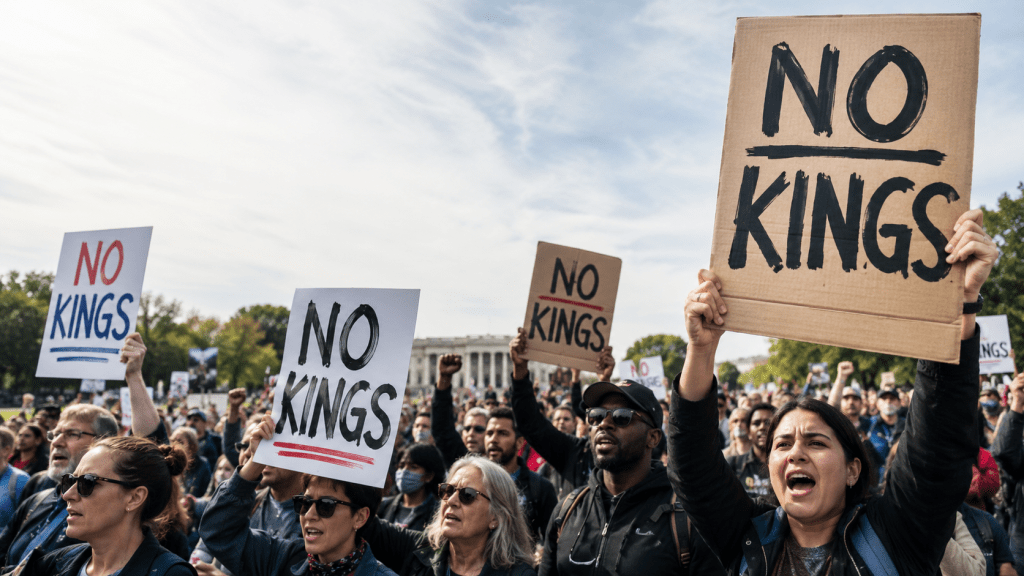
That contradiction still lives inside many of our organizations. People want direction, but they also want voice. They want leadership, but they do not want rule by decree. They want change, but they resist being treated as obstacles to someone else’s agenda. They want institutions to work, but they also want those institutions to remember that human beings are not widgets, data points, or compliance units. That is why the “No Kings” protests resonate far beyond politics. They are a reminder that people eventually resist when power becomes too dictatorial, too arrogant, too performative, or too certain of itself. Whether in government, universities, schools, corporations, nonprofits, or public agencies, leadership that forgets the people will eventually lose the people.
The inspiring possibility is that institutions do not have to choose between effectiveness and democracy. They can move with purpose while still listening deeply. They can make decisions while still honoring participation. They can lead change while still respecting the intelligence, dignity, and lived experience of the people asked to carry that change forward. The best leaders are not kings. They are community-driven. They do not confuse authority with wisdom or consultation with consent. They understand that people are more likely to follow a direction they helped shape, and they know that trust is not built through slogans, listening tours, or consultant reports. Trust is built when people see that their voices actually mattered before the decision was made. That is the work ahead: not performative strategy statements, not leaderless drift, and not top-down certainty disguised as vision. The future belongs to leaders and institutions courageous enough to practice shared purpose in a time of fear, humility in a time of ego, and democratic leadership in a time when too many people are still charmed by wanna be kings.
Please share.
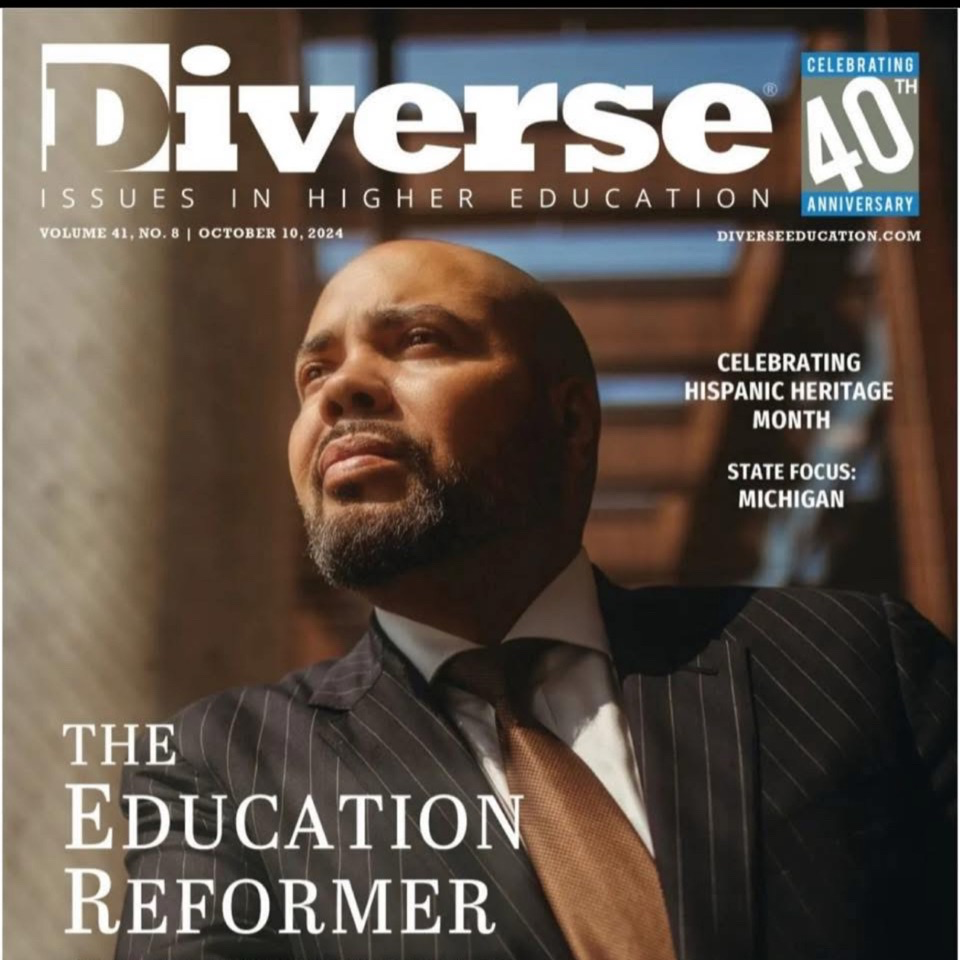
Julian Vasquez Heilig is a nationally recognized public scholar, commentator, and civil rights advocate. He has appeared on major media platforms including Democracy Now!, MSNBC, Al Jazeera, NBC News, PBS, and Univision. His media work reflects a longstanding commitment to making complex policy and leadership issues accessible, urgent, and meaningful.




Leave a Reply