There are moments in American history when a legal decision does not feel like a technical adjustment but like a rupture. This latest Supreme Court ruling limiting the 1965 Voting Rights Act lands in that space. It is not neutral. It is not incremental. It’s power being taken back. The elimination of representation of Black Americans in Congress from Red States is the impending consequence. So for many Black Americans, it is not simply legal interpretation, it is the purposeful erosion of their representation in democracy itself. This kind of attack carries a long memory for Black Americans and is a stark present reminder of this nation’s sordid history.
That is why Eddie Glaude Jr. did not respond last week with detached analysis on MSNOW. He responded with anger. Not performative anger, but the kind that comes from historical awareness and lived experience. He spoke about trying to stay calm and failing to do so. That moment matters because it reveals what policy debates try to hide. Voting rights are not abstract. They are tied to our ancestors, to risk, and to people who died trying to participate in a democracy that did not recognize them.
When the latest Supreme Court decision overturns precedent but swears its not, destroying protections, it does not simply change legal standards. It reopens wounds in the Black community that have never fully healed. It forces Black communities to confront the possibility that what was won through sacrifice can be taken back through new legal interpretation. That is not just legal. That is existential.
Playing Fast and Loose with the Dead
Glaude’s most powerful critique was not about doctrine. It was about memory. He argued that decisions like this treat the sacrifices of the past as expendable. He pointed to those who were lynched, murdered, and brutalized for attempting to vote in the United States, especially in the South, where the history of that violence is not that distant. It involves the martyrs of democracy still enveloped by the landscape.
This is where the critique sharpens into something unavoidable. Each narrowing of voting protections in the law by the Supreme Court is not simply about procedure. It is about whether the country takes seriously the cost that was paid to expand those rights. It is about the Court clearly understanding that it is not just interpreting law. It is reshaping access to politics for Black Americans in a country where access has always been contested by race.
Neutrality is an unsustainable argument in that context. Neutrality assumes a level playing field. American history tells a different story. The struggle for voting rights was never neutral, it was painful, and the consequences of weakening those rights are not neutral either. They are targeted. They are predictable. They are structural.
The Myth of Democratic Stability
There is a persistent story in America that suggests democracy is stable and self correcting because of the rule of law and the Constitution. It is a comforting narrative because it allows governmental institutions to be seen as reliable and fair, even when they are not. Glaude rejects that story directly. He reminds us that the United States has only functioned as a meaningful democracy for a short period of time, beginning with the Voting Rights Act of 1965.
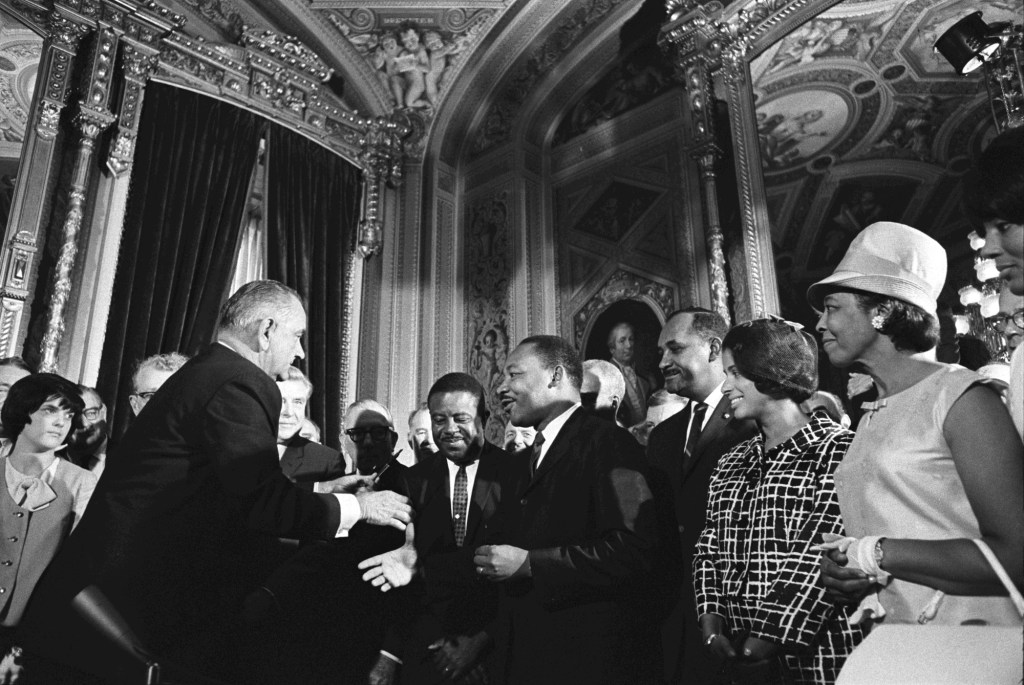
American history is marked by resistance and rollback. The Constitution promised liberty but excluded most. The Civil War amendments attempted to redefine citizenship but were quickly narrowed by the Supreme Court. Reconstruction created possibility, then it was dismantled too. Each expansion has been followed by contraction. This decision fits squarely within the American pattern. It is not a break from history. It is history repeating itself.
What makes this moment more dangerous is how easily the language of progress hides that pattern. The Supreme Court’s idea of a post-racial society collapses when examined against current conditions. Glaude’s point is not theoretical. It is empirical. The structures of race still shape outcomes in this country, and pretending otherwise only protects those structures from our scrutiny.
Exhaustion and the Demand to Fight Again
There is an emotional cost to this repetition. Glaude named it without hesitation. It is exhausting to watch rights be taken back and then to be told to organize again. That exhaustion is not weakness. It is the rational response to a system that demands repeated sacrifice from the same historically marginalized communities.
The deeper issue is what that expectation reveals. It shows that democracy is not equally shared. It suggests that some communities are expected to defend it while others benefit from it without the same level of responsibility and risk. That imbalance is not accidental. It is part of how American power has always sustained itself.
But exhaustion has never meant surrender. History shows the opposite. When access is threatened, organizing intensifies. When participation is restricted, new pathways are created by communities. The question is not whether people will respond. The question is how much more they have to give in order to secure what should not be in question.
Where Representation Will Be Rebuilt
In moments like this, communities turn to institutions that have carried this burden before. The NAACP and civil rights organizations remain central. They bring legal expertise, organizing capacity, and historical memory. They understand that these moments are not isolated. They are part of a larger struggle that requires coordinated response.
Labor unions also become critical in this space. They connect economic justice with democratic participation. They create coalitions that extend beyond single issues. When formal political structures narrow, these alliances expand the terrain of power.
At the same time, voter mobilization becomes more urgent. When access is threatened, participation often increases. Registration drives, community education, and grassroots organizing become necessary tools. This is not symbolic. It is strategic. It is how communities assert presence in a system that repeatedly attempts to limit it.
A Nation Dividing Its Own Rules
The response at the state level also reveals something important about how this moment is unfolding across the country. In states like California, leaders such as Gavin Newsom have explored ways to counterbalance redistricting efforts by placing new maps before voters. Similarly, Virginia has engaged in processes that emphasize broader public participation in how districts are drawn. These approaches reflect an effort to expand democratic input even in the face of national retrenchment.
In contrast, states like Florida and Texas have pursued power-based legislative redistricting strategies without direct voter approval. Maps have been drawn and enacted through political processes in state legislatures. That difference between Red States and Blue State iss not procedural. It is philosophical. It reflects fundamentally different ideas between the right wing and the left wing about who should have a voice in shaping representation.
What is now unfolding in Louisiana, Alabama, and Tennessee is not a cautious or deliberative response to the Supreme Court ruling. It is a rapid effort to redraw the political map in ways that disproportionately weaken Black voting power and political representation. In Alabama and Tennessee, governors are moving immediately to initiate redistricting processes, with Bill Lee calling a special legislative session to accelerate map changes just months before a primary election. In Louisiana, Governor Jeff Landry declared an election-related state of emergency on April 30, 2026, suspending the May 16, 2026, elections in order to facilitate redistricting changes. These actions are not race-neutral in their impact. They occur in states with long histories of contested Black representation and are directed at districts where Black voters have been able to elect candidates of their choice. The speed, timing, and targets of these efforts point to a clear pattern: the use of legal and procedural tools to reduce Black electoral influence and reshape political power along racial lines.
The Work Ahead
What we are witnessing is not just a legal shift. It is a stripping away of illusion. The belief that institutions and the Constitution will reliably protect American democracy has been exposed. What remains is a clearer and more uncomfortable understanding of how this system actually operates when power is contested and accountability is uneven.
There is no neutral ground in this moment. Policies that restrict voting rights and Black political representation are not accidental. They are purposeful choices by right wing politicians. They produce outcomes that are predictable and unequal by race. Describing them as routine partisanship softens what is actually happening and shields those choices from scrutiny. If the impact is consistently one-sided, then the language used to describe it should not pretend otherwise.
I believe there is also a strategic miscalculation embedded in the belief that weakening Black political representation will secure long-term power for the right wing in American politics. History shows a different pattern. Suppression has consistently produced resistance. It has produced organizing that is more adaptive, more networked, and more durable over time. Efforts to reduce representation have rarely eliminated political engagement. They have often intensified it and reshaped it in ways that are harder to control.
At the same time, the broader public is being pulled into a moment of visibility. Right wing ideas that once existed at the level of rhetoric are now being implemented through legal decisions and policy. That shift changes how they are understood. People are no longer evaluating abstract positions. They are evaluating lived consequences. They see who is affected. They see what is limited. They see how systems change in real time.
As that visibility increases, distractions begin to lose their hold. Culture war arguments and symbolic conflicts carry less weight when confronted with the material outcomes in American’s lives. What remains is the negative impact of bad ideas. That reality forces a different kind of political and civic evaluation for voters.
Conclusion
For me, this moment is not abstract. My family history is tied to the fight for access to the ballot. My ancestors fought in the Civil War and the World Wars. They struggled, organized, and risked everything during the Civil Rights Movement in a country that denied them full participation. So watching voting rights protections weakened again is not distant or theoretical. It is personal.
But that connection does more than create pain. It creates purpose. It brings a level of clarity that no New York Times headline or CNN roundtable commentary can replicate. It sharpens focus, removes distance, and makes the stakes undeniable. And history reminds us of something equally important. Every time rights have been challenged, people have risen to meet the moment. Not because it was easy, but because it was necessary.
That same resolve lives on. The story is not only about what is being taken. It is about what will be rebuilt, defended, and reimagined by those who refuse to let the promise of democracy fade for everyone, regardless of what the American right wing does.
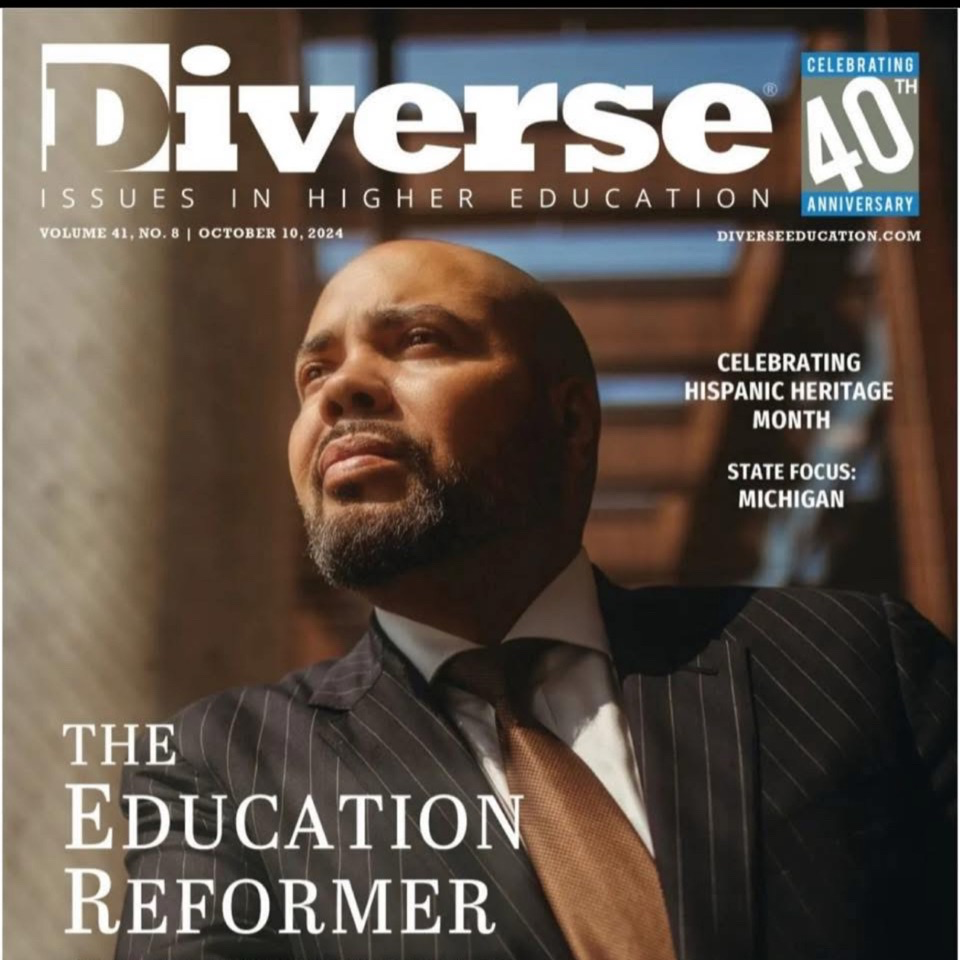
Julian Vasquez Heilig is a nationally recognized public scholar, commentator, and civil rights advocate. He has appeared on major media platforms including Democracy Now!, MSNBC, Al Jazeera, NBC News, PBS, and Univision. His media work reflects a longstanding commitment to making complex policy issues accessible, urgent, and meaningful for the public.





Leave a comment