
Every hiring decision places power in someone’s hands.
Across nearly every field, organizations are preparing to hire the colleagues and leaders who will shape their future. Job descriptions are being written, search committees are being formed, and interview questions are being developed. In higher education, this cycle becomes especially visible in the late summer and fall as faculty return to campus and institutions prepare for searches that will unfold over the coming months.
Yet these decisions are about more than credentials, experience, and accomplishment. Every hiring decision is also a decision about power: who will have it, how they will exercise it, and whose interests they will serve.
In the current political moment, we spend a great deal of time talking about power. Political campaigns revolve around it. Universities debate it. Corporations compete for it. Social movements seek it. Yet I have increasingly come to believe that the most important question is not simply who has power. The more important question is: What does someone want the power to do?
As we write job descriptions and develop interview questions, that question should become one of our most important selection criteria. We should ask not only whether candidates are qualified to hold a position, but what they hope to accomplish with the authority, influence, and responsibility that come with it.
Power Tells Us Who Can Act. Purpose Tells Us Why.
Scholars have long debated what power means. Sociologist Max Weber described power as the ability to carry out one’s will even in the face of resistance. Political scientist Robert Dahl similarly understood power as a relationship in which one actor can influence what another does. Steven Lukes expanded the concept further, arguing that power also operates by determining which issues reach the agenda and shaping what people come to see as possible, normal, or desirable.
These definitions help us identify where power resides and how it operates. But they do not fully answer the moral question at the center of leadership: What is the power for? Power is a tool. A tool can be used for many purposes. The same authority can expand opportunity or restrict it. The same influence can strengthen institutions or weaken them. The same office can be used to open doors for others or close ranks around the people who already possess access.
Psychologist David McClelland offered a particularly useful distinction between personalized and socialized power. Personalized power is directed toward status, control, and personal advancement. Socialized power is directed toward accomplishing shared goals and benefiting an institution or community.
Later research has found that these different motivations can lead to very different decisions. Personalized power is more likely to produce self-serving choices, while prosocial power motivation is associated with concern for others and more constructive leadership. The distinction reinforces a simple idea: Understanding power requires us to examine purpose, not merely possession.
History offers countless examples of people who sought power for different reasons. Some wanted to improve the lives of others. Some wanted to preserve existing arrangements. Some wanted to create new opportunities. Some wanted to maintain control. Motivations matter because they shape outcomes. What humans value influences what they prioritize. What they prioritize influences what they measure. What they measure influences what they reward. What they reward ultimately shapes institutions and communities.
Humans therefore reveal their actual values not only through words, but through budgets, appointments, incentives, measurements, the problems they decide deserve attention and the results they deliver.
Why I Became a Dean and Provost
My own answer to the power question shaped why I became a dean and later a provost. I did not pursue those positions because I was fascinated by titles or stress. I did not accept the offers of employment because they offered prestige or additional compensation. I pursued them because they provided an opportunity to change outcomes for communities at a larger scale.
As a professor, I could interface the students in my classroom. As a dean, I could interface with an entire college. As a provost, I could help shape priorities across an entire university. The attraction was never authority for its own sake. The attraction was the possibility of creating opportunities that otherwise might not exist and helping institutions better serve students and communities.
This understanding aligns with James MacGregor Burns’s distinction between transactional and transforming leadership. Transactional leadership focuses largely on quid pro quo exchanges, compliance, and organizational maintenance. Transforming leadership connects the exercise of authority to a larger values-based purpose and seeks to elevate both leaders and the people they serve.
Educational leadership scholars have developed this idea further. Carolyn Shields argues that transformative leadership must confront inequitable practices and connect institutional improvement to democracy, justice, and the public good. George Theoharis’s research shows that educational leaders committed to social justice do more than express inclusive values. They change priorities, practices, curriculum, and institutional culture, often while encountering substantial resistance. Muhammad Khalifa, Mark Gooden, and James Earl Davis similarly argue that culturally responsive leadership requires critical self-awareness, inclusive school environments, community advocacy, and a willingness to challenge systems that marginalize students.
That answer shaped the choices I made as a dean and provost.
At the University of Kentucky, we focused on expanding access, increasing enrollment, recruiting talented faculty, strengthening research, and preparing more educators. Applications increased dramatically. Enrollment grew. Faculty diversity expanded. Those outcomes were not incidental. They reflected decisions about where to direct attention, resources, and institutional authority.
At Western Michigan University, the priorities remained similar. We focused on student success, retention, graduation, access, and affordability. We invested in systems designed to help students navigate the institution more effectively. Enrollment increased, retention reached an all-time institutional record, and several equity gaps narrowed.
None of these outcomes was the work of one person. James Spillane, Richard Halverson, and John Diamond remind us that educational leadership is distributed across people, routines, relationships, and institutional settings. Leadership may be exercised from a formal office, but lasting change depends on faculty, staff, students, governing bodies, and communities working toward a common purpose as everyday leaders.
That is also why leadership should never be confused with personal heroism. Formal authority can establish priorities and create the conditions for action, but institutional progress is always collective. My responsibility was to use the authority entrusted to me to help organize that collective effort around better outcomes. Leadership was not about possessing power. It was about directing power toward the stated mission of the institution and the public good.
Not Everyone Seeks Power for the Same Reason
Not everyone answers the power question the same way. Some leaders are institutionalists. Their highest priority is preserving the institution. Stability becomes the central objective and continuity becomes the primary measure of success.
Other leaders are motivated by prestige. Reputation matters. Strong institutions often benefit from public recognition. For example, in higher education, the research of Espeland and Sauder warns that rankings can become more than measures of institutional quality. They can begin to define quality, encouraging institutions to reorganize themselves around what external rankings reward.
Some leaders are motivated by personal financial rewards. Some are motivated by influence, achievement, or access to powerful networks or sports event suite tickets. Human beings are complicated, and leadership positions attract people for many different reasons. Most leaders carry several motivations at the same time.
There is another motivation that deserves special attention. Some people seek power primarily to remain in power. Authority becomes the goal rather than the means. Every challenge becomes a threat. Every critic becomes an obstacle. Success is measured by whether power is preserved rather than whether the community benefits.
Motivation is never merely a private matter when someone holds public or institutional authority. What a leader wants from power eventually becomes visible in the opportunities they create, the people they protect, the priorities they fund, and the future they make possible. That is why, before we entrust anyone with power, we must ask the question that matters most.
Conclusion: The Question That Matters
I continue returning to the same question: What would you like the power to do?
Your answer tells us more than résumés, titles, social media reels, or statements of institutional values and mission. It tells us what you value. It tells us whose opportunities you hope to expand, which problems you believe deserve attention, and what outcomes you will pursue when difficult choices emerge. But we should not simply trust words. We should examine what leaders fund, whom they appoint, what they measure, whose counsel they seek, which criticism they tolerate, and whether the people with the least institutional power experience greater opportunity because of their decisions.
Power is never simply something a person has. It is a relationship, a responsibility, and a choice. That is why we must choose our colleagues and leaders carefully. Their vision for using power should be a central criterion in deciding whom we hire, promote, support, and elect. People seek power for different purposes, and those purposes ultimately shape their decisions and their impact on others. The future of our nation and communities will be determined not simply by who gains power, but by what they believe power is for and what they choose to do with it.
Please share.
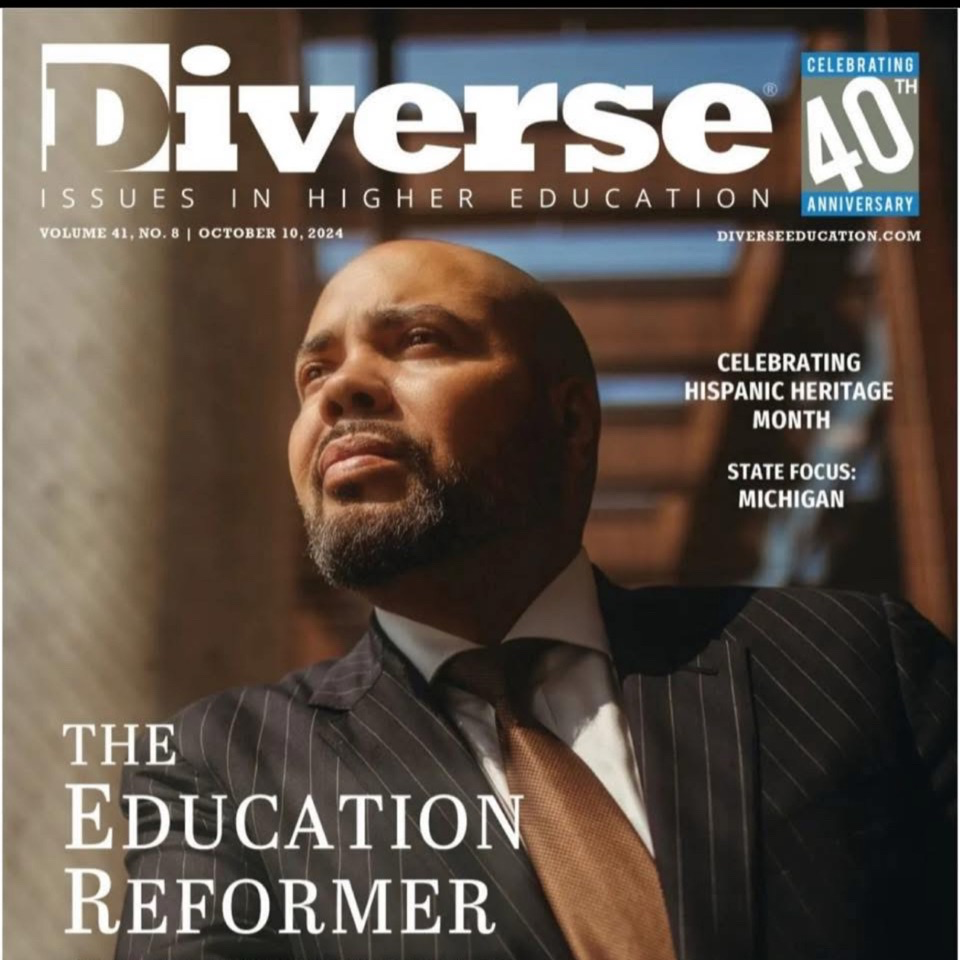
Julian Vasquez Heilig is a nationally recognized public scholar, commentator, and civil rights advocate. He has appeared on major national platforms including Democracy Now!, MSNBC, Al Jazeera, NBC News, PBS, and Univision. His media work reflects a longstanding commitment to making complex policy issues accessible, urgent, and meaningful for the public.





Leave a comment