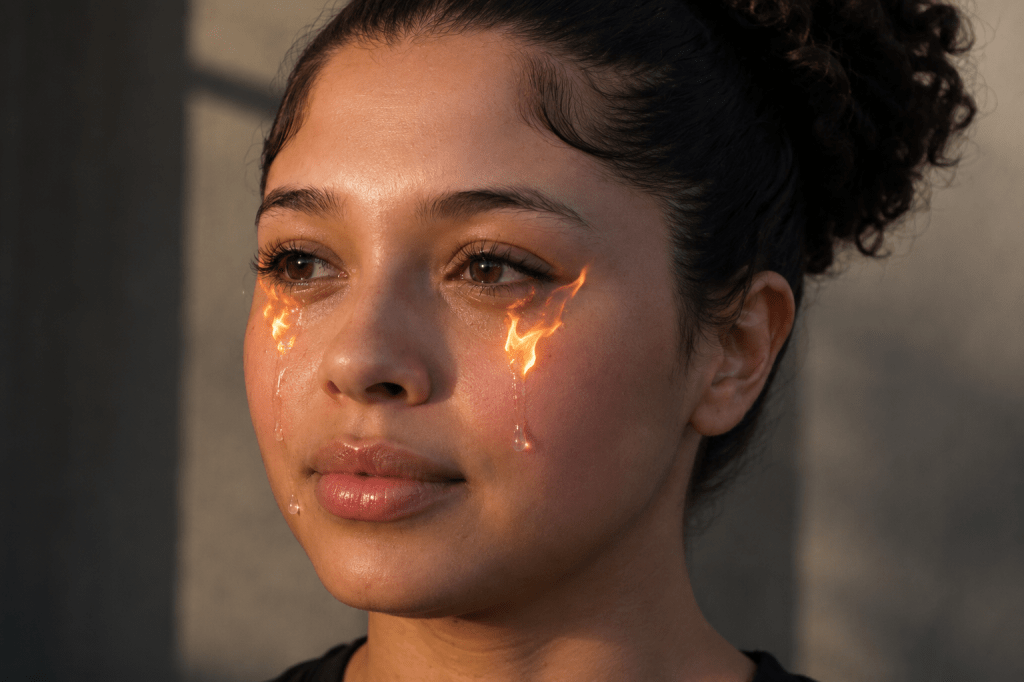
The tears kept coming and they wouldn’t stop.
Ten years ago, I stood inside the National Center for Civil and Human Rights holding the hand of my eight-year-old daughter.
We had spent the morning moving through exhibits about slavery, segregation, lynching, and the long struggle for civil rights. Then we reached a section of the museum that neither of us was prepared for.
We stopped talking.
We sat silently listening.
And then we cried.
Lucia and I stepped into the museum’s lunch counter exhibit. Visitors sit on stools, place headphones over their ears, and experience a simulation of a sit-in during the Civil Rights Movement. Through the headphones came insults, threats, and taunts directed at young people whose only act was demanding to be treated as equal human beings. The voices grew louder and more hostile. The experience lasted only a few minutes, but it felt much longer. When it ended, Lucia looked up at me with tears in her eyes. I looked back at her, and we cried together. In that moment, history was no longer something we studied in books. It became something we felt.
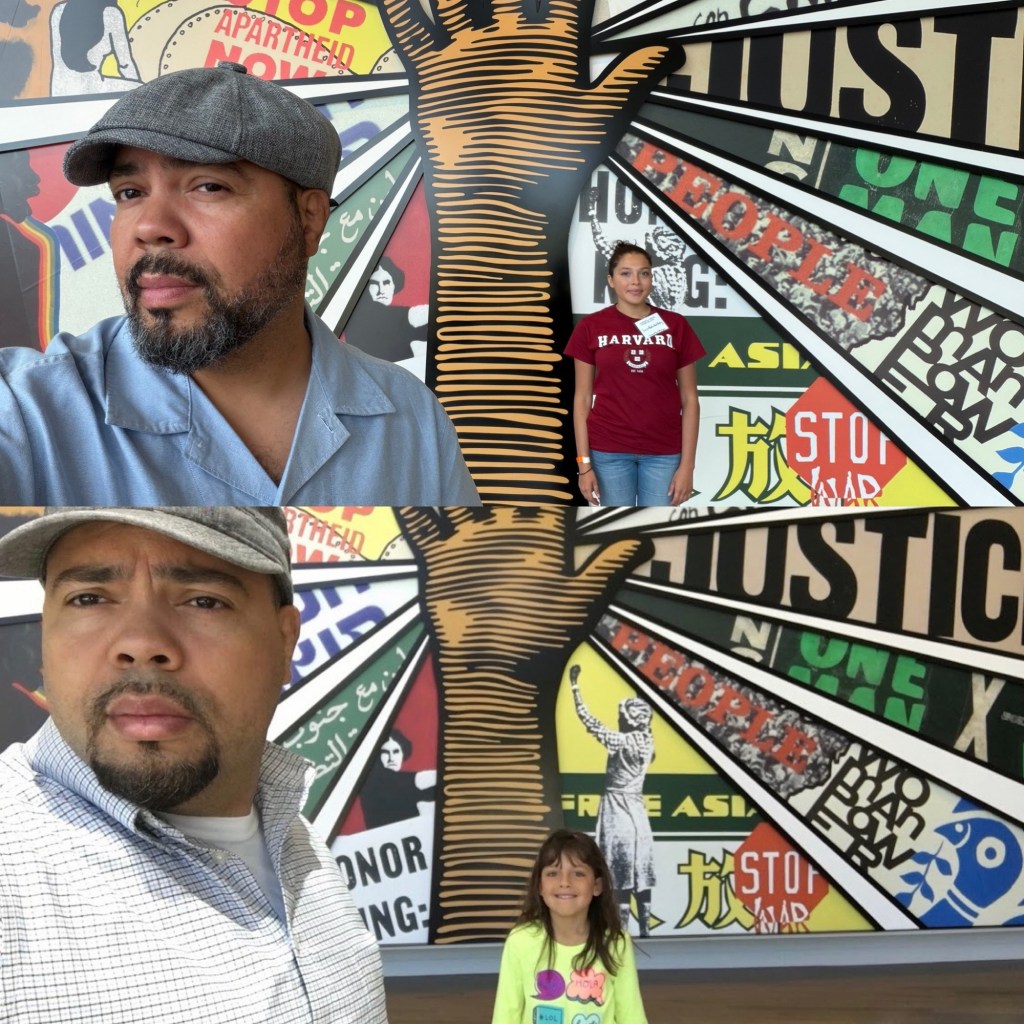
Last week, I returned to that same museum. This time Lucia was not eight years old. She is eighteen. And she was joined by her younger brother.
The three of us walked through those same halls together as I prepared to deliver a keynote address to the Society of Senior Ford Fellows. The conference theme was “Reclaiming Our Future.” My talk was titled “Staying Faithful: Knowledge, Courage, and the Public Good in Uncertain Times.”
As we moved through the exhibits, I noticed something that I had missed ten years earlier. The museum is not primarily about the past. It is about courage. Everywhere I looked, courage stared back at me.
In one room, James Baldwin reminded visitors that “not everything that is faced can be changed, but nothing can be changed until it is faced.”
In another room, Maya Angelou observed that history’s pain need not be relived if it is confronted honestly.
Martin Luther King Jr. spoke of wanting only to leave behind a committed life.
John Lewis reminded visitors that Emmett Till was his George Floyd.
The message was unmistakable. Progress has never been driven by people who waited for courage to arrive. Progress has always been driven by people who acted before they felt ready.
Then I encountered an exhibit that asked a question I have not been able to shake:
Whose story gets told?
The exhibit described how segregationists deliberately distorted the history of Reconstruction. They portrayed Black Americans as lazy, dangerous, and incapable of citizenship. These false narratives were constantly repeated in textbooks, newspapers, films, and political speeches until they became accepted as truth.
The exhibit was describing the nineteenth century. But it could just as easily have been describing today. Because one of the most important political battles in America right now is not over taxes, budgets, or elections.
It is over narrative.
It is over who gets to define reality.
It is over whose stories are remembered and whose stories are erased.
Recently, scholar Ibram X. Kendi described what he calls the “inversion of antiracism.” He argues that efforts to address racial inequities are increasingly portrayed as racist themselves. Programs designed to expand opportunity become discrimination. Efforts to teach honest history become indoctrination. Attempts to address unequal outcomes become attacks on equality.
Whether one agrees with every aspect of Kendi’s argument is beside the point. The larger phenomenon is difficult to ignore. Across the country, we are witnessing efforts to redefine discussions of racism as the real racism. The focus purposefully shifts away from inequality and toward the people who identify it.
The conversation becomes less about the disease and more about the doctor who diagnoses it. The museum helped us understand why this matters.
History teaches that those seeking to preserve inequitable systems rarely announce their intentions openly. Instead, they reshape language. They redefine concepts. They alter narratives. They convince people that change agents are the true threat and that those demanding justice are the real extremists.
That is why battles over voting rights matter.
That is why battles over educational curriculum matter.
That is why battles over college admissions matter.
That is why battles over public memory from statues matter.
These are not isolated policy disputes. They are contests over who belongs in the American story.
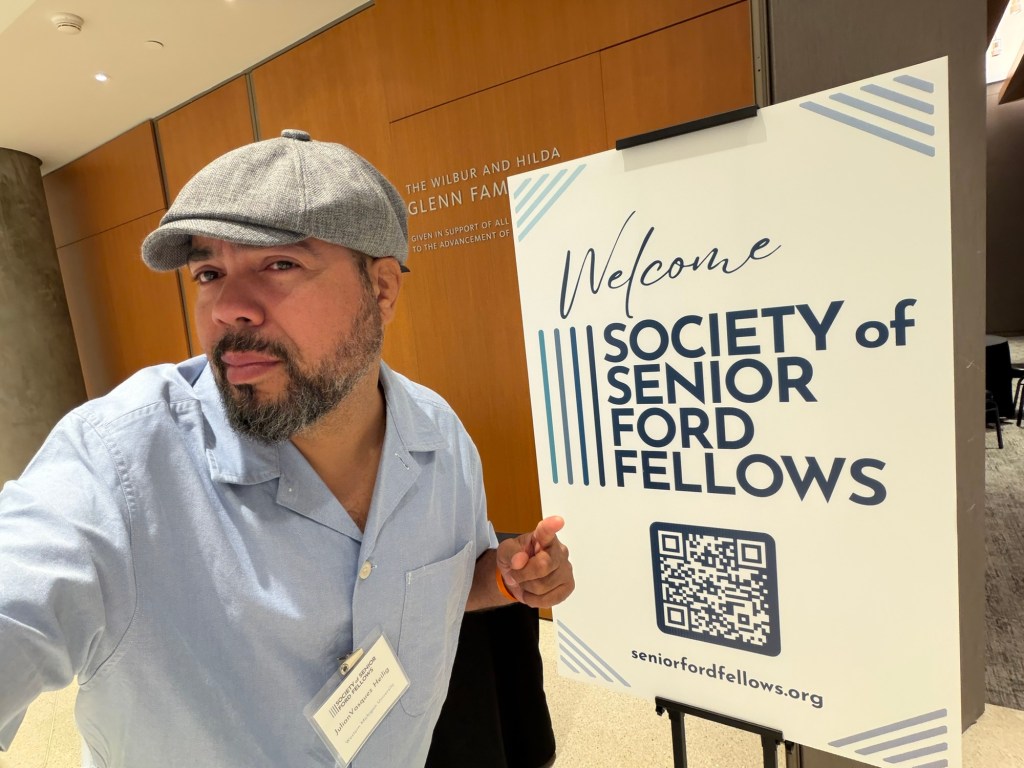
Julian Vasquez Heilig at Senior Ford Fellow conference
As I prepared to give my keynote for the Senior Ford fellows, I kept thinking about Lucia and her brother. The first time Lucia visited this museum, she was learning history. This time she was evaluating it. Questioning it. Connecting it to the world she is inheriting. Watching her and her brother move through the exhibits reminded me that the struggle for justice has always been intergenerational.
Every generation receives unfinished work. Every generation decides whether it will continue the work or abandon it. And every generation must determine whether it has the courage to tell the truth about the world it inhabits.
Before leaving, I stopped once more at Baldwin’s words: “Nothing can be changed until it is faced.” That may be the central challenge of our time. Not simply whether we can solve our problems. But whether we are willing to face them honestly. Supreme Court do you hear me?!
Because courage is not merely standing up to injustice. Sometimes courage begins with refusing to look away. Ten years ago, my daughter and I cried in that museum. I returned with both of my children this time. I left with the same conviction but more understanding. The future of democracy depends upon whether we tell the truth about the past, whether we confront the inequities of the present, and whether we have the courage to remain committed to a more just future.
As I worked on this essay, I found myself playing the new song “Fire To The Water” by Hugo Cantarra, Eli & Fur on repeat. Its message reminded me of both the civil rights leaders whose stories fill the National Center for Civil and Human Rights and the Senior Ford Fellows gathered there this past weekend. To me, Cantarra’s phrase “set fire to the water” is a metaphor for attempting what others believe is impossible, while “keep on burning” is a reminder to remain faithful to the work even when progress feels slow. None of those leaders knew whether they would succeed; they only knew that the cause was worthy of their courage. Progress is rarely made by those who are certain of victory. It is made by those who keep on burning with conviction inside their soul, illuminating a path forward, and by those who set fire to their tears.
Please share.
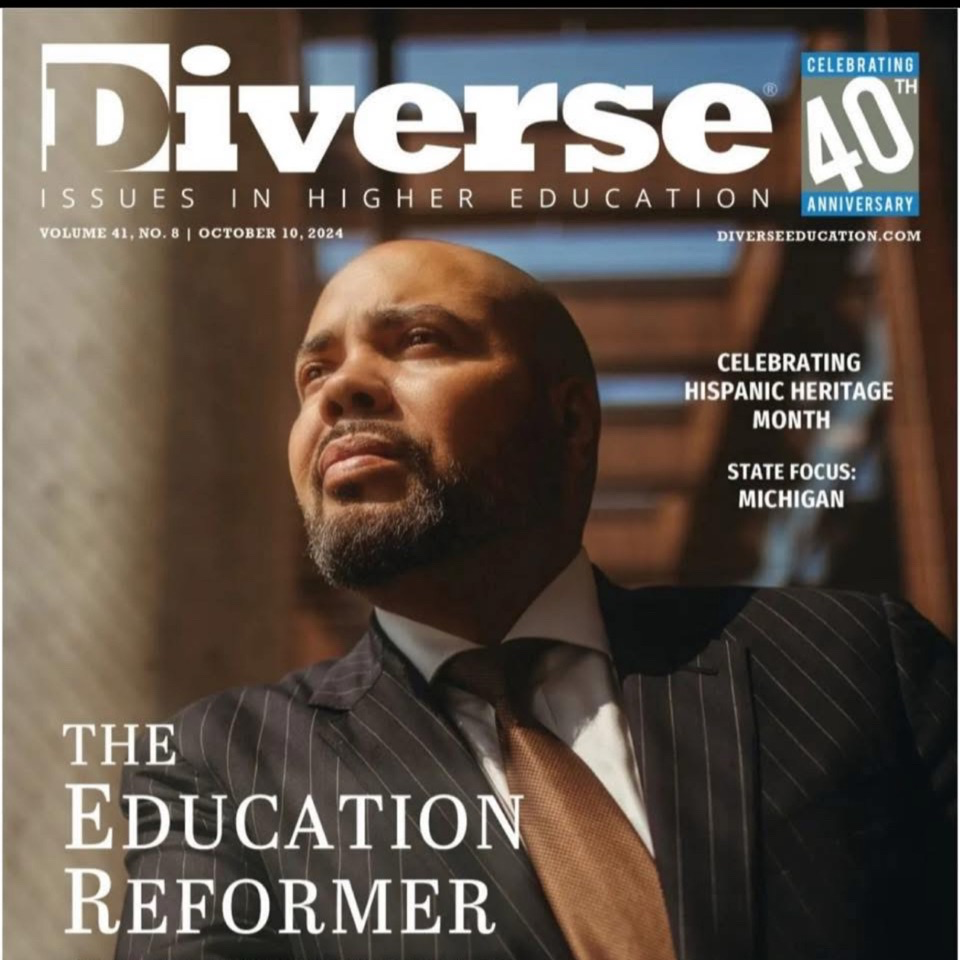
Julian Vasquez Heilig is a nationally recognized public scholar, commentator, and civil rights advocate. He has appeared on major media platforms including Democracy Now!, MSNBC, Al Jazeera, NBC News, PBS, and Univision. His media work reflects a longstanding commitment to making complex policy and leadership issues accessible, urgent, and meaningful.





 Cloaking Inequity
Leave a comment