
A news story stopped me in my tracks this week. Following a UFC event held on White House grounds, fighter Josh Hokit used his post-fight remarks to repeat a false and offensive claim about former First Lady Michelle Obama. He stated, “And lastly, Michelle Obama is a man. Am I right, America?” The comment generated immediate controversy. UFC President Dana White weakly condemned the statement, describing it as “nonsense” while the White House declined to condemn the comment.
As I watched the reactions unfold, I found myself thinking about Michelle Obama for a different reason. Long before she became the target of a cage fighter’s insult at a White House UFC event, the elegant and impressive First Lady became the subject of controversy for planting a vegetable garden. The contrast between those two moments reveals something that political scientists have studied for decades. Public reactions are often shaped less by the action itself than by the identity of the person performing it.
Political scientists frequently ask how societies determine legitimacy. Why are behaviors by Whites viewed as normal while other behavior from African Americans is viewed as controversial? Does race explain why certain public figures granted broad freedom to experiment, fail, entertain, attack, and provoke while others face intense scrutiny for comparatively minor actions? These questions sit at the center of debates about race, power, and privilege in American political life.
The Expanses of White Privilege and the Boundaries of Blackness
Conversations about White Privilege often become trapped in misunderstandings. Many people hear the term and assume it means that White Americans never face hardship or adversity. That interpretation misses a more subtle and politically significant reality. Privilege often operates not as freedom from difficulty but as freedom from constant scrutiny.
One way to think about privilege is through the concept of social space. Social space refers to the range of behaviors that society permits before an individual’s legitimacy is questioned. People with greater social space can make mistakes, behave unconventionally, express strong emotions, or challenge norms without automatically becoming symbols of their race, gender, or identity group. Their actions are interpreted as individual choices rather than group characteristics.
African Americans have historically occupied a different position in American society. Throughout much of American history, Black Americans have been required to navigate narrower boundaries of acceptable behavior. We have often faced pressure to be more credentialed, more disciplined, more respectful, and more cautious than our White counterparts. The margin for error has frequently been smaller, and the penalties for crossing perceived boundaries have often been greater.
When a Vegetable Garden Became Political
Returning to Michelle Obama’s White House Kitchen Garden provides a useful example. Launched in 2009, the initiative sought to promote healthy eating, improve nutritional awareness, and draw attention to childhood obesity. Schoolchildren participated in planting and harvesting. Nutrition advocates praised the effort. On its face, the project was nonpartisan.
Yet controversy emerged almost immediately. Critics framed the initiative as government intrusion into personal choices. Others characterized it as part of a broader left-wing political agenda to determine what Americans ate. The reaction echoed criticism directed at Barack Obama during the 2007 campaign when he mentioned arugula while speaking to farmers in Iowa, a comment that some critics seized upon as evidence of elitism and cultural distance from ordinary Americans. What might have remained a straightforward conversation about nutrition instead became another front in America’s increasingly polarized political landscape, with opponents portraying the Obamas as out-of-touch elites rather than focusing on the substance.
From a political science perspective, the more interesting question is why vegetables became politically charged in the first place. Tomatoes, lettuce, arugula, and carrots do not naturally produce ideological conflict. The reaction suggests that many people were responding not simply to the vegetables, but to what the Obamas represented. The controversy reflected broader struggles over power, identity, race, and belonging in American public life. In that sense, the food was largely incidental. The deeper conflict centered on competing visions of who belongs, who leads, and whose values are seen as legitimate in American society.
The Tan Suit and the Boundaries of Legitimacy
A similar dynamic emerged during the now-famous tan suit controversy. In August 2014, President Barack Obama appeared at a White House press briefing wearing a light-colored suit. What followed was one of the most unusual media cycles of the decade. News organizations and commentators lost their minds and spent days debating whether the suit was sufficiently presidential.
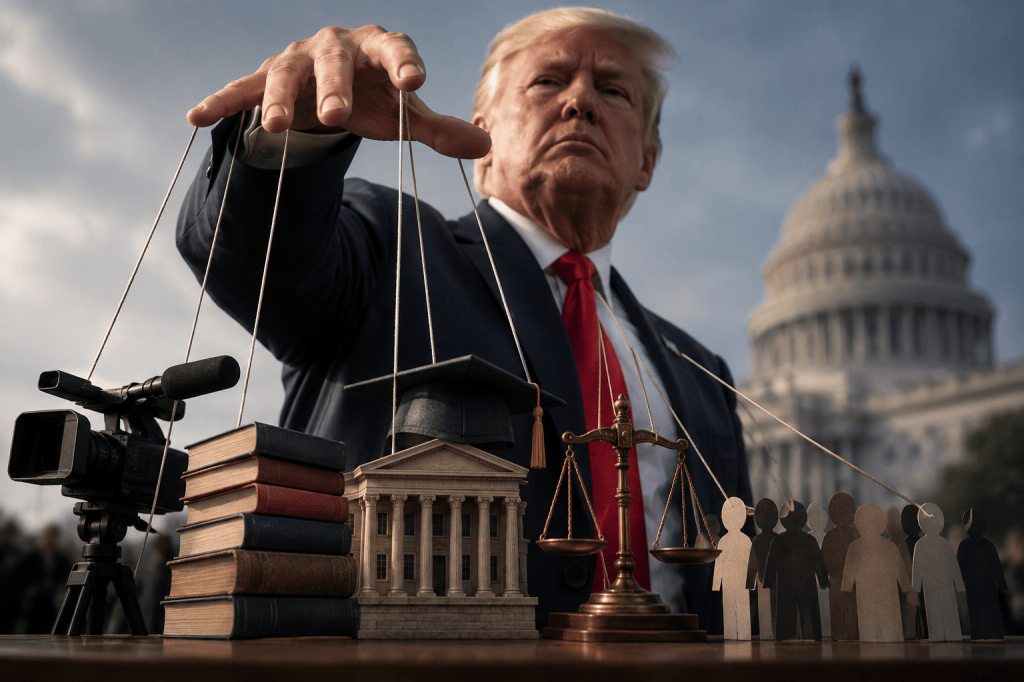
Looking back, the controversy appears almost absurd. The nation faced significant domestic and international challenges at the time, yet public attention shifted toward a wardrobe choice. The suit itself possessed no inherent political significance. Its importance emerged entirely through the overreaction it generated. The contrast is particularly striking when viewed alongside Trump’s constant legal and personal attacks on journalists, media organizations, and political opponents. Presidential statements and billion dollar lawsuits and unusual settlements that might once have dominated news cycles for weeks are often treated as routine features of the Trump presidency. From a political science perspective, the interesting question is not whether one controversy deserved more attention than another. It is why a tan suit became a national debate while other forms of attack rhetoric, conflict, and norm-breaking often generate comparatively little sustained scrutiny.
Political scientists studying race and leadership have long noted that leaders of color often encounter heightened scrutiny regarding appearance, demeanor, and presentation. The issue is not whether every criticism is racist. The issue is that African American leaders frequently operate within a narrow boundary of acceptable conduct. Actions viewed as harmless individuality for a White leader can become evidence of impropriety or unfitness for an African American.
It is worth asking whether Americans would have reacted differently had Barack Obama attempted something similar at the White House lawn for his birthday. Can anyone imagine the political and media response if the Obama White House had hosted an NBA game on the South Lawn or hosted a rap concert in front of the White House fountain? Perhaps the reaction would have been identical to the UFC cage fight and Nitro Circus motorcycle jumping. Perhaps it would not have been. The point is not to know the answer with certainty. The point is that many Americans immediately suspect the answer would be different. That suspicion itself tells us something important about our perceptions of race, politics, and the unequal boundaries of what is considered acceptable in American public life.
Motivated Reasoning and Selective Outrage
The answer may lie in a concept known as motivated reasoning. Decades of political science and psychology research suggest that citizens rarely evaluate information in a purely objective manner. Instead, people tend to process information in ways that protect existing racial identities and beliefs. Evidence that supports one’s beliefs is often accepted readily, while evidence that challenges it receives greater scrutiny. This tendency affects everyone. Conservatives engage in motivated reasoning. Liberals engage in motivated reasoning. The phenomenon is not confined to one ideology or political party. It reflects a broader feature of human cognition.
Democratic societies depend upon the consistent application of norms. Yet citizens frequently evaluate behavior through the lens of group identity rather than through stable principles. The result is a form of asymmetrical judgment in which identical actions are evaluated differently depending upon who performs them. The question, therefore, is not whether a political tribe accepts a behavior. The question is whether an underlying standard of appropriate and legal actions remains consistent when the actor changes.
Our nation’s challenge with race complicates these dynamics. American history contains numerous examples of identical behaviors being interpreted differently depending on the race of the person involved. Scholars have documented racialized perceptions in areas ranging from employment and housing to education, criminal justice, and politics.
Consider the contrasting public reactions to NFL athletes Colin Kaepernick and Jaxson Dart. Kaepernick’s kneeling protest against racial injustice became one of the most controversial acts of athlete political activism in modern American sports history. Years later, Giants quarterback Jaxson Dart publicly introduced President Trump at a political event and also faced criticism, though the nature and intensity of the reactions differed. The comparison is not about whether one athlete was right and the other wrong. Rather, it raises questions about how Americans evaluate political expression, dissent, patriotism, and legitimacy when different athletes occupy different social and racial positions. Political scientists ask not only what was said or done, but how race, identity, and existing social narratives shape public interpretations of those actions.
Conclusion: The Double Standard We Keep Avoiding
When examining controversies like discussed above, we can apply the mirror test. The premise is straightforward: take the exact same action and change only the identity of the person involved. Then ask whether the reaction would remain the same. If Donald Trump had launched a vegetable garden campaign focused on healthy eating, would the reactions have been the same? If Barack Obama had made even one of the provocative remarks that have become commonplace in Trump’s political discourse about inflation, war, or the press, would media coverage and public reaction have unfolded similarly? We cannot know the answers with certainty, but the fact that so many Americans immediately suspect the answers would be different is itself revealing.
Political science teaches us that power is not only about laws and institutions. It is also about norms, expectations, and perceptions. One of the most enduring questions in American democracy is who gets to define those norms and who is allowed to violate them without consequence. Thus, this blog is not really about a UFC fight, Nitro Circus, the Obamas, or Donald Trump. It is about the unequal boundaries that continue to shape American public life. It is about who is granted the freedom to be unconventional, controversial, imperfect, or simply human. And until we are willing to apply the same standards regardless of race, political affiliation, or identity, the racial double standard will remain one of the most persistent, and most concerning features of American democracy.
Please share.
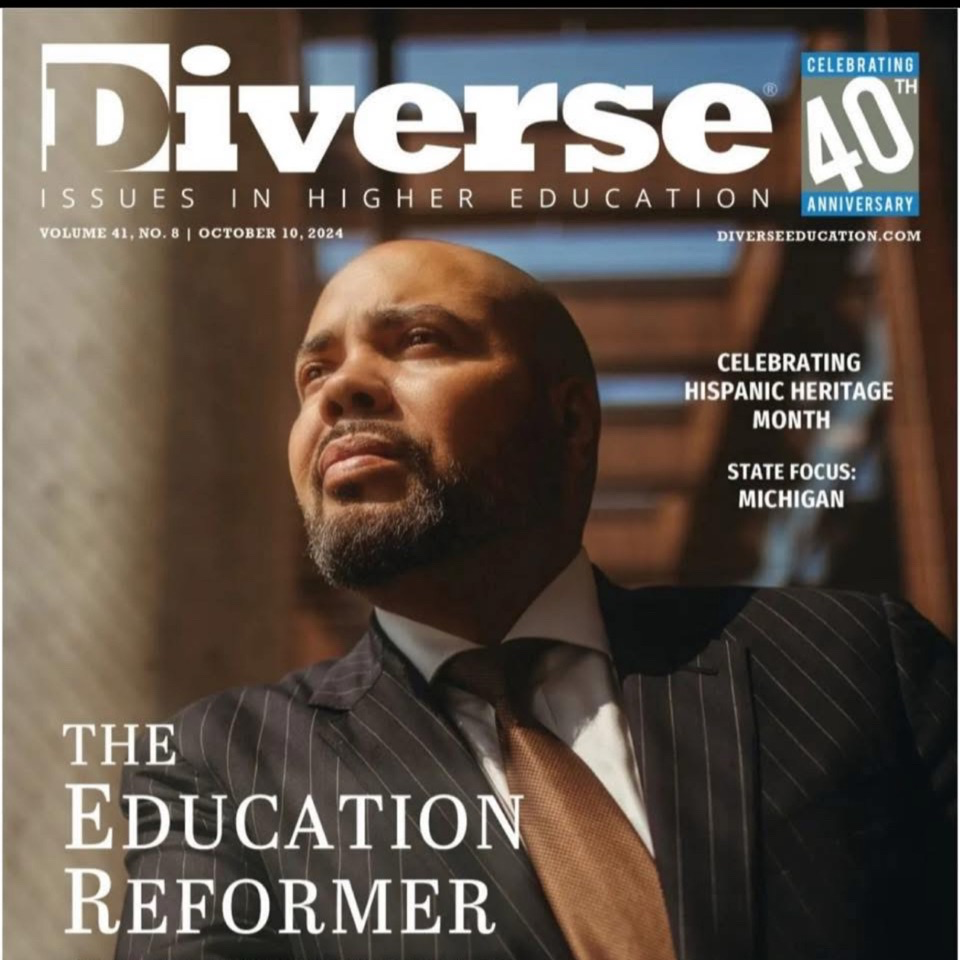
Julian Vasquez Heilig is a nationally recognized public scholar, commentator, and civil rights advocate. He has appeared on major media platforms including Democracy Now!, MSNBC, Al Jazeera, NBC News, PBS, and Univision. His media work reflects a longstanding commitment to making complex policy and leadership issues accessible, urgent, and meaningful.


Leave a comment