
In American history, ‘socialism’ has been one of the most politically radioactive words in the nation’s vocabulary. Yet today, democratic socialists have become one of the most influential factions within the Democratic Party.
American politics has a long history of insurgent movements that challenge the leadership of their own political parties before reshaping national debates. The comparison between the Tea Party and today’s democratic socialist movement is not one of ideology. Rather, it is a comparison of party dynamics: how organized factions seek to redefine the priorities, identity, and direction of a major political party.
Political scientists have long argued that parties are not monolithic organizations but coalitions of groups competing to shape the party’s agenda. In Why Parties?, John Aldrich describes political parties as evolving coalitions that respond to changing incentives and organized constituencies. Likewise, E. E. Schattschneider argued in The Semisovereign People that political conflict is often a struggle over who controls the scope of political debate. These frameworks suggest that the most consequential political battles frequently occur within parties rather than simply between them. Viewed through this lens, the comparison between the Tea Party and democratic socialists becomes less about left versus right and more about the politics of insurgency.
Insurgencies Within the Party
The ideological differences are substantial. The Tea Party emerged following the 2008 financial crisis advocating limited government, lower taxes, reduced federal spending, and constitutional originalism. Democratic socialists generally support a larger public role in health care, labor protections, education, housing, and economic redistribution. Their policy goals are fundamentally different… maybe even opposite. Yet their organizational roles within their respective parties reveal notable similarities.
Both movements emerged from dissatisfaction with what political supporters viewed as overly cautious party establishments. Tea Party activists argued that Republican leaders had become too willing to compromise on spending and the size of government. Democratic socialists have similarly criticized Democratic leaders for embracing incremental reforms rather than pursuing more ambitious structural change on issues such as health care, labor rights, housing, and climate policy.
Both movements also relied heavily on grassroots mobilization. Instead of depending primarily on traditional party organizations, each built networks through volunteers, small-dollar fundraising, local activism, and digital communication. They sought not merely to influence party leaders but to redefine what counted as acceptable party orthodoxy.
The willingness to challenge incumbents in primaries is another point of comparison. Tea Party-backed candidates frequently ran against Republican officeholders they viewed as insufficiently conservative. Likewise, democratic socialist candidates in 2026 have challenged Democratic incumbents whom they regard as too closely aligned with party leadership or corporate interests in Colorado, New York and elsewhere. In both cases, primary elections became the principal arena for contesting the future direction of the party.
The political science literature on the Tea Party reinforces this interpretation. In The Tea Party and the Remaking of Republican Conservatism, Theda Skocpol and Vanessa Williamson argue that the Tea Party was more than a protest movement; it became an organized force that reshaped Republican primaries, influenced party elites, and helped pull the party in a more consistently conservative direction. While Skocpol and Williamson do not make the parallel argument I’m making about democratic socialists, their framework for understanding factional influence provides a useful lens for analyzing contemporary developments within the Democratic Party.
Media ecosystems also amplified both movements. Conservative talk radio (e.g. Rush Limbaugh), cable television (e.g. Fox News), and advocacy organizations accelerated the Tea Party’s influence within Republican politics. Democratic socialists have relied on podcasts, social media, progressive digital publications, and online organizing to reach supporters without depending exclusively on traditional party institutions.
Perhaps the strongest comparison concerns influence rather than numbers. Neither movement likely represented a majority of its party’s voters. Nevertheless, both exercised influence disproportionate to their size by shaping candidate recruitment, primary elections, fundraising networks, and policy debates. Political scientists Marty Cohen, David Karol, Hans Noel, and John Zaller argue in The Party Decides that organized networks of activists, donors, and interest groups frequently determine the trajectory of political parties long before general election voters weigh in. The Tea Party demonstrated this dynamic within the Republican Party, while progressive and democratic socialist activists have increasingly sought to do the same within the Democratic Party.
How Bernie Sanders Changed the Democratic Party
The Bernie Sanders presidential campaigns illustrate how an insurgent movement can reshape a party even without capturing its highest office. Although Sanders failed to win the Democratic nomination in either 2016 or 2020, his campaigns fundamentally changed the party’s policy agenda. Proposals once considered politically marginal—including tuition-free public college, Medicare for All, a $15 federal minimum wage, expanded labor protections, student debt relief, and a more expansive federal role in addressing economic inequality—became central topics in Democratic presidential debates and legislative priorities. Even candidates who rejected Sanders’ platform have often embraced modified versions of his proposals. His campaigns shifted the Democratic Party’s center of gravity, demonstrating that political influence is not measured solely by electoral victories but also by changing what a party believes is politically possible.
The Tea Party offers an instructive contrast. Like the Sanders movement, it began as an insurgency that transformed its party from within. It shifted the Republican Party toward a more conservative orientation and created the political conditions that helped propel Donald Trump to the presidency. Yet once Trump assumed office, many of the Tea Party’s core principles—including fiscal restraint, reducing the national debt, entitlement reform, and a commitment to free-market economics and free trade—gave way to a different form of populist politics. Large federal deficits, protectionist tariffs, and an emphasis on executive power departed from several of the movement’s original priorities. While the Tea Party succeeded in remaking the Republican Party’s electoral coalition, Trumpism ultimately became its dominant governing philosophy.
The Battle for the Future
Whether democratic socialist activism will ultimately broaden the Democratic coalition or narrow it remains an open question. Likewise, scholars continue to debate whether the Tea Party ultimately strengthened or weakened the Republican Party. What is less debatable is that both movements fundamentally altered the internal politics of their respective parties.
American political parties are often described as “big tents.” History suggests they are better understood as living institutions. Some, like the Whigs, collapsed under the weight of internal divisions. Others survived only by absorbing insurgent movements, from Theodore Roosevelt’s Bull Moose Progressives to the Tea Party, that permanently reshaped their identities. As the United States approaches its 250th anniversary, the central struggle in American politics may once again be unfolding not simply between Democrats and Republicans, but within them. The enduring question is not just which party wins elections, but what each party ultimately becomes.
Please share.
NEW: If you’d like to hear me read the post, you can find the audio version on my Substack here.
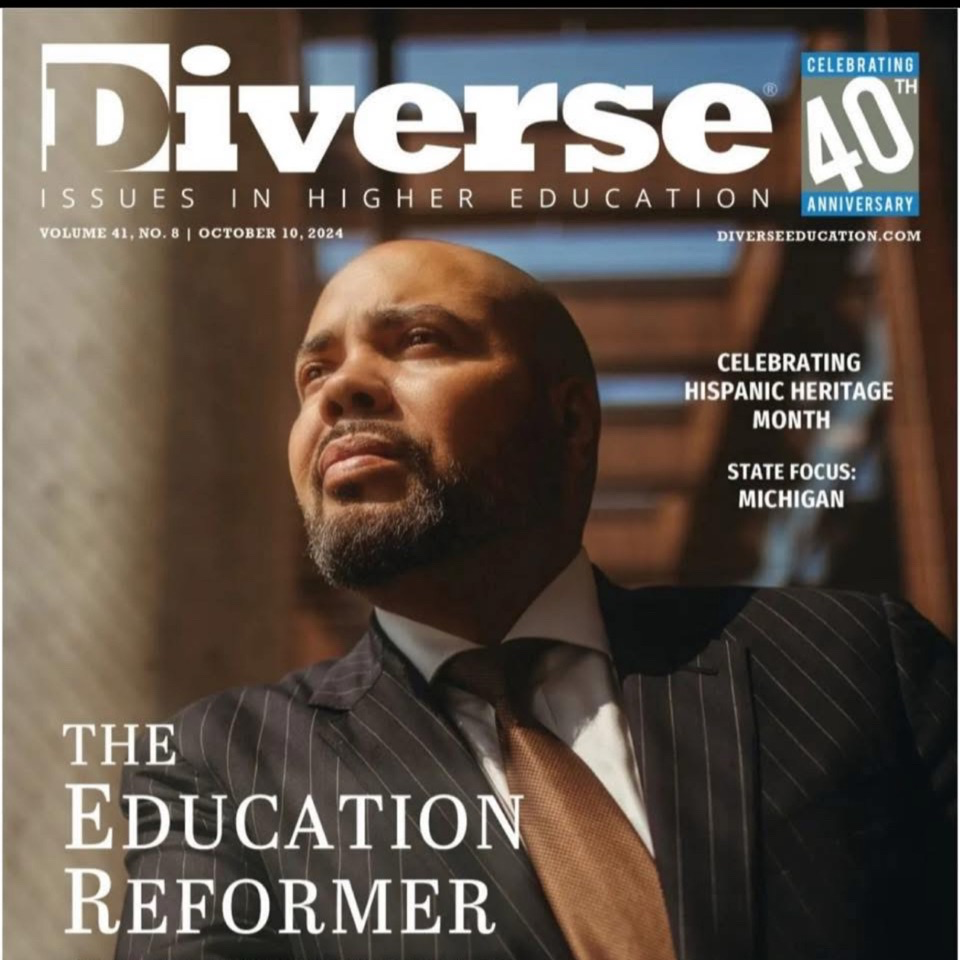
Julian Vasquez Heilig is a nationally recognized public scholar, commentator, and civil rights advocate. He has appeared on major media platforms including Democracy Now!, MSNBC, Al Jazeera, NBC News, PBS, and Univision. His media work reflects a longstanding commitment to making complex policy and leadership issues accessible, urgent, and meaningful.





 Cloaking Inequity
Leave a comment