
A public university classroom is not a political campaign podium. A federal appeals court has just reminded Florida of that, and in doing so, reminded the country of something we should never have forgotten.
This week, the U.S. Court of Appeals for the Eleventh Circuit struck down the higher education provisions of Florida’s “Stop WOKE” Act. Diane Ravitch rightly called it a “stunning victory” for the Constitution and First Amendment. This ruling is more than a win for professors who teach about race, gender, history, civil rights, public policy, or inequality. It is a warning to every governor, trustee, donor, legislator, president, provost, and dean who thinks academic freedom can be traded for political safety.
The slogan was “Stop WOKE.” The legal question was much bigger. Can a state pay a professor and then claim ownership over the professor’s classroom speech? Florida said yes. The Eleventh Circuit said no.
George Orwell wrote in 1984, “Freedom is the freedom to say that two plus two make four.” That line matters because authoritarianism does not only punish dissent. It tries to control reality. It demands obedience and then calls that obedience truth. That is why this case matters.
Professors Are Not Political Mouthpieces
Florida argued that because professors at public universities are paid by the state, their classroom speech belongs to the state. The Eleventh Circuit called that theory a “salary-for-speech rule.” The court described it as a “breathtaking assertion of power” over classrooms where students should be freely trusted to puzzle through ideas that are “good and bad, easy and hard.” It also concluded that if the First Amendment protects anything in public university classrooms, Florida’s law crossed the line.
That language matters because it names the danger clearly. University faculty are not hired to be the mouthpieces of governors. They are not hired to recite legislative talking points. They are hired to teach, research, test claims, mentor students, and pursue truth through evidence.
That does not mean faculty can do whatever they want in a classroom. Universities can shape curriculum and set professional standards. Deans can lead colleges. Provosts can protect academic quality while presidents set institutional priorities.
But that is different from a legislature imposing a statewide political speech code on every professor in every public university classroom. It is also different from a dean using political fear as an administrative tool. I am aware of a college of education dean in Florida who told a faculty member in a meeting that her syllabus had too much “DEI stuff.” The question is whether it had too much DEI for the discipline, for the students, for the evidence, or for the politics of the moment.
A syllabus is not just a list of readings. It is a map of a scholarly journey. It is a professional document shaped by expertise, field standards, research, and the learning goals of a course. When a dean treats that map as a political liability, academic freedom is already being chilled.
The Danger Is Not Only the Law
The court’s strongest language came when it rejected Florida’s theory of control. It said “puppeteering every university professor in the state” is not a lawful way for government to promote its viewpoint. It warned against “forcing an official government line” in a college classroom. It called that danger the “pall of orthodoxy” the First Amendment cannot tolerate.
That sentence should be printed and taped above the desk of every president, provost, and dean (and Supreme Court justice). The threat is not only in Florida statutes. It is also in governing boards, presidential searches, legislative hearings, budget meetings, and college-level conversations. Academic freedom often dies in whispers before it dies in policy.
The University of Florida’s recent presidential politics made this painfully visible. In 2025, Santa Ono was rejected by the Florida Board of Governors after conservative criticism of his past support for diversity, equity, and inclusion. The Associated Press reported that the board voted 10-6 against Ono even after the University of Florida Board of Trustees had approved him unanimously. The AP also reported that his proposed contract included ideological hiring requirements for academic leaders tied to stopping Woke.
Then, in 2026, Stuart Bell was confirmed as the University of Florida’s 14th president. During that process, Bell emphasized he was not coming to Florida to bring DEI or woke back. That was not a formal legal oath. But it sure sounded like a political loyalty test.
Academic Freedom Is Not a Left-Wing Luxury
Some will try to frame this case as a victory for the left. That is too narrow. Academic freedom must protect faculty across political persuasion. Conservative faculty should not be punished for teaching about conservative ideas.
Progressive faculty should not be punished for teaching about progressive ideas. Religious faculty should not be punished for serious scholarly engagement with religion. Secular faculty should not be punished for serious scholarly engagement with secularism. Faculty who study capitalism, socialism, race, gender, empire, policing, democracy, religion, sexuality, nationalism, climate, public health, and education should be judged by evidence and rigor.
I know this personally because college was the first place I encountered Robert Nozick and libertarian ideas in a serious way. I did not walk into those classes looking to have my existing beliefs flattered. I walked in as a student trying to understand the world. I enjoyed learning about different perspectives and deciding what resonated with my life, experience, and values.
I still remember sitting on the lawn in front of Angell Hall at the University of Michigan. Political Philosophy was the final class of my senior year. The TA’s name was Celery. Every ten years or so, I send her a Facebook message thanking her for that class. She might be tired of hearing about it from me.
That is what powerful teaching does. It does not indoctrinate. It opens a door. It lets students walk through traditions of thought and decide what they can carry forward.
College Students Can Handle Hard Ideas
The Eleventh Circuit understood this point. The court wrote that the ideas Florida targeted “may well be noxious” or “maybe not.” Either way, it said the First Amendment trusts students to figure it out for themselves. That sentence is a devastating response to the censorship movement.
A university is not supposed to protect students from contested ideas. It is supposed to teach students how to evaluate them. When politicians decide which interpretations may be endorsed, they are not protecting students. They are training students to fear ideas.
This is why the dissent matters too. Judge Barbara Lagoa argued that the state can decide what is endorsed by professors in its own classrooms. That is the fork in the road. One path says universities are places of inquiry. The other says public universities are instruments of state ideology.
That second path is not conservative. It is not liberal. It is authoritarian. It should worry everyone because the logic can be reversed whenever power changes hands. If Florida can ban ideas one administration calls woke, another state can ban ideas another administration calls reactionary, religious, patriotic, or traditional.
Deans Are on the Front Line
I want to pause on deans because they matter more in this fight than many people realize. Presidents often give speeches about academic freedom. Provosts often write policies about academic standards. Deans are where faculty experience institutional power most directly.
Deans approve hiring plans, shape budgets, influence promotion cultures, and decide whether chairs feel supported or isolated. A dean can defend academic freedom without issuing a press statement. A dean can also chill academic freedom without issuing a formal order. A look, a warning, or a comment about too much “DEI stuff” can do real damage.
If a dean believes in academic freedom only when the legislature is quiet, that dean does not believe in academic freedom. If a provost believes in academic freedom only when donors are calm, that provost does not believe in academic freedom. If a president believes in academic freedom only when the governor approves, that president does not believe in academic freedom. They believe in convenience.
What Leaders Should Say Now
Presidents should say clearly that faculty are not state mouthpieces. Provosts should say clearly that academic quality is judged through disciplinary standards, peer review, accreditation, evidence, and student learning. Deans should say clearly that syllabi are not political confessionals. Boards should say clearly that they govern institutions and not ideological reeducation camps.
Faculty senates should also stop whispering. Academic freedom belongs to the full faculty, including faculty with unpopular views. Students should reject the idea that they are too fragile to hear difficult ideas. Communities should understand that democracy needs universities where truth is pursued and not scripted.
The Eleventh Circuit did not make the university classroom lawless. It made it freer and constitutional. It preserved space for actual teaching. It recognized that a university cannot function if every lecture is haunted by the fear that a political appointee will decide which sentence crossed the line.
More on Florida Is Coming
This will not be the last word on Florida. Cloaking Inequity will soon launch a special series on Florida with Professor Darrius Stanley, a Florida son and professor at the University of Minnesota. His scholarship centers Black education, Black educators, and educational leadership. Please stay tuned as we examine what is happening in Florida and why it matters nationally.
The Florida story matters because it is not only a Florida story. It is a national test of whether public universities will remain places of inquiry. It is a test of whether leaders will protect faculty across political lines. It is a test of whether the public still believes students can think.
Conclusion: Stay Woke, or Stay Free
The word “woke” has been turned into a cartoon. For some, it means awareness of injustice. For others, it means ideological excess. For others still, it is a weapon used to shut down whatever makes powerful people uncomfortable.
So fine. Professors can stay woke, or whatever politicians want to call it. They can stay rigorous. They can stay curious. They can stay faithful to evidence.
The First Amendment does not require students to agree with professors. It does not require professors to be right. It does not require classrooms to be comfortable. It does require that politicians cannot dictate the boundaries of thought simply because they control the budget.
The university classroom is not owned by the governor. The professor is not a puppet. The student is not a passive vessel. The court has spoken, and now presidents, provosts, and deans must decide whether they will.
Please share.
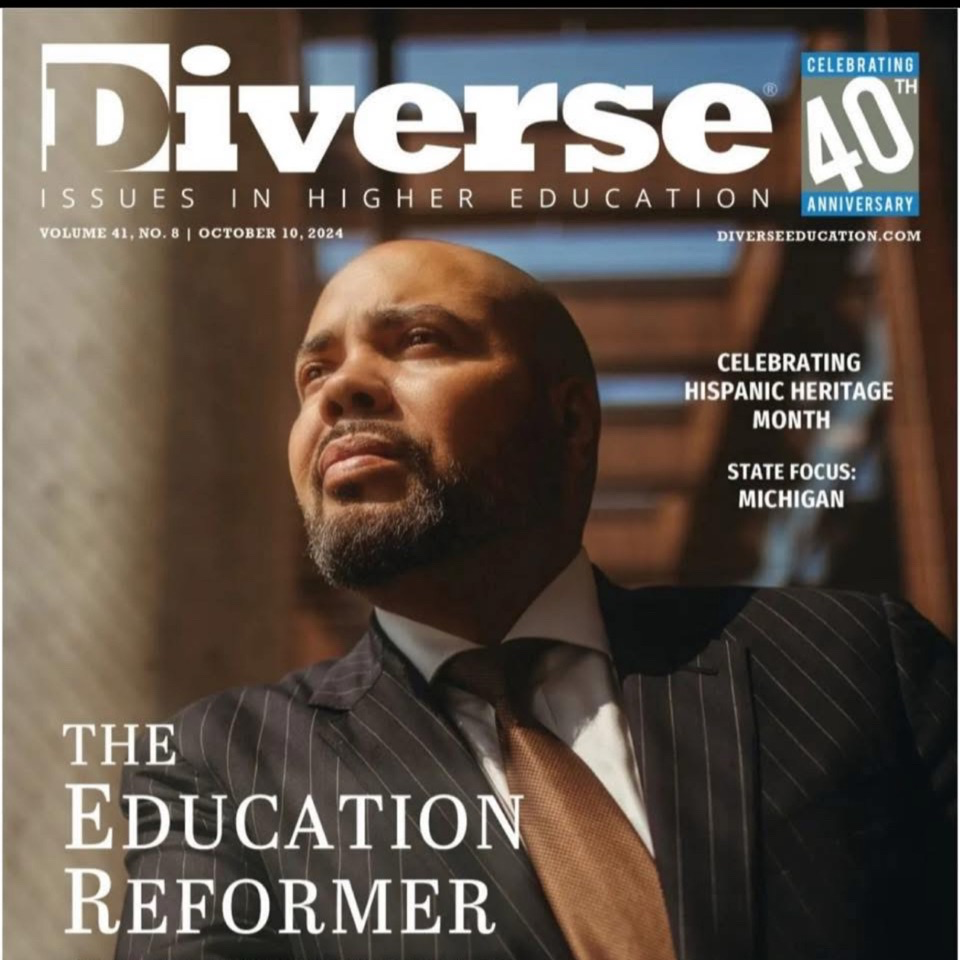
Julian Vasquez Heilig is a nationally recognized public scholar, commentator, and civil rights advocate. He has appeared on major media platforms including Democracy Now!, MSNBC, Al Jazeera, NBC News, PBS, and Univision. His media work reflects a longstanding commitment to making complex policy and leadership issues accessible, urgent, and meaningful.




Leave a Reply