Is the provost at UT-Austin a right wing political operative?
The University of Texas at Austin is eliminating majors in African and African Diaspora Studies, Mexican American and Latina/o Studies, Women’s and Gender Studies, and Race, Indigeneity, and Migration. These are not abstract academic labels. They represent the histories, intellectual traditions, and lived experiences of communities that built Texas and continue to shape the nation.
The manner in which this happened is almost as disturbing as the decision itself. Faculty members reportedly were asked to design proposals to preserve the existing majors inside the provost-initiatived and consolidated Department of Social and Cultural Analysis, but the Daily Texan reported that Office of the Provost rejected that proposal. According to Professor Danielle Pilar Clealand, interim chair, faculty then discovered that the majors had already been removed from the admissions application while they were still working to redesign and save them.
That is not shared governance. It is administrative maneuvering designed to make consultation meaningless.
Name the Person Holding the Authority
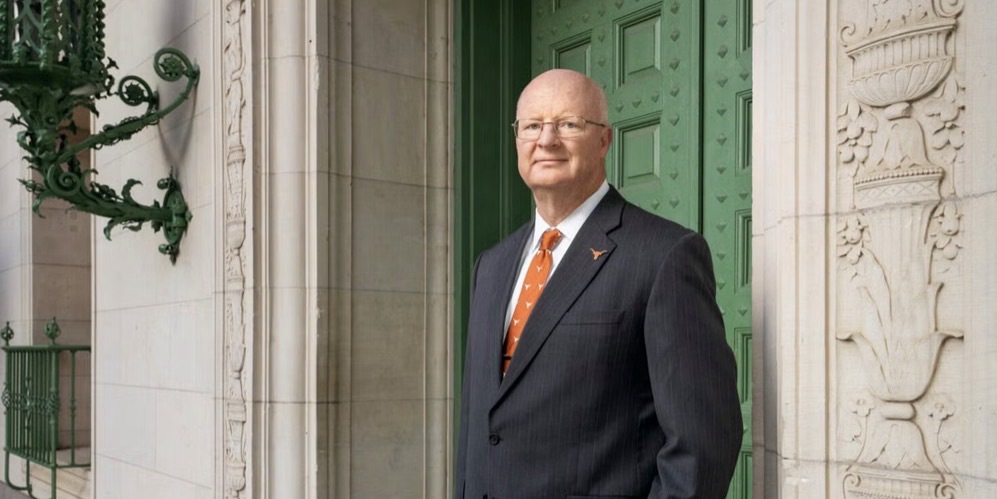
William Inboden became UT Austin’s executive vice president and provost on August 1, 2025. UT describes him as its chief academic officer with responsibility for curriculum, academic programs, faculty recruitment, resource management, and the academic work of 16 colleges and schools. He therefore cannot be treated as a distant observer of decisions made by an anonymous bureaucracy.
The public deserves a direct answer from Provost Inboden. Did he require and support eliminating these majors, did he oppose the decision, or did he simply implement it? If his office rejected the faculty proposal, what evidence supported that rejection, and why were the affected majors removed from the admissions application before the faculty process concluded?
The symbolism is difficult to ignore. An older white male administrator now presides over the elimination of majors devoted to Black, Latino, Indigenous, and gender scholarship. His identity is not by itself the issue, but leadership research requires us to examine who holds power, whose knowledge receives institutional protection, and whose history becomes expendable.
What Does “Civic Leadership” Mean Here?
Inboden also holds a joint faculty appointment in UT’s School of Civic Leadership. Before becoming provost, he directed the University of Florida’s Alexander Hamilton School for Classical and Civic Education. These affiliations matter because institutions operating under the banners of “civic leadership,” “classical education,” and “intellectual diversity” have expanded from Texas to Florida during a coordinated conservative effort to politically reshape public higher education.
The phrase “civic leadership” sounds neutral and admirable. In practice, however, it can become coded language for privileging a conservative version of Western civilization while describing ethnic studies, gender studies, and critical examinations of power as ideological.
The media record provides important context. The Houston Chronicle reported that UT’s School of Civic Leadership grew from an institute championed by conservative lawmakers and donors who wanted greater “intellectual diversity.” The UT System later approved a $100 million investment for the school’s permanent home.
Meanwhile, Axios reported that UT hired 14 professors for a new humanities center and that many previously taught at the Florida school Inboden directed. At the same time, UT is eliminating four multicultural studies majors rooted in the civil rights struggles of the 1960s and 1970s.
I have not seen evidence of a formal numerical quota for conservative professors. But when public resources build institutions expressly promoted as ideological counterweights, while programs studying marginalized communities are dismantled, the result resembles an ideological preference whether administrators call it an official quota or not. Political favoritism that overwhelms qualifications does not become academic freedom simply because its supporters describe themselves as restoring balance.
Leadership Research Says Listen Before You Erase
Research on inclusive leadership finds that leaders who listen, invite dissent, and treat people with respect create greater psychological safety, employee voice, and team effectiveness. One empirical study found that inclusive leadership was positively associated with employee voice and team performance. Silencing faculty expertise and making consequential decisions before consultation is complete represents the opposite approach and will ultimately lead to the diminishment of UT-Austin.
Strong leadership is not measured by how efficiently an administrator carries out political wishes. It is measured by whether the leader protects an institution’s mission rather than being a political operative. A provost who ignores intellectual inquiry and care more politics, is an unelected politician, not an academic leader.
I Have Faced This Choice
I have discussed before that when I served as provost at Western Michigan University, I faced pressure to close Gender and Women’s Studies. The Faculty Senate recommended against closure, and I agreed with the faculty despite intense internal pressure to do otherwise. I paid a political price, and I would make the same decision again.
I also advocated for Black student success and community-centered initiatives while several deans complained about and opposed those efforts. Those complaints had consequences for me, but leadership without risk is merely management. If leaders support marginalized communities only when nobody powerful objects, they do not truly support those communities.
As provost, I said no to closing Gender and Women’s Studies because the university did not belong to me or to the loudest administrators around the cabinet table. It belonged to the students, faculty, staff, alumni, and communities whose labor, knowledge, and trust gave the institution meaning.
We must be of the people because the people are the institution. Buildings, endowments, rankings, and administrative titles are empty without them.
Accountability Is Not Harassment
How should Provost William Inboden pay a professional price if the public record confirms that he enabled this academic erasure? The answer is organized, lawful, evidence-based accountability. Faculty can demand the written rationale, timelines, enrollment analyses, communications, and names of decision-makers. They can pursue Faculty governance resolutions, censure, or a vote of no confidence.
Students, alumni, professional associations, journalists, donors, and community organizations can document the decision and ensure it follows Inboden throughout his professional career so that it comes up in any Internet search. Future search committees for presidencies should know whether he protected shared governance or circumvented it. However, for red states I suspect bringing partisan politics into the university would be a badge of honor and cinch for a presidency.
Public knowledge about these actions must be written about actively in research and scholarship and remain focused on official conduct. The goal is a durable public record establishing that a white male provost prioritized erasing historically marginalized communities from a curriculum.
One Facebook commenter described the situation as a “dangerous conservative political coup” and urged Texans to elect Gina Hinojosa and legislators willing to restore the programs. Elections matter because governors appoint regents, legislatures control public policy, and political power is already shaping what universities teach in red states. Academic communities cannot pretend politics is absent while politicians and their sycophants reorganize educational institutions for partisan political purposes.
Is It 1950 Again?
A quick Google search shows that UT Austin has a sordid and problematic history on race. I was well aware of its infamous history when I was faculty at UT Austin for eight years. The university clearly cannot claim to prepare students for citizenship in a diverse nation and democracy while eliminating structured opportunities to study the people whose struggles transformed American democracy. It cannot celebrate Texas history while treating Black, Mexican American, Indigenous, and women’s histories as disposable.
William Inboden should explain publicly what he did, when he did it, and why faculty members were allowed to continue deliberating after the admissions application had reportedly been changed. Until those questions receive credible answers, this looks less like academic stewardship and more like a biased political purge.
The response from faculty must be insurgent work that is organized, principled, nonviolent, and rooted in all the people the university serves. Faculty, students, alumni, and communities must organize, preserve the record, demand accountability, and refuse to let administrative power erase them quietly.
I also want to say that the field of education also noticed the provost’s underwhelming hire for Dean for the College of Education at UT. His credentials fit squarely in the political mode the UT-Austin provost appears to be engaged in.
Is it 1950 again? Only if we allow university leaders to act as though the people whose histories they are eliminating from student learning and the communities they serve have no power to answer back.
Please share.
Julian Vasquez Heilig is a nationally recognized public scholar, commentator, and civil rights advocate whose work has appeared on Democracy Now!, MSNBC, Al Jazeera, NBC News, PBS, and Univision. He brings clarity, urgency, and public relevance to complex issues in education, policy, and leadership. For consulting, speaking opportunities, and collaborations, contact jvh@alumni.stanford.edu.





Leave a comment