
I just spoke with CNN about what I witnessed at the Las Vegas airport. Yet speaking the words aloud has not made the experience easier to carry.
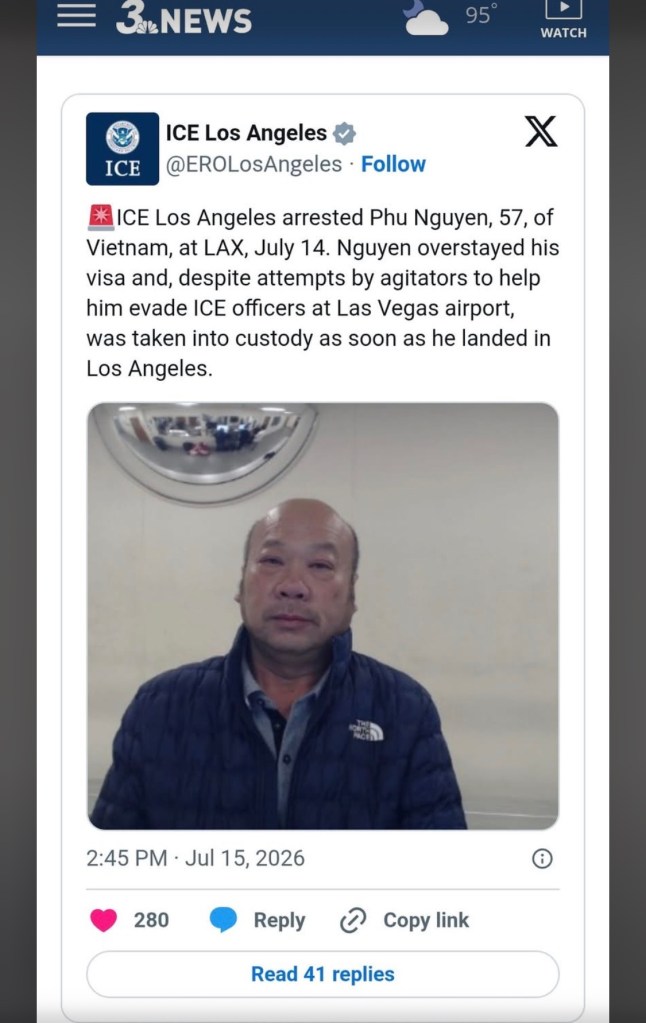
I am still dealing with the trauma and grief of watching an older Asian man being violently attacked by ICE agents for, in their words, “overstaying his visa.” I watched two federal agents tackle him as he cried out in pain. I watched approximately ten Black women refuse to walk past him, raising their voices and demanding that the unidentified agents explain what they were doing. I watched ICE leave him with one handcuff still attached before Las Vegas Metropolitan Police officers removed it later. I watched emergency personnel bring a stretcher because of the injuries he had sustained. He ultimately declined the stretcher and boarded my flight, but none of that erased what had already happened.
His body boarded the plane. He was then quietly arrested by ICE when he deplaned in Los Angeles.
The memories of the violence followed the rest of us home
This week, the Michigan sky has forgotten its color due to smoke coming from fires in Canada. The sun rises behind a veil as though morning itself has something it could not bear to say. I step outside expecting air and instead inhaling the distant memory of forests burning hundreds of miles away.
The smoke had crossed an international border without showing identification. It had traveled freely across states, communities, and neighborhoods. It settled into our lungs without being stopped, questioned, detained, or asked whether it belonged here.
Grief moves like wildfire smoke because it rarely asks permission before crossing borders. It drifts through cracks we thought were sealed. It settles into our clothes and conversations. It lingers long after we believe the immediate danger has passed.
A fire in another place becomes a cough in our own chest. In the same way, unnecessary political violence against another human being can become a heaviness inside everyone who witnesses it.
What happened at the airport is not occurring in isolation. In July 2026, ICE has prioritized arresting approximately 10,000 people during a single five-day period.. That’s an average of roughly 2,000 arrests every day and represented a dramatic escalation of the Trump administration’s mass-deportation campaign.
The rapid disruption to human lives from numbers of that size are difficult to comprehend. Ten thousand people means ten thousand families interrupted. It means frightened children, anxious spouses, worried parents, unanswered telephone calls, missed work shifts, and families suddenly uncertain whether someone they love will return home.
Immigration status does not erase humanity. Overstaying a visa does not justify humiliation, violence, or the abandonment of human dignity. An immigration violation is generally only a civil matter. It should never become permission for federal agents to treat an older man as though his body has no value and his pain deserves no response.
The national consequences of increasingly aggressive enforcement tactics have become deadly. Within approximately one week, ICE agents fatally shot two men during separate vehicle encounters in Houston, Texas, and Biddeford, Maine. According to reporting, neither man was the intended target of the immigration operation in which he was killed. The incidents prompted ICE to temporarily suspend most vehicle stops while the agency reviewed its practices.
That pause did not last. Why? President Donald Trump publicly said that ICE should continue conducting vehicle stops despite the two fatal shootings. His statement placed continued enforcement above the urgent warning delivered by two deaths and by the agency’s own decision to pause the practice. This is what makes the moment so disturbing. The violence is not simply the product of one agent, one airport, or one encounter. It exists within a political system increasingly driven by quotas, speed, fear, TV spectacle, and racialized pressure. Yes, it is racialized, according to media reports the only refugees allowed in the United States this year have been White.
When the government begins measuring success primarily by the number of human beings it can arrest, it creates incentives to stop seeing people as people. A person becomes a target. A family becomes a statistic. A terrified man becomes another completed enforcement action. The older man I saw was not a statistic. He was a human being in visible pain to everyone in that airport.
The Black women who defended him understood that immediately. They did not ask which political party he supported. They did not demand to see his documents. They did not pause to calculate whether helping him might be socially convenient. They saw a vulnerable person being attacked and recognized that silence would make them participants in what was happening.
They raised their voices.
They demanded accountability.
They reminded the attackers and everyone watching that violent power does not become moral merely because it wears a badge. Their intervention did not erase the eventual arrest, but it prevented the violence from occurring without witnesses. In a moment designed by ICE to make one man feel alone, they made certain that he was not. That courage stays with me alongside the trauma. It also still leaves me with an uncomfortable question: In a moment that requires courage, what will we do?
Will we keep walking because the person being harmed is not part of our race or ethnicity? Will we look away because we are afraid of becoming involved? Will we convince ourselves that government agents must be acting appropriately simply because they represent the government?
Or will we stop?
Will we bear witness?
Will we use our voices before silence becomes complicity?
No one has asked me what I did in the many email I have received about this situation. Professor Dee Sherwood once told me that these events happen very quickly so you have to resolve in your heart what you will do before it happens. Once the situation started, I immediately ran toward the commotion to have the back of the Black women, called 911, and then comforted the man who was attacked.
Each breath I take today carries an invisible weight. It is heavy enough to remind me that something human was harmed before my eyes. We may never see where the smoke comes from. We will never learn the names of every person detained, deported, injured, or killed. Yet our bodies still recognize sorrow. Our lungs know when the world is burning, and our hearts know when another human being is being treated as less than human.
The smoke over Michigan and much of the Midwest and Northeast and the violence at the airport may appear to be separate events, but both remind us that what happens somewhere else eventually reaches us. A burning forest sends its smoke across borders. An act of cruelty sends fear through entire communities. A policy announced in Washington by Donald Trump can become a knee against an older man’s body in an airport thousands of miles away or a father killed in a car in Maine.
Distance does not protect us from responsibility. And so we breathe carefully. We protect one another. We bear witness, even when remembering hurts. We refuse to pretend that the sky is clear simply because acknowledging the smoke makes other people uncomfortable.
Healing begins when we name the smoke for what it is. Justice begins when we name the violence for what it is.
Sometimes the hardest thing we inhale is not ash.
Sometimes it is grief.
Please share.
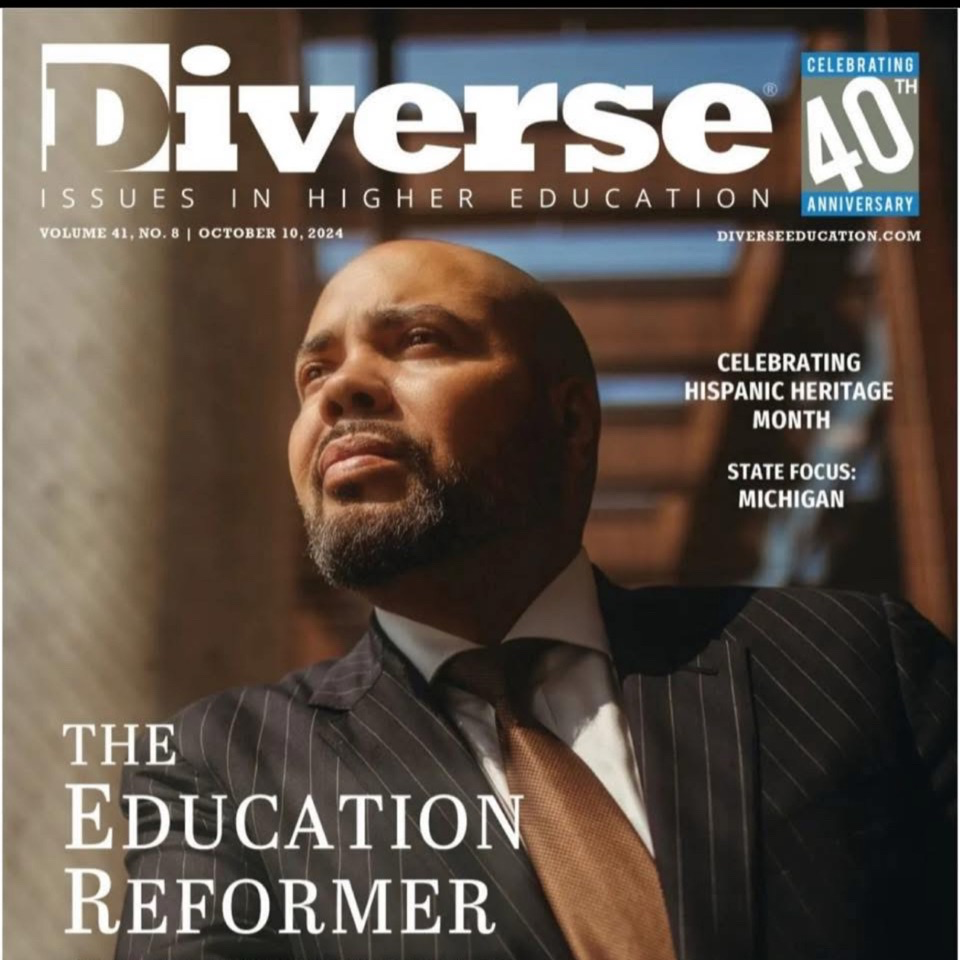
Julian Vasquez Heilig is a nationally recognized public scholar, commentator, and civil rights advocate. He has appeared on major media platforms including Democracy Now!, MSNBC, Al Jazeera, NBC News, PBS, and Univision. His media work reflects a longstanding commitment to making complex policy and leadership issues accessible, urgent, and meaningful.



Leave a comment