Nikole Hannah-Jones’s essay about her daughter’s education is heartbreaking because it poses a question almost every parent understands: Did I make the right choice for my child?
Hannah-Jones made the choice more publicly and politically than most. A decade ago, she and her husband sent their daughter, Najya, to a predominantly Black, high-poverty public school in Brooklyn. They could afford other options. Instead, they wanted their own choices to reflect their belief that privileged families help reproduce educational inequality when they abandon schools serving poor Black children. Then their daughter grew old enough to judge that decision for herself.
“Did you know my school was bad like this when you decided to put me here?” Najya asked her mother after discovering how her middle school compared with New York City’s most prestigious public schools. Later, she put the question even more painfully: If her parents had the resources to get her a better education, why hadn’t they? That is not really a question about school choice. It is a question about parenthood.
Every parent makes these tradeoffs, although few of us have to explain them in The New York Times. Families choose schools because of academics, income, housing, sports, religion, culture, race, language, safety, disability services, discipline, transportation, friendships, family traditions and often simply what they can afford. Rarely does one school maximize everything a family values.
A parent might choose a Seventh-Day Adventist school with fewer Advanced Placement courses because faith formation matters deeply. Another might choose a suburban school for its academics but watch a Black child struggle culturally. A family might remain in a less prestigious district because grandparents live nearby. An athlete may choose a school because of a coach or a starting opportunity. A parent of a child with disabilities may value services more than test scores. Another family may choose a culturally affirming school where their child feels known. None of those choices can be reduced to a ranking on GreatSchools.
That is partly what makes Hannah-Jones’s conclusion so complicated. Najya did experience serious academic failures. Her elementary school sometimes failed to assess her properly, return graded work or even recognize substantial gaps in her mathematics preparation. Her mother eventually discovered assignments riddled with mistakes that had never been corrected. Those are not imaginary problems created by standardized tests or middle-class expectations. Children deserve competent teachers, rigorous instruction and honest feedback.
My own research has found that teacher preparation and teacher quality matter (Darling-Hammond et al., 2005). Defending public education should never require pretending otherwise. But an educator responding to Hannah-Jones’s essay on Facebook raised the concern that has stayed with me: the article can leave readers “to blame structural problems on the usual scapegoats who never had the power to create them.” That is where I think we need to be careful.
Hannah-Jones herself provides the evidence for a more structural conclusion. Najya’s middle-school principal explains that her school enrolled everyone, including children arriving years behind academically, while selective schools concentrated students already prepared to succeed. More than one-third of students at Najya’s middle school had identified learning disabilities, compared with 17 percent at her selective high school. The school was simultaneously expected to remediate years of lost learning, teach grade-level material, manage social and behavioral needs and prepare its strongest students for elite high schools.
That is not simply a teacher-quality problem. It is institutional sorting. My research has documented versions of this dynamic for two decades. Jennifer Holme and I found persistent racial, economic and linguistic segregation long after Jim Crow formally ended (Vasquez Heilig & Holme, 2013). My colleagues and I later found intense racial segregation in charter schools as well, reminding us that giving families more choices does not automatically dismantle inequality (Vasquez Heilig et al., 2019). Research on accountability similarly showed how schools serving marginalized students can be punished for outcomes produced partly by unequal opportunities to learn (Vasquez Heilig & Darling-Hammond, 2008; Vasquez Heilig et al., 2018).
School finance matters too. Davíd Martínez and I have argued that educational opportunity is fundamentally a civil-rights question because children cannot be held equally accountable when they have not been provided comparable opportunities to learn (Martínez & Vasquez Heilig, 2022). This does not absolve the adults who failed Najya. It changes the scale of the indictment. So Hannah-Jones’s story ultimately demonstrates why the parental decision is harder than “choose the better school.”
Najya eventually chose one of New York City’s highly selective public high schools. Academically, she initially struggled because her previous schooling had left gaps. But there was another cost. She had gone from Black schools where, as Hannah-Jones writes, nobody questioned whether Black children could be smart to an environment where classmates used racial slurs and questioned her intelligence. She briefly wanted to leave.
By the end of the essay, Najya herself recognizes the tradeoff. She tells her mother she is glad she did not spend her early childhood in predominantly white schools because her Black schools helped give her a strong racial identity and the confidence to challenge racism. She had also discovered something important about her more privileged classmates: They were not necessarily smarter or better behaved. “They just had more.” That may be the most important sentence in the essay.
Parents make choices. Systems distribute what there is to choose from. Honestly, I personally understand Hannah-Jones’s regret. When your child says, “I never really got the education I wanted,” intellectual arguments about the common good become painfully inadequate. I have heard that same argument from my children. Parents have a special obligation to their own children, and there is no shame in acknowledging that. But we must resist those who are turning this deeply personal story into another argument that the solution to educational inequality is for parents to make better individual choices via vouchers and charter schools. That road leads exactly where we already are.
Families with money purchase tutoring. Families with information navigate admissions systems. Families with mobility purchase homes near preferred schools. Families with social capital advocate successfully. Families without those advantages receive whatever the system leaves behind. The problem is not that parents love their own children too much. The problem is that we have constructed a competitive education system where high-quality education is rationed and doing the best for one’s own child can require leaving other children behind.
The goal should therefore not be to tell parents which sacrifice to make. Choose academics over culture. Choose integration over belonging. Choose religion over coursework. Choose athletics over proximity. Choose the collective over your child. Those are family decisions, and reasonable parents can weigh them differently. Our public responsibility is different. It is to make the consequences of those choices less brutal.
Conclusion
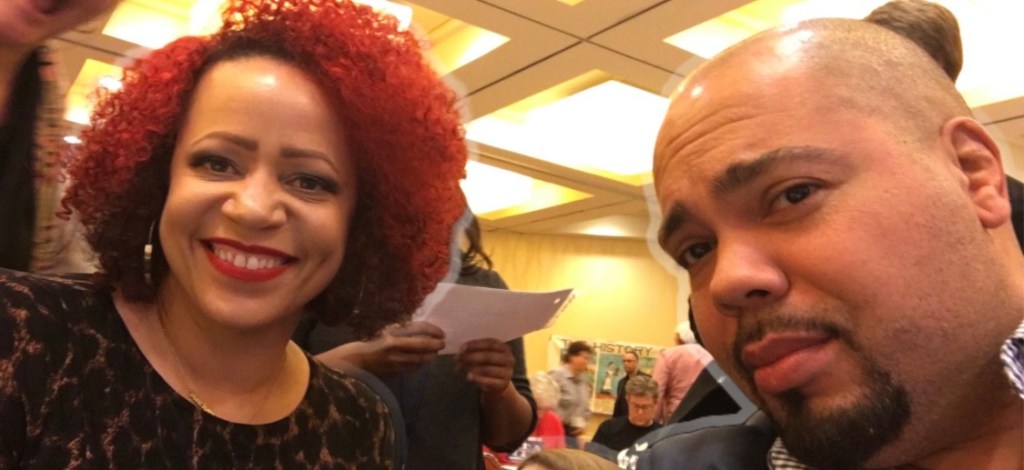
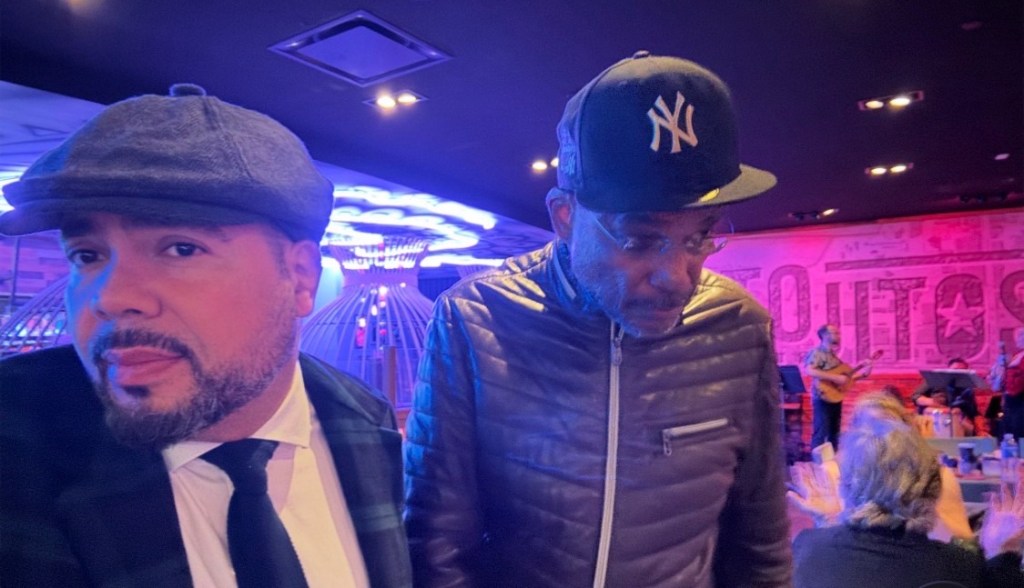
I should also say that I have long admired Nikole Hannah-Jones and her work. I first met her in Oakland in 2017 at the Network for Public Education conference, and I have been a fan of her scholarship and journalism (see photo). That is part of why her essay stayed with me. I read it not as an argument to defeat, but as an extraordinarily difficult question posed by a parent whose choices illuminate the choices millions of families are forced to make.
A Black child should not have to choose between cultural affirmation and rigorous academics. A poor child should not have to attend school with less because her parents earn less. A student should not need admission to a selective school to encounter advanced mathematics. And teachers in high-poverty schools should not be expected to repair years of accumulated inequality while working with fewer resources and then be blamed when they cannot perform miracles.
Hannah-Jones asks whether fighting for every Black child meant betraying her own. I think her essay points to this conclusion: There was never a perfect choice available. That is the real indictment. And it is not an accident. For generations, American education policy has created and maintained systems in which access to rigorous coursework, experienced teachers, enrichment, safety, social capital, and opportunity too often follows race, wealth, and geography. Parents are then asked to make intensely personal choices inside inequalities they did not create.
The question, then, is not whether Hannah-Jones made the right choice for her daughter, or whether another family would have been more virtuous for choosing differently. The harder question is why we continue to tolerate the American education system that makes families choose among things every child should receive together.
Please share.
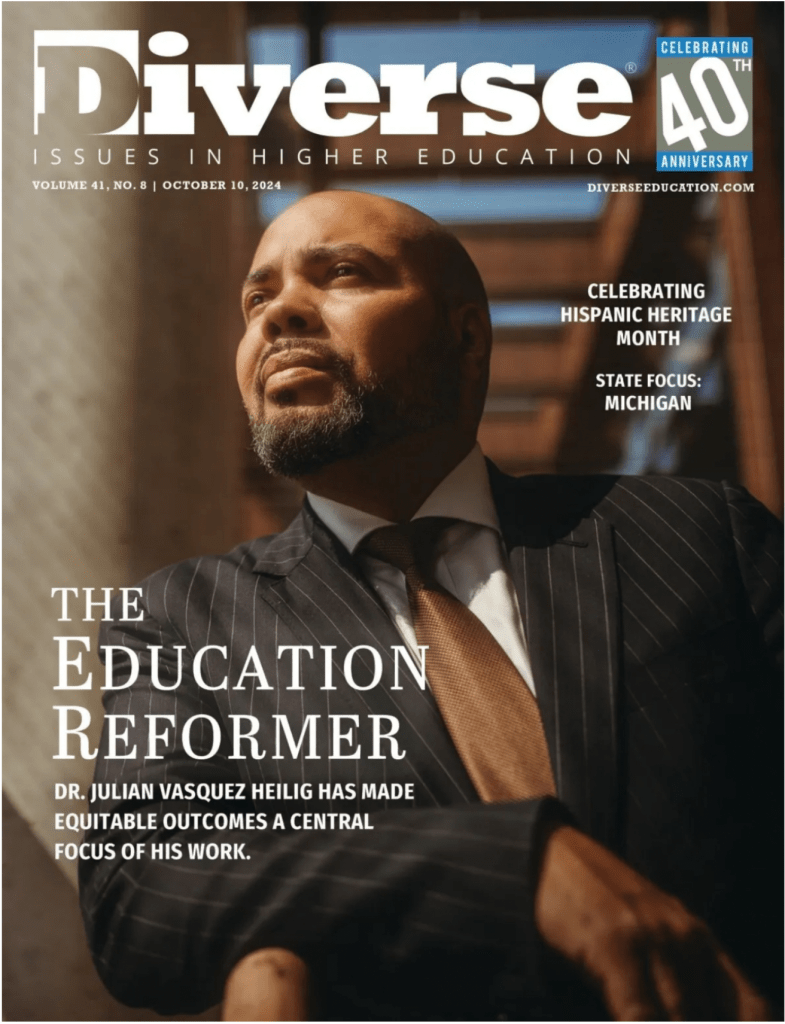
Julian Vasquez Heilig is a nationally recognized public scholar, commentator, and civil rights advocate whose work has appeared on Democracy Now!, MSNBC, Al Jazeera, NBC News, PBS, and Univision. He brings clarity, urgency, and public relevance to complex issues in education, policy, and leadership. For consulting, speaking opportunities, and collaborations, contact jvh@alumni.stanford.edu.
References
Darling-Hammond, L., Holtzman, D. J., Gatlin, S. J., & Vasquez Heilig, J. (2005). Does teacher preparation matter? Evidence about teacher certification, Teach For America, and teacher effectiveness. Education Policy Analysis Archives, 13(42).
Martínez, D. G., & Vasquez Heilig, J. (2022). An opportunity to learn: Engaging in the praxis of school finance policy and civil rights. Law & Inequality: A Journal of Theory and Practice, 40(2), 311–334.
Vasquez Heilig, J., Brewer, T. J., & Pedraza, J. (2018). Examining the myth of accountability, high-stakes testing and the achievement gap. Journal of Family Strengths, 18(1), 1–14.
Vasquez Heilig, J., Brewer, T. J., & Williams, Y. (2019). Choice without inclusion? Comparing the intensity of racial segregation in charters and public schools at the local, state and national levels. Education Sciences, 9(3), 205.
Vasquez Heilig, J., & Darling-Hammond, L. (2008). Accountability Texas-style: The progress and learning of urban minority students in a high-stakes testing context. Educational Evaluation and Policy Analysis, 30(2), 75–110.
Vasquez Heilig, J., & Holme, J. J. (2013). Nearly 50 years post-Jim Crow: Persisting and expansive school segregation for African American, Latina/o and ELL students in Texas. Education and Urban Society, 45(5), 609–632.




Leave a Reply