
This Halloween 🎃 , I want to tell you some truly scary stories about school vouchers, charter schools, segregation, and the future of public education.
As a scholar who has spent more than two decades researching educational equity, school choice, privatization, accountability, and their consequences for historically marginalized communities, I was invited to Tulsa this past week to address some of the most pressing questions facing public education at a community forum. You can explore my published research on these topics here at Academia.edu.
Who really benefits from school choice? Why are public schools closing while states expand private-school subsidies? And when families are told they are free to choose, who gets blamed when their children cannot access a high-quality education? These questions were at the heart of our discussion in Tulsa, where the history of Black Wall Street offers a powerful reminder of the relationship between race, economic opportunity, and public policy.
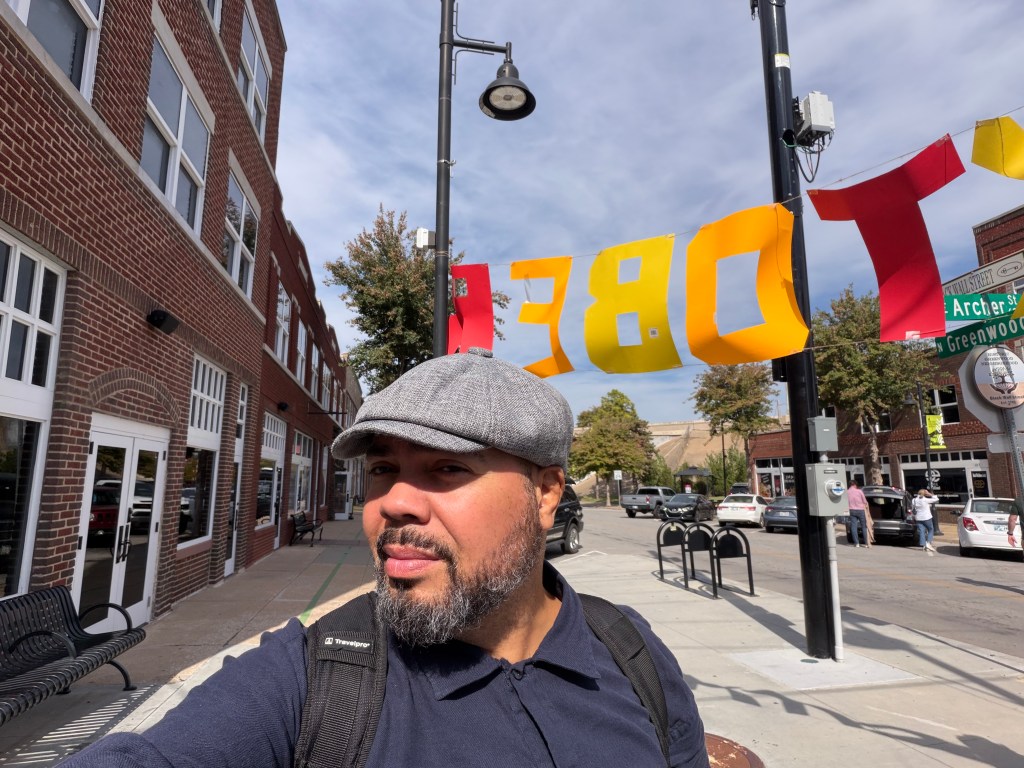
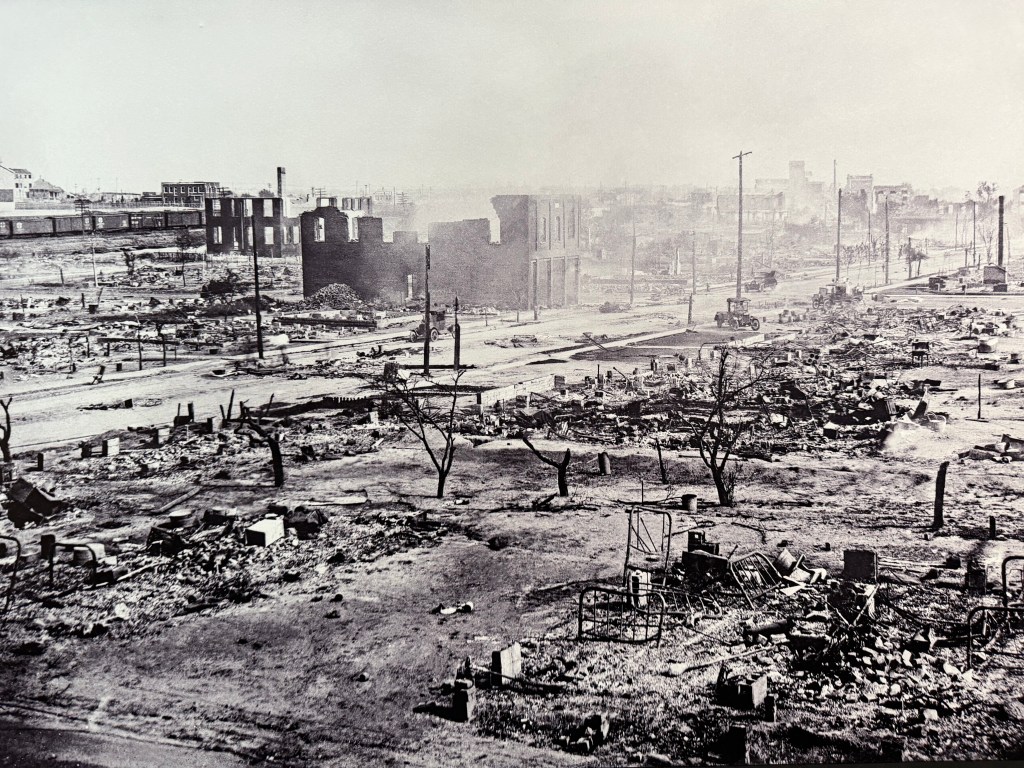
A few days before Halloween, I found myself walking through Tulsa’s historic Greenwood District, once known throughout America as Black Wall Street. Visiting the Greenwood Rising museum and reflecting on the extraordinary Black businesses, families, and institutions that flourished there before the 1921 Tulsa Race Massacre was a powerful experience. White mobs destroyed almost all of this thriving community and murdered 300 people, but Greenwood’s Black residents persevered and rebuilt. Standing in that history reminded me that educational opportunity, economic power, race, and political decisions have always been deeply connected in America.
Later, I joined economist Clara Mattei, educators, school board members, and community advocates for an October 25 public forum hosted by the Forum for Real Economic Emancipation at Tulsa’s historic Big 10 Ballroom. Our discussion explored school vouchers, charter schools, state takeovers, school funding, and the struggle to improve public education. Tulsa provided an urgent backdrop: its school board had just voted to close or consolidate 17 schools while addressing a $12 million budget shortfall. Meanwhile, Oklahoma had authorized up to $275 million annually for private-school tuition tax credits beginning in the 2027–28 school year.
The contrast is as revealing as it is troubling. Oklahoma is expanding public subsidies for private schooling while Tulsa closes public schools to address a budget shortfall. This reflects a disturbing set of political priorities. State leaders can find hundreds of millions of dollars to subsidize private education while public schools serving entire communities are told there is not enough money to keep their doors open. The result is a public education system increasingly subjected to austerity while private education receives expanding government support. How can politicians claim to champion educational opportunity while financing private school choice and charter schools while allowing neighborhood public schools to disappear?
The evening included two panels and an extended audience discussion. I had several opportunities to address the history, research, and consequences of education privatization. Below are reflections on my remarks, with direct links to the specific location in the recording of the forum.
1. The Frightening History of Vouchers: Brown v. Board and Segregation
With Halloween approaching, here is some history worth remembering: some of America’s earliest publicly funded private-school tuition programs were used to resist desegregation.
Consider Prince Edward County, Virginia, where officials shut down the entire public school system from 1959 to 1964 rather than desegregate after Brown v. Board of Education. While approximately 1,700 Black children were denied access to their neighborhood public schools, white families sent their children to newly established private segregation academies supported by state and local tuition grants and tax benefits. One of those institutions, Prince Edward Academy, became a model for segregation academies elsewhere in the South. Taxpayer dollars helped sustain private educational opportunities for white children while Black children were denied public education. This is a documented chapter in the birth of school vouchers that should not be forgotten.
During our first panel, I discussed the general history of vouchers and its relationship to contemporary voucher debates. Today’s programs in Florida, Texas, Arizona and elsewhere operate under different laws and policy rationales, but understanding the history is essential when evaluating claims that school choice automatically expands educational freedom.
Watch my remarks: School Vouchers, Brown v. Board, and the History of Segregation (7:40)
2. Who Really Gets to Choose?
One question from the discussion challenged the assumption underlying many school-choice arguments: If parents are free to choose schools, does that make them responsible when their children do not receive a high-quality education?
My response examined the importance of that argument. Families do not begin with equal financial resources, transportation options, access to information, or school availability. Geographic boundaries can separate neighborhoods with dramatically different educational opportunities.
And there is another fundamental issue: In many private-school choice arrangements, schools also choose which students they admit.
The ability to apply for admission does not guarantee acceptance, transportation, or access to the services a child needs. These realities complicate claims that expanding choice alone can resolve unequal educational opportunity.
Watch my remarks: Who Benefits From School Choice? Schools Do the Choosing (32:44)
3. Houston, New Orleans, and the Return of No Child Left Behind
When we returned to the stage for the second panel, I discussed the actual outcomes and unresolved controversies surrounding government takeovers in Houston and New Orleans.
Both cities have experienced major changes in governance, accountability, and school operations, although their reforms differ substantially. Advocates point to limited achievement gains on state-based tests and purported organizational improvements. Critics raise concerns about graduation rates, SAT/ACT scores, teacher turnover, community control, student experiences, and whether state-based tests measure performance adequately capture educational quality.
I also addressed renewed interest in high-stakes testing approaches associated with No Child Left Behind. Before reviving past accountability frameworks, we should seriously examine their results, unintended consequences, and what communities learned from living under them.
Educational improvement must be evaluated through credible evidence, including outcomes that matter to families and educators.
Watch my remarks: What Have We Learned From Houston, New Orleans, and Accountability Reform? (1:06:23)
4. Decolonizing Our Minds About Education
One of the most important questions of the evening concerned how communities can imagine educational futures beyond the assumptions that currently dominate policy debates.
I discussed the importance of decolonizing our thinking about education, including questioning whose knowledge is valued, whose experiences are dismissed, and why reforms so often arrive from outside communities with little meaningful involvement from those most affected.
My personal history with charter schools and educational inequality has repeatedly brought me back to the importance of examining institutional power, challenging assumptions with data, and listening to communities as sources of expertise.
Watch my remarks: Why We Must Decolonize Our Minds (1:48:42)
5. Be an Education Voter
As the midterm elections approach, education deserves serious attention.
School boards, state legislatures, governors, and other elected officials make decisions that affect school finance, staffing, academic programs, student services, and public accountability. Those decisions can shape a child’s educational experience for years.
During the audience discussion, I emphasized the importance of understanding education policy and participating in democratic decision-making. Education voters can examine what candidates propose, assess their records, and ask whether policies provide meaningful opportunities for children and communities.
Watch my remarks: Be an Education Voter (1:57:40)
6. What Happens When Educational Leaders Lack Courage?
Another audience question raised the problem of educational leaders who fail to act according to their stated values.
Having served as a university dean and provost, I understand that leadership involves competing responsibilities, institutional constraints, and difficult decisions. But communities also have legitimate expectations of values, courage, transparency, integrity, and accountability.
In my response, I discussed how organized public pressure can influence institutional decisions and why leaders must be held accountable for the consequences of their actions.
The question applies to university presidents and provosts, school superintendents, education commissioners, and elected governing boards alike.
Watch my remarks: Educational Leadership, Courage, and Accountability (2:06:46)
7. Are Charter Schools Really Public Schools?
This question closed another important part of our discussion.
Charter schools are discussed as public schools, but I argue they are privately managed schools because they differ substantially from public schools in governance, oversight, labor arrangements, enrollment practices, and accountability.
Important questions concern how public funds are spent, who makes decisions, what obligations schools have toward students, and whether families enjoy meaningful public accountability.
Stating public status alone does not resolve those questions. They deserve careful consideration across every type of publicly funded school (neighborhood public, charter, and private voucher schools).
Watch my remarks: Are Charter Schools Public Schools? (2:10:23)
Conclusion: From Black Wall Street to the Future of Public Education
My visit to the Greenwood neighborhood stayed with me throughout the forum. Black Wall Street tells a story of extraordinary community achievement, devastating racial violence, and the determination to rebuild. Its history challenges us to examine how institutions can either protect opportunity or undermine it.
The conversations in Tulsa raised contemporary versions of those questions. Who has access to educational opportunity? Who controls public resources? Who gets heard when schools face closure or takeover? What responsibilities do public institutions have to the communities they serve?
I appreciated the opportunity to join Clara Mattei, Shawna Mott-Wright, Darryl Bright, John Croisant, Maria Benzon, Aaron Baker, and the hundreds of Tulsa residents who contributed their experiences and perspectives at the community forum.
As Halloween approaches, the history of school vouchers offers some unsettling and honestly scary lessons. But history also offers examples of extraordinary courage, organizing, and collective action. My visit to Black Wall Street reminded me of something essential: Communities have always possessed the knowledge, talent, and determination to shape their own futures. Our educational institutions should help make that possible.
Watch the complete Tulsa public education forum
Please share this discussion with educators, families, researchers, and community leaders interested in the future of public education.
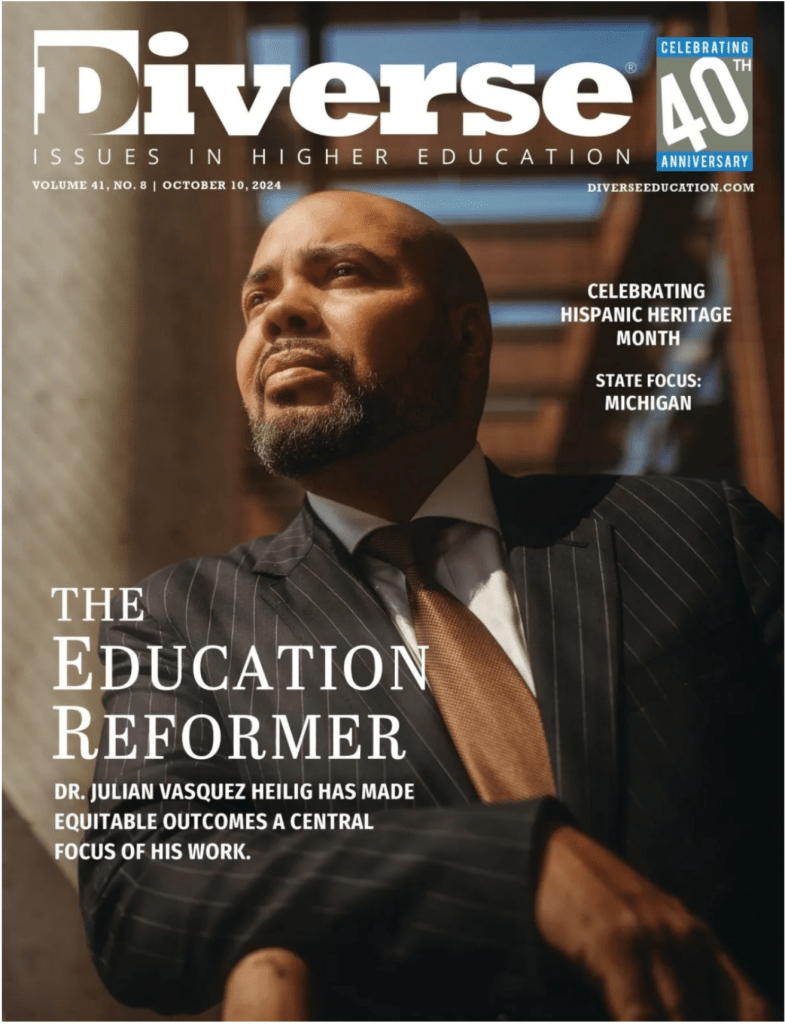
Julian Vasquez Heilig is a nationally recognized education policy scholar, civil rights leader, and experienced university provost and dean. A Stanford-trained scholar and former California–Hawaii NAACP Education Committee chair, he has led educational innovation, improved student outcomes, and strengthened educator preparation across four states. His expertise spans education governance, community accountability, and institutional transformation. Contact him at jvh@alumni.stanford.edu.



Leave a Reply