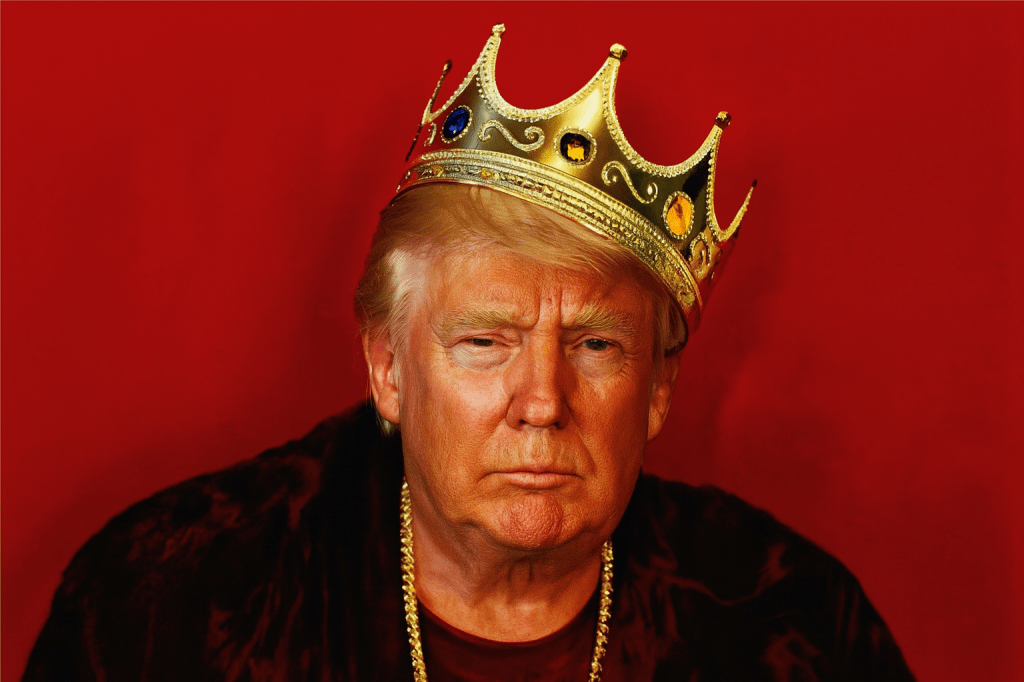
History tells us that some of the most dangerous political violence is carried out not by individuals against one another, but by the government itself.
Before I go on, I’d like to invite you to my online lecture tonight at 7 – 8:30pm EST entitled Sankofa, Shattered Trust, and the Price of Corruption in Politics and Policy. You can register here. Please mark your calendars and set an alarm and reminder.
When most Americans hear the phrase political violence, they imagine angry mobs, shattered windows, armed extremists, or the assault on the U.S. Capitol on January 6. We have been conditioned to recognize political violence when it comes from outside government institutions and openly rejects the rule of law. Yet political violence can take another form that is far more difficult to recognize because it carries the authority of the state. Sometimes it arrives wearing a badge, citing federal law, and insisting that because government officials are carrying it out, it must be legitimate.
That possibility has become impossible for me to ignore after witnessing an older male Australian citizen, of Asian-descent, being violently detained by ICE officers at the Las Vegas airport. I continue to replay in my mind what I saw: confusion, fear, physical force, and strangers stepping forward to defend with the First Amendment rights someone they had never met. What disturbed me most was not simply the force itself but how ordinary it appeared to many around me. The assumption seemed to be that because the officers represented the government, whatever happened next required no further questioning. Yet democracy depends upon citizens asking difficult questions precisely when power is exercised in its name.
Power Is Not the Same as Legitimacy
The German sociologist Max Weber argued that the modern state possesses a monopoly on the legitimate use of physical force. The federal government can arrest, detain, imprison, and, under limited circumstances, use deadly force because society grants it that authority. Weber’s insight helps explain why ICE continues to take actions, such as shooting and killing people who are driving away from its agents, that would be criminal if committed by private citizens or even by local or state police officers. In fact, media reports this week suggest that the FBI has been instructed to no longer investigate shootings involving ICE agents. That makes me deeply concerned for people living in red states where Republican-controlled governments have been reluctant to investigate ICE-related incidents. At the same time, Weber never suggested that every exercise of state power is automatically legitimate simply because it is legal. Legality and legitimacy are related, but they are not the same.
History clearly demonstrates why that distinction matters for power and governance. Slavery was protected by law. The Fugitive Slave Acts empowered federal officials to capture people escaping bondage. Native Americans were forcibly displaced and massacred through military campaigns and government-sanctioned policies. Racial segregation was enforced through legislation, the courts, and police departments. Japanese Americans were incarcerated during World War II under executive authority and through the actions of administrative institutions. None of these injustices occurred outside the government. They occurred because the government itself was the racialized instrument through which injustice was organized and administered.
Violence Can Be Federal
Political theorist Hannah Arendt offered another important distinction between power and violence. She argued that genuine political power rests on public consent and shared legitimacy. Violence, by contrast, is a tool used when institutions increasingly rely on coercion rather than persuasion. The federal government may compel obedience through force, but force alone cannot produce democratic legitimacy. Recent polling suggests that public confidence in ICE’s methods has already eroded. A recent UMass Amherst national poll found that only 33 percent of Americans approved of ICE’s performance. Majorities also opposed ICE agents wearing masks to conceal their identities and using physical force against protesters. ICE agents’ increasing reliance on force, therefore, may not demonstrate institutional strength but instead reveal a widening divide between federal enforcement practices and the public consent upon which democratic authority ultimately depends.
Michel Foucault expanded this understanding by arguing that modern societies exercise power not only through spectacular displays of force but through surveillance, discipline, and the management of everyday life. Fear is the point of the federal action. People modify their behavior because they know they may be watched or punished. Families avoid certain places. Communities withdraw from public institutions. Individuals remain silent because they want to avoid attracting attention. In that sense, political power trafficking in fear often becomes most effective before physical force is ever used.
That insight helps explain why public immigration raids or highly visible detentions affect far more people than those immediately involved. The audience extends well beyond the individual placed in handcuffs in the Las Vegas airport. Children observe. Families change routines. Witnesses experience trauma. Entire communities begin calculating risk before entering a mall, attending school, church, medical appointments, or court proceedings. The political consequence is not confined to one arrest. The broader effect is the production of fear.
The Difference Between Law and Justice
None of this means that governments lack the authority to enforce immigration law. Every nation has the right to administer its borders and implement immigration policy through lawful procedures. Courts have upheld many enforcement actions while finding others unconstitutional or inconsistent with statutory requirements. The question is therefore not whether immigration enforcement itself is inherently illegitimate. The question is how that authority is exercised and whether constitutional principles remain intact while it is exercised.
This distinction is especially important because democracies are judged not only by the laws they enact but by the way those laws are implemented. Due process, transparency, proportionality, accountability, and equal treatment are not technical details. They are the mechanisms through which citizens determine whether state power serves democracy or merely commands obedience with force. When those safeguards weaken, legality alone cannot guarantee justice.
For that reason, I have begun thinking differently about political violence. We often imagine violence as something individual to individual. Yet political violence now involves the ICE’s use of force in ways that intimidate communities, discourage civic participation, or communicate that certain groups exist in a more precarious relationship with the law than others. The objective need not be widespread physical injury. The political objective is achieved when fear itself of death meted out by federal officers becomes normalized.
To be clear, I am not arguing that January 6 and ICE enforcement are the same event. They are fundamentally different. January 6 involved private citizens attacking democratic institutions in an effort to disrupt the peaceful transfer of presidential power from an election. Immigration enforcement involves government officials exercising state authority under federal law for civil matters. Those differences matter and should not be minimized.
The comparison lies elsewhere. Both illustrate how force can shape political behavior. One sought to influence democracy with illegal force and violence. The other raises questions about how democratic institutions themselves use civil law to exercise coercive power and whether those enforcing are actually following the Constitution. Both remind us that democracy depends not only upon elections but also upon how power is exercised between elections.
Conclusion: The Question Every Democracy Must Ask
Personally witnessing the attempted ICE arrest in the Las Vegas airport changed the way I think about political power. I found myself asking not simply whether the officers possessed legal authority but whether the exercise of that authority strengthened or weakened democratic legitimacy. Government agents inevitably possess coercive power because of the weapons they carry and the protection they receive from courts. The defining question for a democracy is not whether that power exists. The defining question is how carefully it is restrained by the Constitution.
As noted above, history repeatedly warns us that politicians say they are acting lawfully while future generations conclude they were acting unjustly. Legality has never been a sufficient defense against moral scrutiny. Democratic citizens therefore have an obligation to examine the exercise of state power by ICE and other federal agents with the same seriousness that they examine violence directed against individuals by other individuals. Our commitment to democracy and the Constitution should not depend upon which political party is exercising force.
Political violence does not always announce itself through an attack on a government building or political banners carried from the White House to the Capitol, as we witnessed on January 6. It can also be carried out by the government itself…through administrative decisions, detention practices, for-profit prisons, presidential executive orders, and armed operations by ICE and the military in streets and neighborhoods. When federal government agents stop, detain, brutalize or kill people without due process, constitutional justification, or meaningful accountability, this is not merely aggressive enforcement. It is state-sanctioned political violence and a betrayal of democracy.
The Constitution is not suspended when federal agents enter an airport, workplace, street, or neighborhood. Protections against unreasonable searches and seizures, guarantees of due process and equal protection, and the right to protest government conduct do not disappear simply because officials invoke immigration enforcement or executive authority. For example, one detail not mentioned in media reports about the Las Vegas airport incident is that ICE agents appeared to remove items from the Australian citizen’s backpack as they departed. That is why the internet videos show Black women pursuing the agents in the terminal. Warrantless government searches and seizures do not become constitutional simply because they are conducted by federal agents. History repeatedly reminds us that injustice can be bureaucratically orderly, presidentially approved, and carried out under the color of law.
President John F. Kennedy understood that constitutional rights are ultimately a moral obligation, not merely a legal abstraction. During a 1963 civil rights address, he declared, “We are confronted primarily with a moral issue. It is as old as the Scriptures and is as clear as the American Constitution.” That remains the fundamental issue before us. When government actions violate constitutional protections, terrorize communities, and treat human dignity as expendable, they cannot be dismissed as ordinary law enforcement. They are political violence… and a democratic nation must possess the courage to name them as such.
Please share.
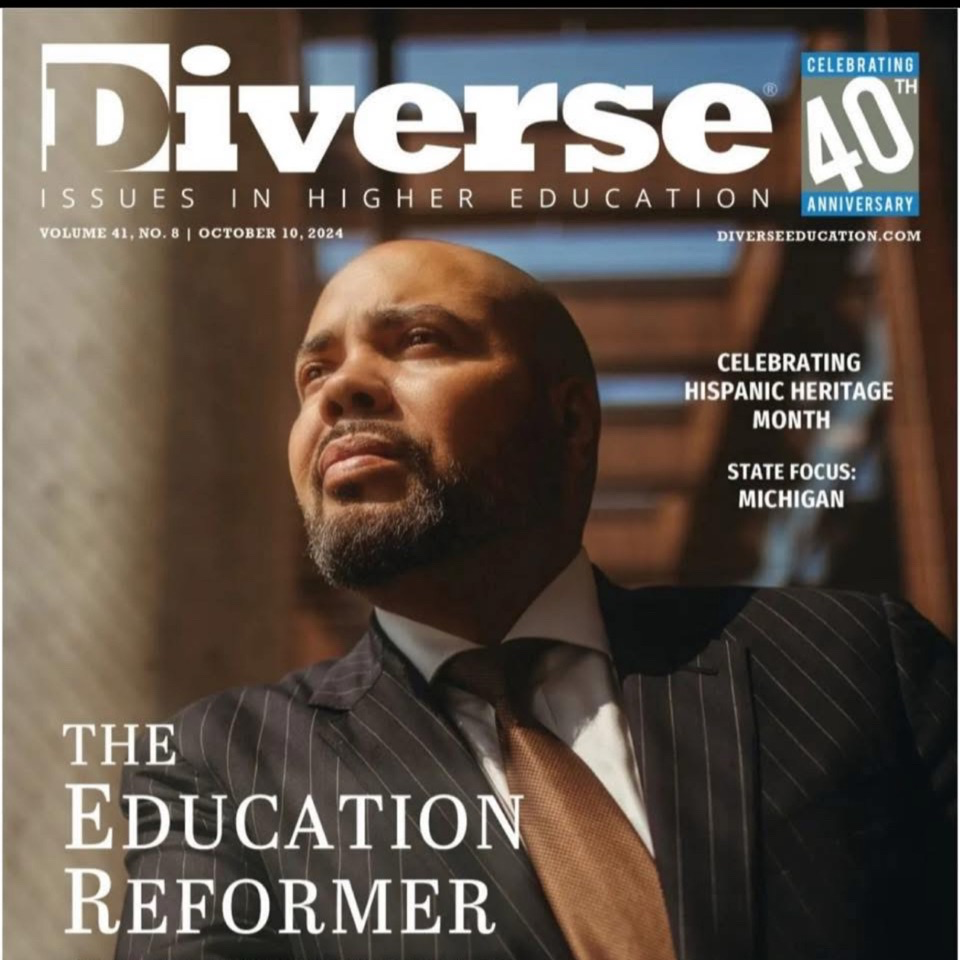
Julian Vasquez Heilig is a nationally recognized policy scholar, public intellectual, and civil rights advocate. He is a recipient of more than 30 honors, including the 2025 NAACP Keeper of the Flame Award, Vasquez Heilig brings both scholarly rigor and grassroots commitment to the fight for equity and justice.





Leave a Reply