Jingle the keys. Make them bright. Make them loud.
Keep the public staring at them while documents disappear from view, casualty numbers climb, missiles fly, and powerful people avoid difficult questions about pedophiles. That is increasingly how America works. When accountability becomes uncomfortable, change the subject.
Recent jangling keys include pink “Latina Power” clothing, Mayor Zohran Mamdani, and Dr. Anthony Fauci’s decisions during the 2020 pandemic. Each subject can produce outrage, conflict, and viral social media clips. Each can divide Americans into predictable teams. Most importantly, each can consume hours of public attention on TV and social media etc. without requiring the people currently holding power to explain what they are actually doing right now.
Meanwhile, there are serious unanswered questions about the Epstein files, including what has been released, what remains hidden, who was protected, and whether accountability will ever reach beyond Jeffrey Epstein, Ghislaine Maxwell and Prince Andrew. Americans need to know who enabled the abuse, whether laws were broken, why institutions failed, and whether powerful people received protection.
We are also fighting an expanding war with Iran. More than 600 American service members have been reported as casualties, while Iranian ballistic missile attacks continue to test American forces and missile defenses throughout the region. Iran has also claimed to have deployed hypersonic weapons that travel at extraordinary speeds and are evading conventional defenses. The United States is spending tens of billions of dollars to replenish missile interceptors and other weapons depleted by the conflict. These developments could reshape American foreign policy, military readiness, public spending, and the lives of thousands of military families. Yet they receive less sustained discussion than pink clothing from Congress (more on this in a moment).
The president is also aging before our eyes. Donald Trump is 80 years old and the oldest person ever inaugurated as president. Journalists have documented visible signs of aging, especially extensive bruising on his hands and frequent naps during public appearances, while his physician and staff insist he remains in excellent health. Americans should not diagnose any president from video clips, but they have every right to demand credible and continuing transparency about the health of someone commanding the military during a dangerous war. Democrats faced legitimate questions about Joe Biden’s capacity. Republicans should not receive a different standard simply because the president now belongs to their party.
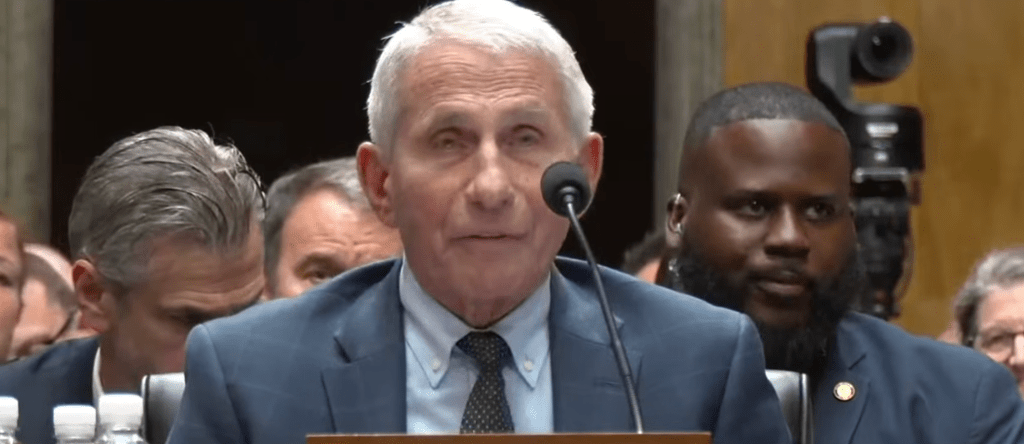
Instead of examining those questions, we are being dragged back into 2020 to debate Dr. Fauci again. Pandemic accountability is a legitimate subject, and no public official should be immune from scrutiny. But timing is part of politics. When Congress and cable news return obsessively to a six-year-old controversy about Covid-19 while an active war is producing hundreds of casualties, Epstein-related questions remain unanswered, and presidential capacity is being questioned, we should notice the subject change. Putting Fauci under oath is a very obvious set of jingling keys.
Zohran Mamdani is another example. Conservatives predicted chaos when he was elected mayor of New York City, but he transitioned into City Hall and has been governing for months. New Yorkers should carefully evaluate his record, including his affordability agenda, housing policies, education, transportation proposals, and plans for city-supported grocery stores. Some of those policies may succeed, while others may fail. But that is what democratic governance looks like. Yet national media repeatedly treat Mamdani’s identity, religion, ideology, and every provocative statement surrounding him as though one mayor is an immediate threat to the entire nation.
While everyone argues about whether New York has become socialist, fewer people are asking who authorized the next military strike, what the war is actually costing and what we could have spent the money on instead. Such as refunding tariff inflation costs to the American people, solving homelessness, or returning to Obamacare subsidies.
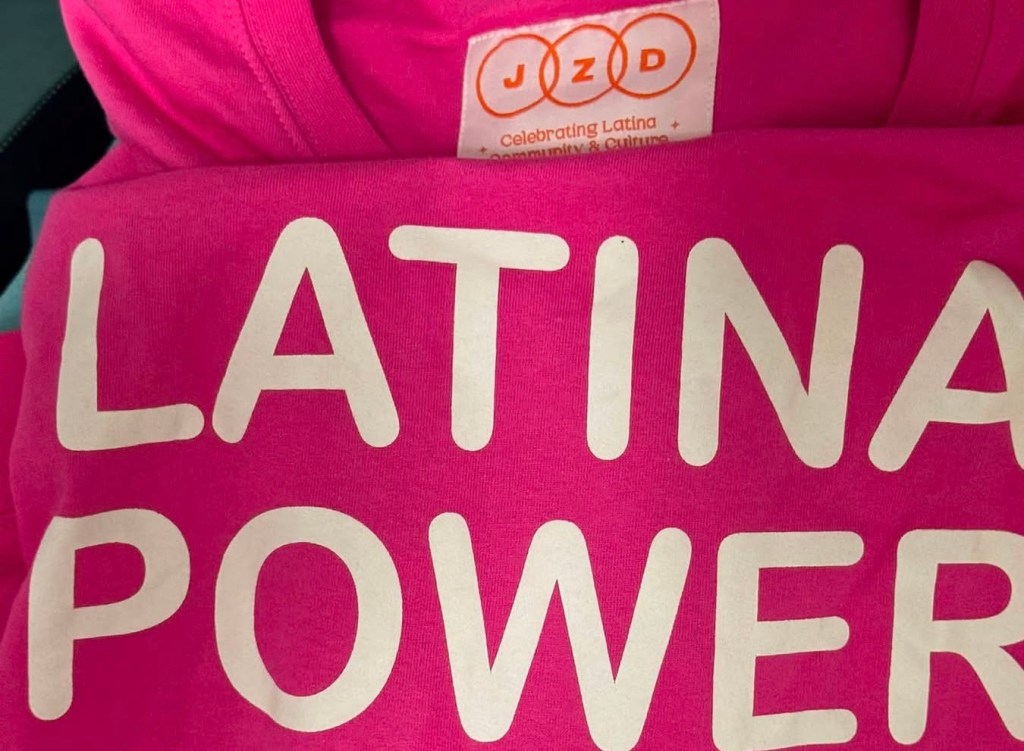
Then there is the “Latina Power” pink clothing. Congressman Brandon Gill held up an image of the merchandise during a congressional hearing and treated it as evidence of racism and misconduct at the Smithsonian. A pink hat had reportedly been sold in the museum for years without creating any national emergencies. It became an emergency when a politician placed it before the cameras and began jingling it.
For me, the words “Latina Power” are not an abstract political slogan. I am Afro-Latino, and the Latina women in my family taught me resilience, faith, education, service, and perseverance. I think about grandmothers, aunts, mothers, educators, workers, caregivers, and community builders whose sacrifices created opportunities for the generations that followed them. Their strength and power threaten no one. They are not comparable to the Ku Klux Klan’s demands for White Power or its history of terrorizing families by burning crosses on their lawns. It represents dignity, history, and the determination to be seen in a country that has too often excluded their experiences from its public story.
Social media and cable news is helping transform these distractions into national obsessions. CNN NewsNight with Abby Phillip too often feels like the laboratory where many of the jingling keys are tested, sharpened, and packaged before migrating into the next day’s broader political conversation. A provocative subject is introduced, panelists are placed into predictable ideological roles, people interrupt one another, and the resulting confrontation is clipped for social media. The format rewards heat more than understanding. The controversy becomes the story, while the underlying policy issue disappears.
This is larger than Abby Phillip or CNN (I actually do watch the show, please have me on). Yet, the entire political-media ecosystem rewards outrage because outrage generates attention, ratings, shares, donations, and votes. Politicians provide the jingling keys. Cable news assembles the panel. Social-media platforms circulate the loudest exchange. For example, I was watching reels today, and I could literally feel my blood pressure rising. The public is left angry, exhausted, and distracted, while the consequential decisions by powerful people are made somewhere outside the frame.
Political scientists call part of this agenda-setting. Political leaders and media institutions may not determine exactly what people believe, but they possess tremendous power to determine what people spend their time thinking about. A distraction does not need to be false to function as a distraction. It only needs to consume the limited attention available.
That is how we arrived at this crazy environment. Americans are pushed from one manufactured emergency to another before the previous issue can be understood or resolved. Yesterday’s outrage disappears beneath today’s viral confrontation. We are encouraged to react immediately, select a side, and attack strangers and political opponents before asking whether the controversy deserves our attention at all. We are becoming emotionally activated but democratically immobilized.
We need to recognize when the keys are jingling. Whenever political leaders or cable-news panels suddenly elevate a symbolic controversy, ask three questions:
- What more consequential subject is being displaced?
- Who benefits from changing the conversation?
- What decision is being made while we are distracted?
“Latina Power” is not the crisis. Neither is Zohran Mamdani turning New York City into a socialist stronghold. Replaying the 2020 pandemic will not answer the urgent questions of 2026. The real crisis is a political culture that keeps Americans fighting over symbols while troops are wounded, missiles fly, documents related to pedophilia remain obscured, and legitimate questions about presidential capacity go unanswered.
We must stop chasing the bright, loudly jingling keys deliberately waved before us. As Dr. Martin Luther King Jr. warned, “Nothing in all the world is more dangerous than sincere ignorance and conscientious stupidity.” Look at who is moving quietly through the room, what they are hiding, and what they are taking while our attention is elsewhere. The keys only work when we choose distraction over truth.
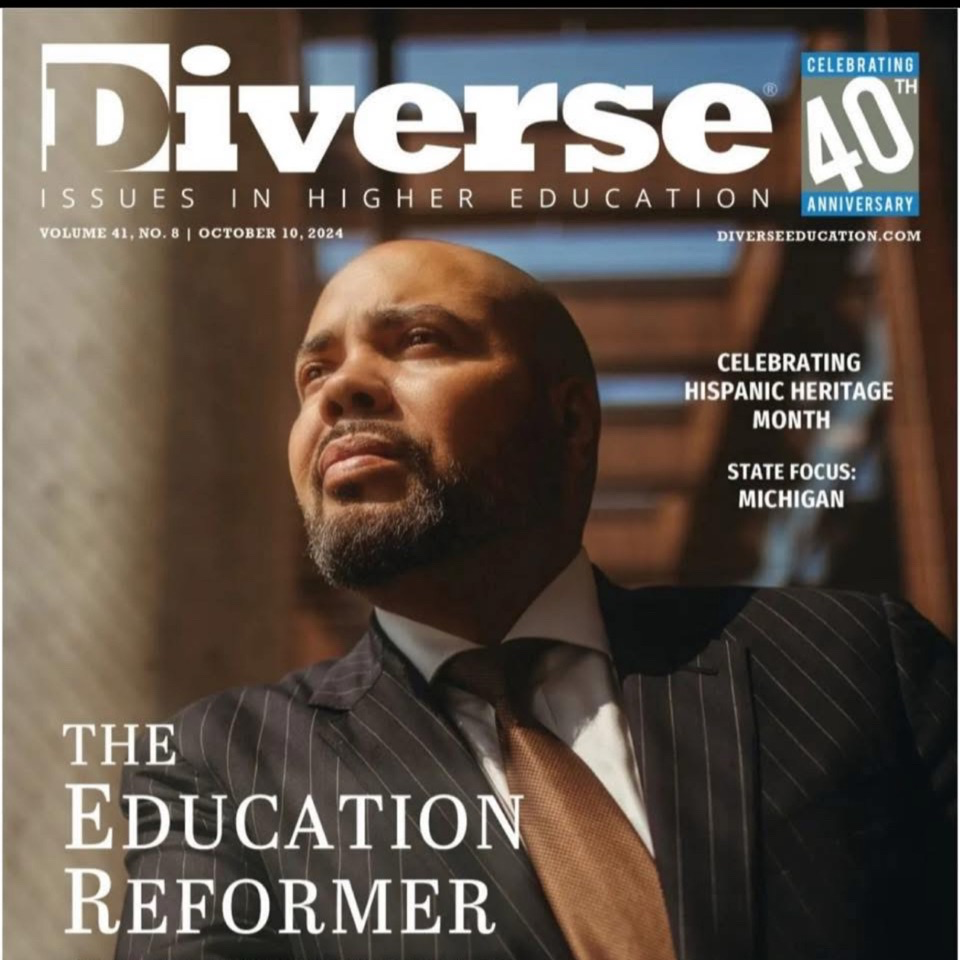
Julian Vasquez Heilig is a nationally recognized public scholar, commentator, and civil rights advocate. He has appeared on major national platforms including Democracy Now!, MSNBC, Al Jazeera, NBC News, PBS, and Univision. His media work reflects a longstanding commitment to making complex policy issues accessible, urgent, and meaningful for the public.



Leave a comment