
There is a popular acronym for Donald Trump’s governing style: TACO—“Trump Always Chickens Out.” The idea is straightforward. Trump makes an enormous threat, markets it as nonnegotiable, watches markets or political institutions react, and eventually retreats. Then everyone declares that Trump has chickened out again. I am increasingly convinced that this explanation misses something important.
Trump does not always retreat from what he wants. Often, he keeps pursuing essentially the same objective through a different mechanism. The threat changes. The justification changes. The agreement changes. The letter changes. Sometimes even the people delivering the message change because the others were fired. But underneath all of those pivots sits an objective that remains remarkably consistent.
The problem is that sometimes the objective itself is untenable. And so Trump keeps running into reality.
Look at Iran
Consider the continuing war with Iran. Trump clearly wants the war to end. He also wants it to end on terms that allow him to declare an unmistakable American victory. Those are not necessarily the same thing.
The pattern has become almost dizzying. There have been ceasefires, negotiations, preliminary agreements, announcements of progress, renewed military action, and then new “negotiations.” In June, the United States and Iran signed a memorandum establishing a framework to discuss toward a more durable settlement. By July, Trump was publicly declaring that the ceasefire was “OVER!” while simultaneously saying negotiations could continue.
Its déjà vu all over again.
On August 6, Trump said he believed the Iran war would end “pretty soon.” Yet the conflict has continued for months, while the United States faces its own pressures, including strains on inventories of some advanced weapons. Meanwhile, fundamental disagreements between Washington and Tehran remain unresolved.
That does not look like someone simply chickening out. It looks like someone repeatedly discovering that the outcome he wants cannot easily be imposed on another country with its own interests, political pressures, military capabilities, and definition of victory. So another ceasefire is proposed. Another negotiation begins. Another framework emerges.
The destination remains elusive because the destination may not be available on the terms being demanded.
Higher Education Has Its Own Version of This Cycle
Something remarkably similar has happened in the Trump administration’s confrontation with American education.
I discussed this pattern last year when the Department of Education issued its February 14, 2025 Dear Colleague letter. The administration attempted to dramatically expand its interpretation of the Supreme Court’s Students for Fair Admissions decision and threatened institutions receiving federal funds over practices extending well beyond admissions. The Department subsequently issued FAQs reinforcing its interpretation and promising enforcement.
Then reality intervened.
Federal courts blocked enforcement. The Department’s own current copy of the Dear Colleague letter now carries a notice explaining that a federal court enjoined the government from enforcing or implementing the letter, its associated FAQs, the End DEI Portal, and the certification requirement.
If the TACO theory were completely correct, that should have been the end of it. It wasn’t. The strategy changed.
From the Dear Colleague Letter to the Compact
Next came the Compact for Academic Excellence in Higher Education.
The mechanism was different, but the ambition was familiar. Rather than simply ordering universities to comply with an expansive interpretation of federal civil-rights law, the administration sought voluntary institutional agreements tied to federal benefits and priorities.
Again, reality intervened. Universities resisted. By October 2025, numerous institutions had publicly rejected the compact or indicated they would not sign it in its existing form. Inside Higher Ed reported that 17 universities had publicly declined while only four had indicated interest.
Think about what happened. The administration did not abandon its broader effort to control and reshape American higher education. It changed instruments. First, coercion through a Dear Colleague letter. Then, inducement through a compact. And now another approach.
Now Comes the Call to University Leaders
Secretary of Education Linda McMahon’s new “National Call to Action to University Presidents and Governing Boards” last week represents another iteration.
This time, the administration is not simply standing outside higher education issuing commands. University leaders themselves have been involved in the conversation. That matters because bringing respected institutional voices into the process potentially gives the administration something the earlier efforts lacked: legitimacy from within the sector.
But changing the process does not necessarily resolve the underlying problem. The federal government certainly has legitimate interests in civil rights enforcement, research integrity, student outcomes, responsible stewardship of federal funds, and ensuring that institutions receiving taxpayer support obey federal law. Universities should not be immune from criticism, accountability, or reform.
But there is an enormous difference between federal accountability and federal direction of intellectual life. When Washington begins asking how universities should approach faculty hiring, academic viewpoints, research priorities, admissions, grading, or curriculum, we are approaching questions traditionally protected by institutional autonomy, faculty governance, academic freedom, and, at public institutions, constitutional constraints. No cleverly written and negotiated letter eliminates those tensions.
The Instrument Keeps Changing Because the Constraint Remains
This is why “Trump Always Chickens Out” is too simple. Sometimes Trump retreats. But usually what looks like retreat is actually iteration. Iran offers one version: ceasefire, negotiations, breakdown, renewed conflict, another proposed deal. Higher education offers another: Dear Colleague letter, court intervention, compact, institutional resistance, another national call to action. The contexts and stakes are obviously very different. But the governing pattern deserves attention.
Trump frequently treats resistance as evidence that he needs another route rather than evidence that the destination itself should be reconsidered. That distinction matters. Because if you believe Trump always chickens out, your strategy is simple: wait him out.
But if Trump instead repeatedly changes tactics while retaining the same objective, waiting becomes a dangerous strategy. The next mechanism may be more sophisticated than the last one. The next proposal may recruit allies the previous proposal lacked. The next legal argument may be narrower. The next political strategy may be more difficult to challenge.
Reality Still Gets a Vote
There is something else Trump keeps encountering. Institutions have rules. Courts have jurisdiction. Universities have governance structures. Countries have interests. Faculty have rights. Presidents do not possess unlimited authority simply because they announce an objective loudly enough.
That is not governmental dysfunction. In a constitutional democracy, some of those constraints are features rather than bugs. So perhaps TACO is the wrong metaphor. Trump does not always chicken out. Sometimes he advances, hits a wall, backs up, moves twenty feet down the wall, and charges again.
Iran reveals the limits of demanding a peace that requires the other side’s submission. Higher education reveals the limits of demanding institutional obedience when universities retain constitutional rights, traditions of shared governance, and obligations to pursue truth beyond political convenience. When one strategy fails, the administration changes the language, recruits new messengers, or approaches the same objective from another direction. But changing the route does not make an illegitimate destination attainable.
The real question is not whether Trump retreats. It is whether democratic institutions recognize that persistence is not the same as legitimacy and pressure is not the same as authority. Reality imposes limits, but those limits become meaningful only when people and institutions defend them through law, governance, public accountability, and principled refusal. Universities should not mistake the administration’s repeated pivots for moderation. Each failed strategy is evidence that resistance matters.
Trump does not always TACO. Sometimes he circles the same destination until reality, democracy, and institutions with courage make clear that there is no legitimate road to get there.
Please share.
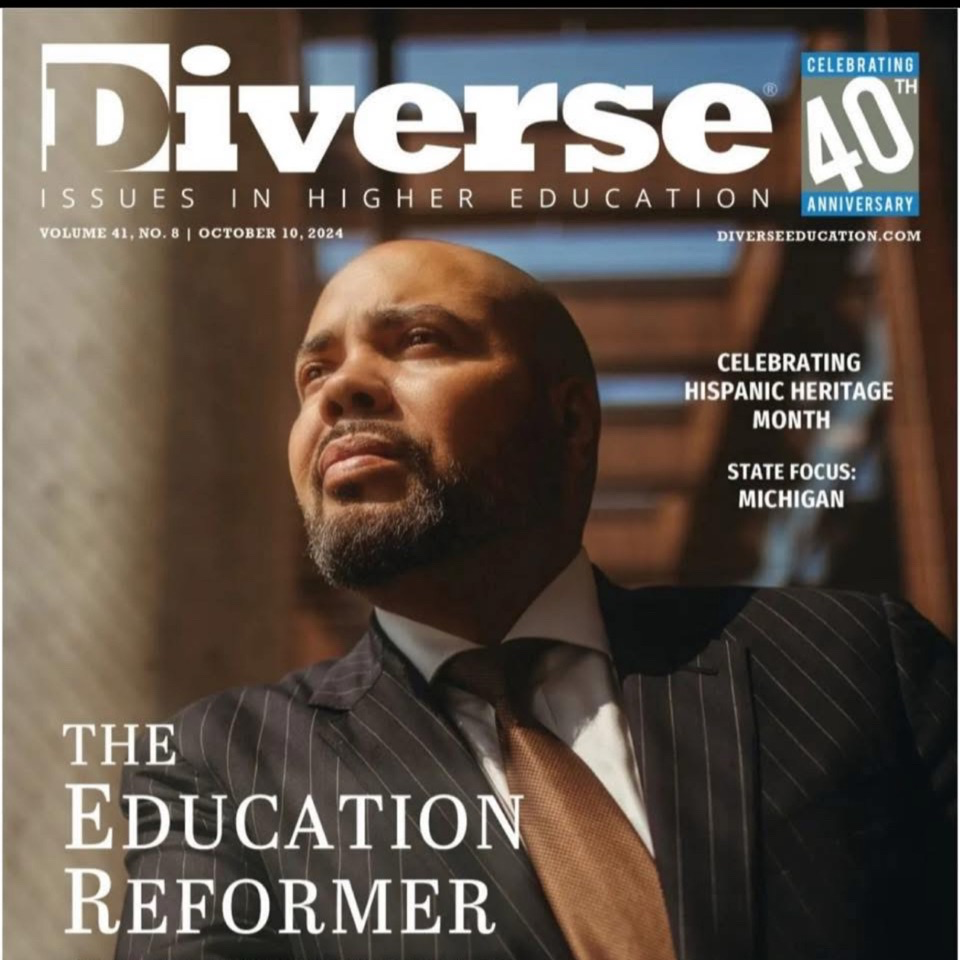
Julian Vasquez Heilig is a nationally recognized public scholar, commentator, and civil rights advocate. He has appeared on major national platforms including Democracy Now!, MSNBC, Al Jazeera, NBC News, PBS, and Univision. His media work reflects a longstanding commitment to making complex policy issues accessible, urgent, and meaningful for the public.





 Cloaking Inequity
Leave a comment