
He told you that you were in this together. In reality, he was using you as cover.
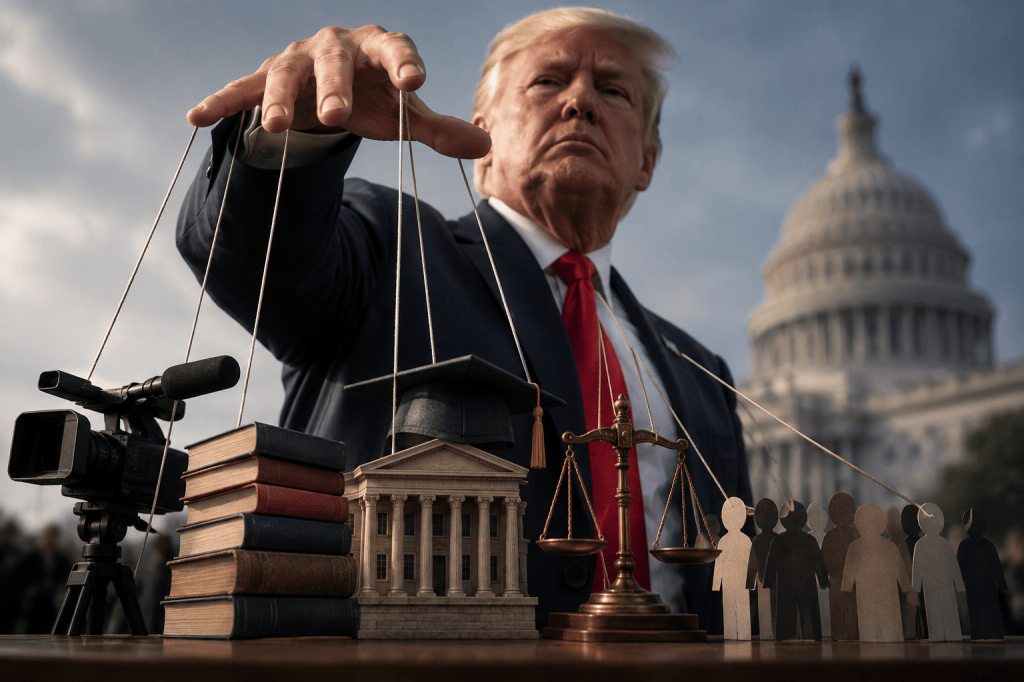
In July 2026, President Donald Trump boarded Air Force One in full view of cameras after attending a NATO summit in Ankara, Turkey. Once aboard, however, he reportedly exited through another door, entered an airport catering truck, and transferred to a smaller military aircraft with a few close personal aides, but no members of his Cabinet. The move was reportedly prompted by an alleged Iranian assassination threat communicated by Israel that the CIA assessed as “low confidence.” The original plane continued toward Britain carrying Secretary of State Marco Rubio, Treasury Secretary Scott Bessent, White House personnel, and members of the press, most of whom apparently believed Trump was still aboard.
Air Force One carrying everyone else became the decoy while the president and only his personal aides escaped the perceived danger. Although the operation may have protected Trump, it also left other people traveling aboard the 747 jet that a potential attacker would have expected him to be on.
Some supportive observers have described the operation as clever, but I see weakness in a leader protecting himself by allowing other people to become the decoy. Trump later said that he simply followed the instructions of the Secret Service and military, and presidential protection personnel certainly have a responsibility to safeguard his life.
Yet the image remains troubling: the most powerful person leaves quietly while staff members, public officials, and journalists continue aboard a highly visible decoy target. Most did not know that the president had switched planes. Whatever its tactical merits, the episode raises a larger moral question about what leaders owe the people who stand beside them when danger approaches.
“I Can Feel It Coming”
Every so often, someone reaches out to me with the same quiet concern. It’s been a superintendent who sensed that a school board was turning against them, a university leader who knew a political campaign was preparing to target them, or an elected official who saw a coalition forming that was soon to try to remove them. Sometimes it is a nonprofit leader, community organizer, scholar, or public servant who has simply become inconvenient to someone powerful. The details are always different, but they usually say some version of the same thing: I can feel it coming. They recognize the early signs of an attack because the tone of conversations has shifted, familiar people have grown distant, and messages have begun circulating just beyond their view.
The first response to that realization is usually panic and/or sleepless nights. The mind starts racing through possible accusations, adversaries, outcomes, and responses. People wonder whether they should speak publicly, gather allies, release documents, prepare statements, or confront those they suspect are organizing against them. Fear in this moment can cause leaders to focus so narrowly on saving themselves that they don’t consider what the conflict may do to the people around them.
Never Make Your People the Decoy
When leaders know an attack is approaching, they may be tempted to redirect the danger toward someone else. They blame a subordinate, distance themselves from or fire a colleague, abandon a controversial initiative, or allow the least powerful members of the organization to absorb the criticism. For example, we see this in universities when leaders sacrifice diversity programs, academic departments, faculty members, or staff members in the hope that political opponents will be satisfied. We see it in school systems when a superintendent blames a principal, and in nonprofit organizations when an executive places responsibility on a director who had little authority over the contested decision. In each case, the leader quietly changes planes while everyone else continues aboard the decoy.
That strategy may preserve a position temporarily, but it rarely creates lasting safety. People who attack are seldom satisfied by one concession, especially after learning that pressure produces results. They’ll soon return with another demand, another target, and another definition of what must be surrendered. Meanwhile, employees and community members learn that their leaders will sacrifice them whenever protection becomes inconvenient. A leader who survives by abandoning others may retain the title while losing the community trust that makes leadership possible.
Preparation Is an Act of Protection
Long before modern leadership books and crisis-management manuals existed, the Chinese strategist Sun Tzu argued that conflicts are often decided before the confrontation formally begins. Preparation, positioning, relationships, and timing shape what becomes possible once an attack becomes visible. For an ethical leader, however, preparation cannot be limited to creating a personal escape route. It should include ensuring that vulnerable people know their value and the emerging situation. The objective is to build a community capable of enduring pressure without sacrificing its contributing members.
Trust cannot be manufactured in the middle of a crisis. If people have watched a leader protect them when doing so was inconvenient, they are more likely to remain steady when that leader comes under attack. If they have watched the same leader repeatedly abandon others, no speech about loyalty or unity will persuade them to assume another risk. Credibility is accumulated through ordinary decisions made long before anyone knows a confrontation is coming. Those decisions determine whether people will face the crisis together or scatter as soon as the pressure begins.
Preparation also requires honesty about what standing together may cost and about who may ultimately refuse to stand with you. I have watched people abandon a leader who had defended their interests, opened doors for them, and even hired them. Past support does not promise loyalty, and leaders should not assume that those who benefited from their decisions will remain beside them when the pressure arrives. At the same time, people should never be misled about the danger or unknowingly placed in the path of an attack intended for someone else. Shared struggle is meaningful only when people understand what is happening and retain the agency to decide whether and how they will participate. Asking colleagues to stand with you is fundamentally different from using them as cover. One builds solidarity; the other exploits trust.
Let the Attackers Reveal Themselves
Those preparing an attack often begin with enormous confidence because they have been discussing their plan privately while the target is only beginning to understand what is happening. Their narrative appears polished, their coalition looks united, and their momentum can feel unstoppable. Yet maintaining that energy requires continuing cooperation among people who may have different ambitions and motives.
This is often how the people who come for others begin creating the conditions for their own eventual demise. Their certainty produces overreach, their appetite exceeds their judgment, and their willingness to distort the truth eventually makes them untrustworthy even to their former allies. My mother always told me “there is no honor among thieves.” They put in motion their own demise. They may win an early vote of confidence, dominate the narrative during the short term, or force someone from a position, but those victories temporarily conceal more serious damage to their credibility. People eventually recognize patterns of manipulation, betrayal, and cruelty, especially when the attackers immediately begin searching for their next target… which is often each other. You may not have to confront the people who come for you because, given enough room, they lean into the qualities that lead to their own undoing.
Conclusion: Never Make Your People the Decoy
You can defend your reputation without sacrificing someone else’s, preserve an institution without abandoning its most vulnerable members, and confront deception without allowing it to reshape your own leadership. That path is harder because it denies you the easy option of quietly escaping in the catering truck while transferring the danger to those left behind. It may cost you your position, but no position is worth preserving by making others pay the price for your survival. Titles can be taken, authority can disappear, and institutions can turn against you, but integrity remains yours to surrender or protect. Even when you cannot control the attack, you can still decide what kind of leader you will be when it arrives.
When the attack comes, do not slip away with your closest confidants while everyone else unknowingly flies ahead as the decoy. Turn toward your people, tell them the truth, and face the danger beside them. Leadership is not measured by whether you secure the safest exit for yourself, but by whether the people who trusted you are safer because you stood with them. You may not escape the attack, but you can refuse to place others in greater danger or use them as shields for your survival. The final measure of leadership is not whether you found a way off the plane; it is whether, when danger arrived, you refused to abandon the people still aboard.
Please share.

Julian Vasquez Heilig is a nationally recognized public scholar, commentator, and civil rights advocate. He has appeared on major national platforms including Democracy Now!, MSNBC, Al Jazeera, NBC News, PBS, and Univision. His media work reflects a longstanding commitment to making complex policy issues accessible, urgent, and meaningful for the public.






Leave a comment