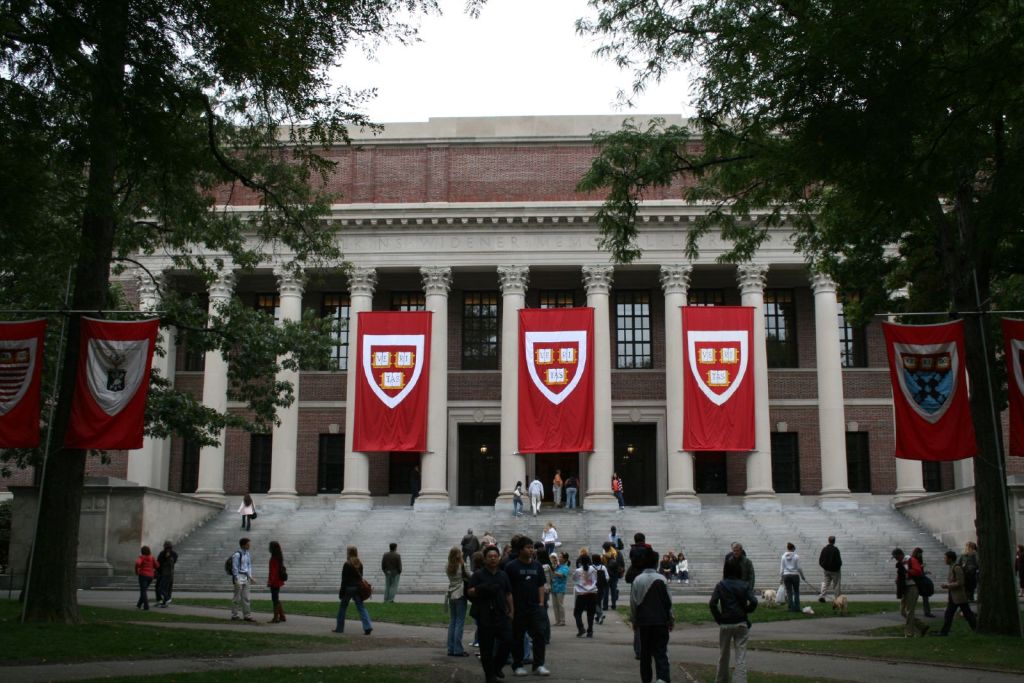
If universities refuse to replace research funding lost to political discrimination, they cannot punish the scholars whose work the government erased.
This week, I attended a meeting of Cardinal Courage, a nonpartisan, multigenerational coalition of Stanford alumni and allies working to defend academic freedom and resist political interference in universities. As a Stanford alumnus, I joined the conversation expecting an important discussion about institutional courage. I did not expect to leave heartbroken. One Stanford faculty member’s voice trembled as they described canceled grants and the destruction unfolding around them. Then they said, “Stanford has decided to sit this out.”
That statement has stayed with me. Stanford is one of the wealthiest and most influential universities in the world. If Stanford can sit this out, what protection exists for researchers at universities with smaller endowments, fewer political connections, and less institutional power? Academic freedom means very little if universities defend ideas in principle while abandoning the people producing them in practice. Faculty cannot conduct research with a statement of concern, and graduate students cannot pay their bills with a webinar about resilience.
The professor explained that this attack was not confined to education, ethnic studies, gender studies, or other fields right-wing politicians routinely dismiss as ideological. Cancer research was being disrupted. Diabetes research was being disrupted. They worried that we were watching the destruction of a generation of scholars and a generation of knowledge across the entire spectrum of academic fields. These words prompted my question: If the government cancels research because of its viewpoint, what responsibility does a university have to protect the careers of the scholars it abandoned?
A Political Purge Disguised as Efficiency
The public evidence demonstrates that these cancellations were not ordinary adjustments to federal research priorities. Nature reported that sworn court testimony and internal correspondence showed representatives of the Department of Government Efficiency (DOGE) directing National Institutes of Health grant terminations. DOGE was built around Elon Musk and staffed by operatives given extraordinary authority over federal agencies. The Washington Post reported that deposition videos and public records revealed DOGE personnel using ChatGPT to identify humanities grants associated with diversity, equity, and inclusion. This was not peer review by qualified scholars. It was a political purge dressed up as government efficiency.
The words used to flag supposedly objectionable research exposed the intense viewpoint discrimination. Reported terms included “BIPOC,” “minorities,” “Native,” “tribal,” “Indigenous,” “immigrant,” “LGBTQ,” “homosexual,” and “gay.” NIH projects were reportedly targeted for words such as “race,” “transgender,” “inequity,” and “minority.” According to The Verge, one DOGE official struggled during a deposition even to define DEI, although his team had used the category to eliminate grants. They could not consistently explain what they were hunting, but they were willing to destroy research because an abstract mentioned marginalized people.
A federal judge later found that DOGE’s cancellation of more than $100 million in National Endowment for the Humanities grants was unconstitutional. As ABC News reported, references to Black civil rights history, Native communities, Jewish Holocaust testimony, women, and Asian American experiences had effectively been treated as markers of wastefulness or insufficient merit. Entire communities became warning words for the DOGE cancel culture. Their histories, health needs, educational experiences, and struggles for equality became reasons to prevent knowledge from being produced. That is viewpoint discrimination, even when government officials hide it behind spreadsheets, artificial intelligence, and bureaucratic language.
The Lost Research Is Larger Than DEI
The scale of the destruction has been staggering. Science News reported that approximately 2,500 NIH grants with $2.3 billion in unspent funding were frozen or terminated, while more than 1,300 National Science Foundation grants with roughly $700 million remaining were cut. Reuters reported that NIH terminated $1.81 billion across 694 grants during one six-week period alone. The National Institute on Minority Health and Health Disparities lost approximately $224 million, nearly one-third of the grant funding examined in that analysis. These numbers represent careers interrupted, data never collected, treatments delayed, and questions that may now remain unanswered.
I have accepted relatively few grants during my career for two reasons. First, I have served in administrative leadership roles since 2014, which left little time to pursue external funding because my focus was on supporting the faculty I supervised and advancing their grantmaking. Second, I have wanted the freedom to conduct research according to my own scholarly judgment rather than the shifting priorities of governments or funders. Even without extensive grant funding or substantial student research support, I have produced approximately 80 scholarly works over the past two decades. That independence protected much of my scholarship, but it also helped me recognize how vulnerable grant-dependent faculty become when political operatives gain control of the funding system.
Most faculty cannot replace a canceled multimillion-dollar research project by working harder at night and on the weekends. Grants support research assistants, laboratory staff, community partners, data collection, equipment, travel, and sometimes portions of faculty salaries. Canceling a grant can destroy years of relationship-building, interrupt longitudinal studies, scatter research teams, and derail the careers of graduate students and junior scholars. When universities ignore those consequences, they make the government’s viewpoint discrimination more effective. They become silent partners in the political attack and destruction.
Fund the Research or Lower the Standards
Universities have not responded equally. Harvard committed $250 million of its own resources to sustain research affected by federal disruptions. The Associated Press reported that Harvard joined institutions including Johns Hopkins and Northwestern in using internal resources to protect threatened research. Other universities simply offered sympathetic emails, webinars, legal updates, or advice about removing controversial words from grant applications. Faculty did not need another carefully worded message acknowledging uncertainty. They needed bridge funding, job protection, legal action, tenure-clock extensions, research assistants, and leaders willing to fight.
Faculty senates, deans, provosts, presidents, and governing boards cannot sit idly by while political discrimination destroys careers and science. Universities therefore have two defensible choices: replace the canceled funding or lower the productivity standards applied to the scholars who lost it. I am not calling for lower expectations of research integrity, methodological rigor, originality, teaching, or intellectual quality. I am calling for lower expectations for grant dollars, publications, completed studies, supported students, and other products faculty were politically prevented from producing. Universities cannot shrug their shoulders while the research disappears and then punish scholars for failing to produce what their institutions refused to protect.
Count What Political Discrimination Took Away
Every competitively awarded grant canceled because of politically targeted language should be counted fully in promotion and tenure. The record should include the original dollar amount, peer-review status, principal-investigator role, approved aims, and intended duration. Tenure clocks should be extended automatically, and the affected period should be removed from calculations of expected productivity. Committees should also consider the manuscripts, datasets, community partnerships, student opportunities, and public benefits the project was reasonably expected to generate. A canceled grant must never be treated as though the scholar failed to win one.
This does not require universities to invent findings that never existed. It requires them to estimate the scholarly opportunity that was taken away using the funded proposal, project timeline, work already completed, prior productivity, and ordinary expectations within the discipline. Courts calculate damages from lost future wages, profits, and opportunities every day. Universities are capable of evaluating lost scholarly productivity when the evidence is contained in a successfully peer-reviewed proposal. What they cannot ethically do is pretend the loss never occurred because acknowledging it would require institutional accountability.
Some faculty will object that everyone must be judged by identical standards. Identical treatment following unequal obstruction is not fairness. If one runner competes freely while political officials tie weights to another runner’s ankles, comparing only their finishing times does not make the race meritocratic. We are confronting a potential lost generation of scholars and knowledge across cancer research, diabetes research, education, history, health equity, and many other fields. This is a travesty, and universities must act. Fund the research or lower the affected productivity standards, but do not allow political discrimination to cost scholars their careers and society the knowledge they were prepared to create.
Conclusion
This crisis will not fall equally. Presidents, provosts, deans, and most senior faculty will retain their titles, salaries, tenure, and professional standing. Junior and early career faculty will carry the missing publications, interrupted studies, displaced students, and canceled grants into promotion and tenure reviews that could determine the rest of their careers. Faculty expect university leaders to defend them, especially when that defense is difficult, expensive, or politically unpopular. Leadership matters most when the people with the least protection are under attack.
I appeal to those entrusted with leading our universities to respond with empathy and understand what is at stake. Imagine having your early career judged by work the government prevented you from completing while your institution stood aside. Do not shrug. Do not hide behind procedure. Do not sit this out. Leadership is not the title you hold when your institution is safe; it is the shield and sword you raise high on the battlefield when the people in your care and protection are under attack. Fund the research, document the discrimination, modify the tenure process, protect careers, and show the next generation of scholars that when political power tried to erase their work, someone with institutional power finally stood between them and the danger.
Please share.
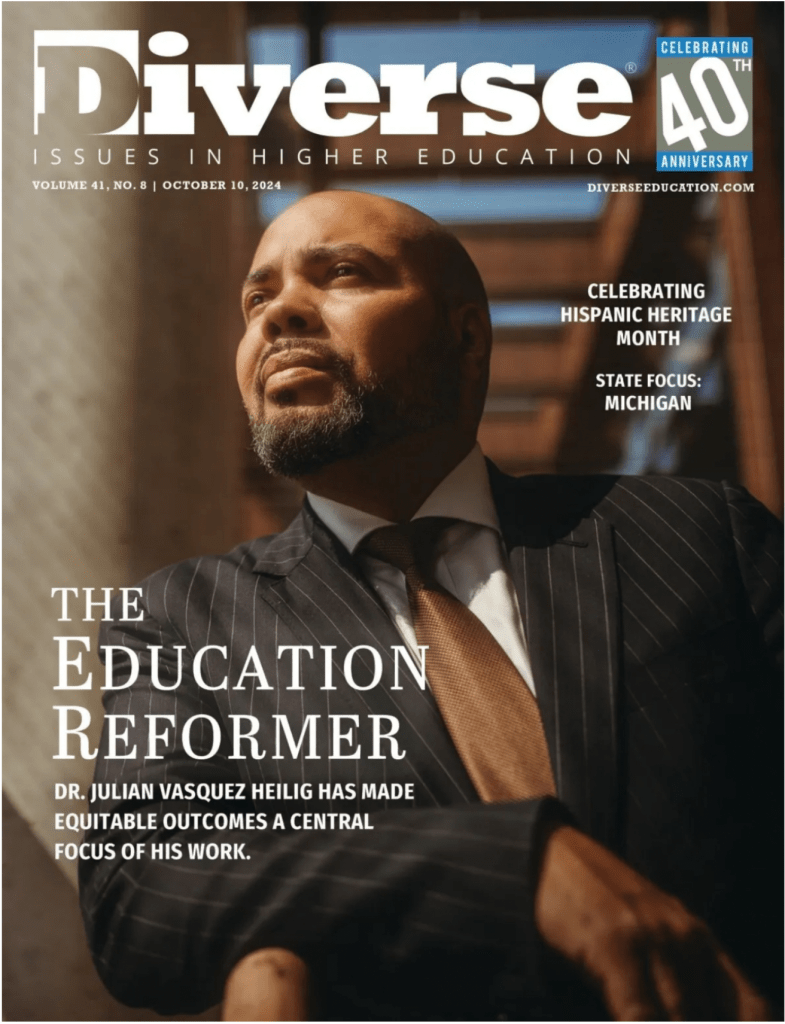
Julian Vasquez Heilig is a nationally recognized public scholar, commentator, and civil rights advocate whose work has appeared on Democracy Now!, MSNBC, Al Jazeera, NBC News, PBS, and Univision. He brings clarity, urgency, and public relevance to complex issues in education, policy, and leadership. For consulting, speaking opportunities, and collaborations, contact jvh@alumni.stanford.edu.




Leave a comment