I regret to inform you that… one day, every one of us is going to retire. Our titles will disappear from directories. Our offices will belong to someone else. The meetings will continue without us, and new humans (or robots) will make decisions that once belonged to us. Eventually, the organizations to which we devoted so much of our lives will turn another page in their histories.
We spend decades building careers and pursuing opportunities to make a difference. Yet we rarely stop to consider what will remain when our professional journeys come to an end. In the film Gladiator, Maximus offers a line that has stayed with me for years: “What we do in life echoes in eternity.” The older I get, the more I appreciate those words. Our influence can continue across generations in ways we may never fully understand.
Perhaps that is why I have such mixed emotions about the upcoming retirement of my friend and mentor, Dr. Kofi Lomotey. This November, the University Council for Educational Administration (UCEA) will gather in Pittsburgh to celebrate Kofi’s remarkable career. I am genuinely looking forward to the occasion. I am also approaching it with sadness because so many are not quite ready for this chapter of his professional life to close.
Everyone Knows a Kofi
I suspect most of us have known someone like Kofi. Someone who gives and keeps giving. Someone who inspires us to imagine possibilities we might never have considered. Someone who believes in our potential during moments when we struggle to believe in ourselves. These are the people who answer when we call. They celebrate our successes and support us through disappointments. They offer wisdom with a generosity that can be difficult to comprehend.
There are so many Kofis in this world, and I wonder whether we fully appreciate what they give us.
Kofi has spent decades shaping educational leadership. He has served as a university provost and distinguished scholar. His research and mentorship have influenced generations of educators. Yet when I reflect on his influence in my own life, I return to something wonderfully simple. Kofi always picks up the phone. Always.
Throughout my career, I have called him for advice about the complexities of university leadership. Sometimes the challenges involved consequential decisions. Other times, I simply needed the perspective of someone who understood the difficult world of higher education administration.
There is something deeply reassuring about having a mentor who makes himself available. Academic leadership can be lonely work. Knowing that someone with Kofi’s experience is willing to listen has meant more to me than I can adequately express.
We Live On in Other People
Have you ever had a friend or colleague remind you of something you said years ago that profoundly influenced their life, only to discover that you have absolutely no memory of saying it? They remember the conversation in remarkable detail. They might even repeat your exact words while you search your memory and come up completely empty. I find those moments fascinating because they reveal something profound about human relationships. A conversation that seemed ordinary to us may have become a defining moment in someone else’s life. I have come to believe that this is one of the ways we truly live on. We become part of other people.
Next week, I will return to Stanford University to receive the Graduate School of Education’s Alumni Excellence in Education Award. One of my former professors, Anthony Antonio, will introduce me during the celebration. I still hear Anthony’s voice in my head when I write. Years ago, he told me, “Don’t use the word ‘via.’ Choose something else.” It was a small piece of writing advice during my graduate studies. I cannot tell you how many times I have been writing something and heard those words again. I am almost 100 percent certain Anthony has absolutely no recollection of telling me that. For him, it was probably an ordinary moment of mentoring a doctoral student. For me, it became part of how I write.
Decades later, a professor’s voice in my head still shapes the choices I make at my keyboard. Think about how extraordinary that is. Anthony may have forgotten the conversation, but his influence continues every time I pause before typing that word. Something he said years ago remains alive in my daily work. And I suspect we all carry similar voices within us.
The Words We Inherit
Think about the expressions passed down through your own family. Perhaps your grandparents used phrases that your parents repeated and that you now find yourself saying without thinking. An expression like “cotton-picking” carries a complicated cultural history that many people repeating it today may never have considered.
Sometimes we hear ourselves speaking and recognize the voice of a parent or grandparent. We may repeat a phrase whose origins we cannot explain or offer advice using the exact words someone once shared with us. A person may have been gone for decades, yet something of their presence remains alive in the language of their children and grandchildren.
The same phenomenon occurs in our professional lives. A mentor shares an insight that becomes part of how we approach our job. An educator challenges our thinking in a way that permanently changes how we understand the world. A colleague offers encouragement that we later find ourselves repeating to someone facing a similar challenge. Over time, their wisdom becomes intertwined with our own judgment.
I wonder how many things we say today originated with someone who mentored us years ago. I suspect more than we realize. We are walking collections of the people who loved us and challenged us. Their influence lives in our habits and in the ways we treat others. And that brings me back to Kofi.
The Genius of Generosity
Imagine how many people have received advice from Kofi Lomotey throughout his career. Somewhere today, a dean may be encouraging a faculty member using wisdom Kofi shared decades ago. A professor may be supporting a graduate student because Kofi once modeled what meaningful mentorship looks like.
Those students and colleagues will eventually encourage others. His influence will travel into classrooms and communities he may never visit. There is a kind of genius in seeing potential in others and helping them develop it. Kofi possesses that genius. His generosity has multiplied through the lives of countless people.
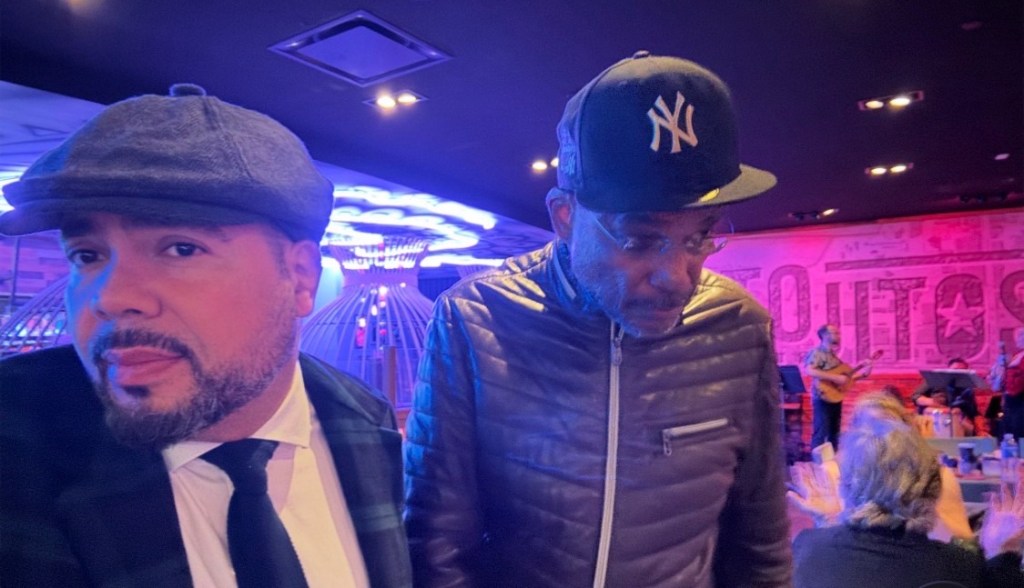
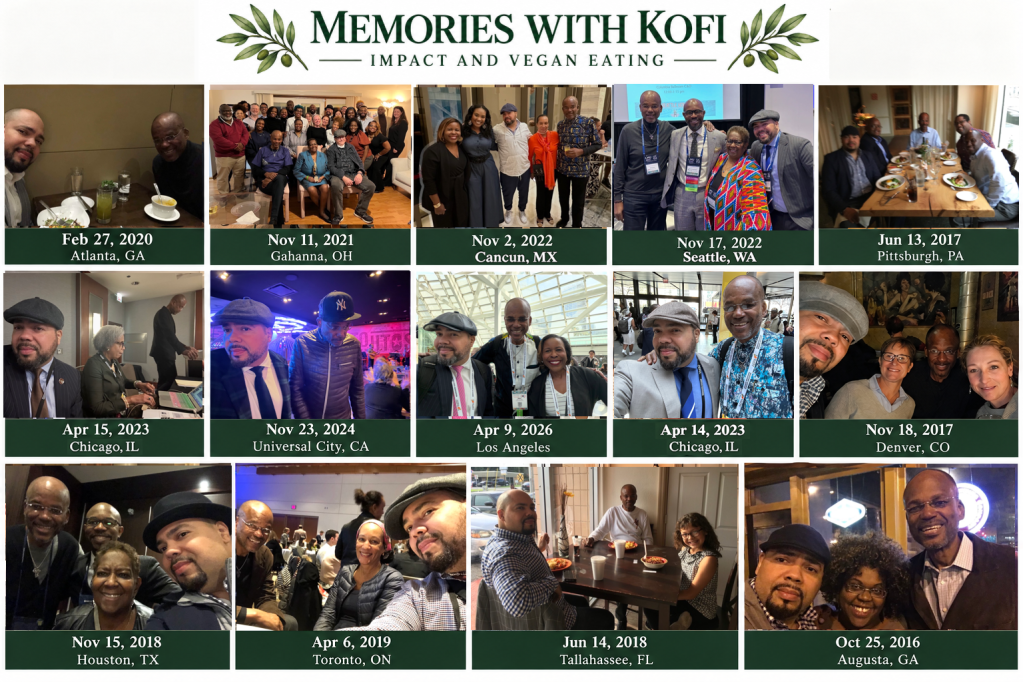
I have also been fortunate to experience another side of Kofi’s friendship. We have spent time together around the world at conferences and university gatherings. Some of my favorite memories involve searching for a great vegan restaurant in whatever city we happened to be visiting. We have shared wonderful meals and countless laughs. Our conversations have wandered from university leadership to the meaning of life. Those experiences have become treasured parts of my own story.
Give Them Their Flowers
One of my hopes for Kofi’s retirement celebration is that he will hear how much he has meant to the people around him. I hope former students remind him of moments when his encouragement made a difference. I hope colleagues share stories about opportunities he helped create. Too often, we wait until someone retires before gathering to celebrate their influence. Sometimes we wait until they are no longer with us. We deliver beautiful tributes filled with words the people we love never had an opportunity to hear.
Perhaps we should make gratitude a more regular part of our lives. Call the educator who believed in you before anyone else did. Reach out to the colleague who helped you through a difficult season. Thank the mentor whose wisdom continues guiding your decisions. And remember that the Kofis in our lives also need encouragement. People who devote so much of themselves to others deserve to know that their efforts matter.
Who Is Your Kofi?
When my own retirement eventually arrives, I hope people will remember that I made time for them. I hope they will remember that I offered encouragement and helped create opportunities for others to succeed. Kofi has modeled that kind of generosity throughout his career, and I am grateful to have learned from his example.
Kofi, thank you for your friendship and wisdom. Thank you for the wonderful memories we have made around the world. Most of all, thank you for always answering the phone. I look forward to celebrating you in Pittsburgh this November. I also look forward to the conversations and adventures I hope we still have ahead of us.
To everyone reading this, I would love to hear your stories about Kofi Lomotey or someone who has played a similar role in your life. Perhaps a mentor shared words you still repeat decades later. Perhaps someone believed in you when you needed it most. Share those memories. Better yet, reach out to that person today and tell them how much they mean to you.
Somewhere in the world, there is a Kofi who deserves to hear how much they matter. And somewhere in someone else’s life, you may already be their Kofi without even knowing it.
Please share.
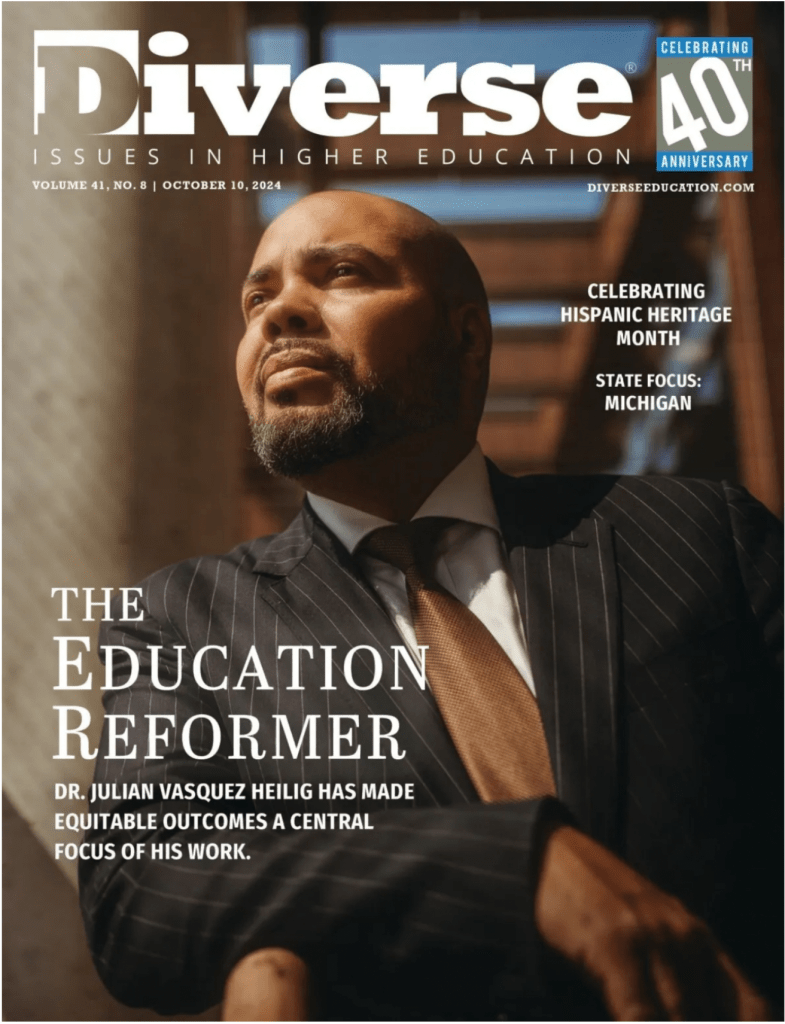
Julian Vasquez Heilig is a nationally recognized public scholar, commentator, and civil rights advocate whose work has appeared on Democracy Now!, MSNBC, Al Jazeera, NBC News, PBS, and Univision. He brings clarity, urgency, and public relevance to complex issues in education, policy, and leadership. For consulting, speaking opportunities, and collaborations, contact jvh@alumni.stanford.edu.




Leave a Reply