
The midterm vote in the United States could do more than change who holds political power; it could determine the future of education.
First, congrats to Lula for his big victory this week in the national Brazilian elections! Incidentally, a Brazilian university recruited me for a Fulbright project that past year examining how Brazil was recovering and reinventing its education system after Jair Bolsonaro’s presidency. After the invitation, I applied and Fulbright faculty peer reviewers scored and approved the proposal. Unfortunately, the U.S. State Department then rejected it. I was not given an explanation establishing why they rejected the invited and reviewer approved Fulbright, although I couldn’t help wondering whether examining the innovation of the education system after Bolsonaro was an uncomfortable subject for the Trump Administration.
The experience left me thinking about questions much closer to home. What would it take to reimagine and rebuild education in the United States after the midterms? More specifically, what might be possible in Texas after more than a decade under Governor Greg Abbott as a case study?
I spent eight years as a professor at the University of Texas at Austin, studying educational equity, civil rights, school accountability, and privatization. During my time in Texas, I witnessed how nakedly political decisions shaped educational opportunities for millions of students and the educators who served them. With State Representative Gina Hinojosa now challenging Abbott for governor, I have examined her official education platform and considering what could change if Texas takes a different political direction.
The possibilities extend well beyond one state, considering that the Republican’s ideas for education are all over the place (charter schools, vouchers, banning curriculum etc). Texas offers a compelling case study of how shifts in political leadership after the midterms could reshape educational policy, governance, and public investment in states transitioning from Republican to Democratic control. What happens in Texas could offer important lessons for the future of public education across the country.
For my case study, I examine ten possibilities. Some of the ideas below are commitments Hinojosa has publicly made. Others are reforms I believe deserve consideration, particularly in higher education and financial accountability.
1. The Texas Education Agency Would Get an Educator as Commissioner
Hinojosa has explicitly promised to remove Texas Education Agency non-educator Commissioner Mike Morath and appoint an educator. This could fundamentally change the agency’s relationship with schools. The next commissioner would bring direct experience with teaching and learning to an organization responsible for overseeing millions of students, school accountability, state interventions, and billions in education spending.
The consequential question would be whether that professional background will actually translate into different institutional priorities. Texas educators have spent years operating under accountability pressures, staffing shortages, and extensive state requirements. A commissioner with educator experience could approach those challenges with a different understanding of what teachers and students need, although successful administration would also require considerable policy and management expertise.
Earlier I provide some persepctives on California’s newly implemented commissioner position here.
2. Houston and Other State-Controlled Districts Could Return to Their Communities
Hinojosa promises to end state takeovers and restore local governance. Houston ISD offers the most consequential example, with state-appointed leaders making major decisions about instruction, staffing, and campus operations after the 2023 state takeover ostensibly due to single test score in a single high school. For the Republican in Texas, local control has meant controlling people locally.
The educational record deserves careful examination. State officials and takeover supporters cite improved academic ratings at historically struggling campuses in Houston, while critics have raised concerns about teacher turnover (about 12,000 have left the district), instructional restrictions and canned curriculum, elimination of an elected school board, and the manipulation of student populations to show fake results. A transition back to community governance would produce actual improvements while restoring democratic accountability.
Fort Worth, Austin, and other districts facing or experiencing state takeover present similar questions about who makes decisions and how communities regain authority over their schools.
3. Testing and Accountability System Would Be Revised
Hinojosa has proposed ending STAAR, pausing A through F accountability ratings, and developing a new system. Her campaign reports that TEA has awarded more than $1.7 billion to testing vendors during Abbott’s governorship.
During my years at UT Austin, I studied how high-stakes accountability affected schools serving historically marginalized communities in Texas. That research shaped my advocacy for community-based accountability and multiple measures of school success. This revised system could place greater emphasis on academic growth, graduation, student engagement, access to advanced coursework, and the opportunity to learn. Such changes would require legislation and a credible replacement system that gives families actually useful information about school performance.
4. Voucher Spending Could Face a Comprehensive Audit
Texas has committed $1 billion to its new private school voucher program, which Hinojosa proposes to end. A comprehensive financial review could examine who received funds, what providers charged, whether expenses met legal requirements, and whether safeguards adequately protected taxpayers.
Other states offer reasons to investigate. In Arizona, the media has reviewed records showing that education savings account money had been spent on travel-related expenses across 44 states and 13 countries. More than 100 accounts were associated with at least $21,000 in spending at Disney parks, Disney stores, and Disney’s streaming service. Some expenditures may have been approved under existing program rules, which makes the distinction between legal spending and appropriate public spending particularly important.
Texas investigators could carefully examine whether its own program permits comparable purchases, whether vendors are properly screened, and whether families and providers comply with spending restrictions. Arizona’s experience is a warning about oversight. I recently heard at the Network for Public Education conference that Florida has a $1 billion state budget deficit due to unlimited vouchers; that’s another warning.
5. Charter School Financial Misconduct Could Face Stronger Enforcement
Texas already has a documented history of serious charter school spending controversies. Consider IDEA Public Schools, one of the nation’s largest charter networks. Its leadership faced scrutiny over plans involving private aircraft and expenditures of approximately $400,000 on premium San Antonio Spurs tickets and luxury seating. Reports also described a proposed private jet lease, executive travel expenses, related-party business arrangements, and the acquisition of a boutique hotel. Former CEO Tom Torkelson departed with a reported $900,000 severance package. In 2024, TEA placed IDEA under conservatorship following a years-long investigation into financial and operational misconduct.
Texas could strengthen financial disclosure requirements, investigate conflicts of interest, recover improperly spent funds where legally possible, and refer substantiated fraud to law enforcement. Prosecutions should follow evidence of criminal violations rather than assumptions about an institution’s charter status.
6. Abbott’s University Regents Could Be Replaced
Texas governors exercise substantial influence over higher education through appointments to university governing boards. At the University of Texas System, nine regents serve staggered six-year terms and require Senate confirmation. A new governor would inherit those existing terms. However, three UT regent terms are scheduled to expire in February 2027, creating an early opportunity for appointments if successors are confirmed.
New appointments could change the governing boards’ approach to presidential selection, academic freedom, institutional performance, and faculty governance. They could also prompt closer examination of whether political relationships have been given undue weight in university leadership appointments.
Hinojosa has not announced a comprehensive regent replacement agenda, and current regents cannot simply be dismissed for their political associations in theory. Nevertheless, governing board appointments would be an important part of any change in Texas higher education policy.
7. University Presidents, Provosts, and Deans Could Face New Evaluations
Changes to governing boards could eventually produce changes in university leadership. Presidents are selected and evaluated through governing structures, while presidents exercise substantial authority over the appointment and dismissal of provosts, deans, and other academic administrators. The University of Texas System’s rules generally delegate responsibility for appointing and dismissing institutional administrative officers to university presidents.
A new governing board could examine whether presidents were selected through credible processes, whether administrative appointments emphasized academic qualifications, and whether leaders delivered results in enrollment, research, student success, and institutional governance. Where community-wide evaluations establish serious leadership failures, governing boards and presidents could make personnel changes consistent with applicable rules and contracts.
8. Black, Latino, Indigenous, and Gender Studies Could Regain Support
Texas universities have faced substantial political and legislative pressure concerning diversity initiatives, academic programs, and the teaching of race and gender. A change in state leadership could reopen discussions about the important place of Black Studies, Latino Studies, Indigenous Studies, Gender Studies, and related fields within public universities in our democracy.
These disciplines contribute to historical understanding, scholarship, public policy, and students’ ability to examine complex social questions. Decisions about their academic standing should involve faculty expertise, scholarly standards, student demand, and institutional missions.
Restoring programs affected by state policies could require legislative changes, governing board action, institutional funding, and faculty recruitment. Hinojosa has not explicitly promised these restorations, but her administration’s approach to higher education appointments and governance could influence their future.
9. Teachers Could Receive Higher Pay
Hinojosa’s education platform calls for raising teacher salaries and reviewing vendor contracts that her campaign considers wasteful or improper. She proposes using recovered resources to support educators.
Texas would need to determine how much money contract reviews could actually recover and whether those savings would support recurring compensation increases. Significant statewide salary changes would likely require legislative appropriations.
10. We Can Reconsider the Relationship Between Education and Political Power
For too long, political leaders, including the governors, education commissioners, and state legislatures, have used the power of government to exert oppressive pressure on public schools, educators, universities, and the communities they serve. Through state takeovers, punitive accountability systems, restrictions on academic freedom, increasingly centralized decision-making, and privatizing our schools, communities have too often been treated as problems to be managed rather than partners capable of developing solutions. Political authority has been used to impose decisions while diminishing the voices of parents, teachers, students, and locally elected representatives.
A different approach in Texas and elsewhere after the midterms would begin by recognizing that communities are the solution, not the problem. That principle should apply equally to red and blue communities, rural towns and major cities, and neighborhoods across every region. Families and educators understand their local schools, their children’s needs, and the challenges facing their communities. Their knowledge deserves meaningful influence over educational decisions. Restoring public trust requires moving away from political coercion and toward shared responsibility, meaningful local governance, transparent accountability, and genuine community participation.
After the midterms we will have an opportunity to reconsider how political power is exercised in education. Governors, commissioners, and legislators should use their authority to support communities, expand educational opportunity, and provide the resources schools need to succeed. The ultimate measure of leadership should be whether public institutions strengthen the capacity of people to shape their own futures. Regardless of whether a community votes red or blue, its children deserve excellent public schools, its educators deserve professional respect, and its residents deserve a meaningful voice in the decisions affecting their lives. A stronger education system can emerge when state leaders begin trusting communities as essential partners in educational improvement.
Years from now, our children may not remember who won the midterms. But they will live with what the winners chose to build, whose voices they listened to, and whose futures they believed were worth investing in.
Please share.
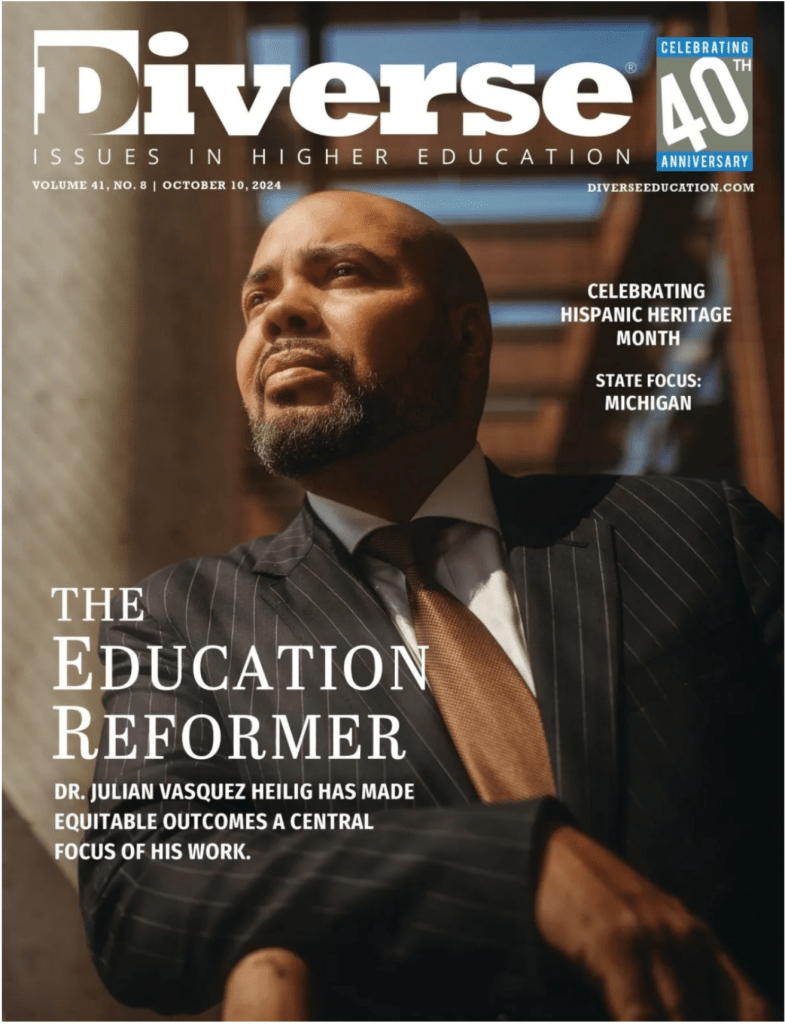
Julian Vasquez Heilig is a nationally recognized education policy scholar, civil rights leader, and experienced university provost and dean. A Stanford-trained scholar and former California–Hawaii NAACP Education Committee chair, he has led educational innovation, improved student outcomes, and strengthened educator preparation across four states. His expertise spans education governance, community accountability, and institutional transformation. Contact him at jvh@alumni.stanford.edu.



Leave a Reply