
Will our next generation of statewide education leaders drive change or defend the status quo?
I was sitting on the sofa in Diane Ravitch’s Brooklyn home when the Network for Public Education (NPE) was born. As a founding board member, I remember us tossing around the name “COPS” (Citizens Organized for Public Schools, I think that’s what it stood for!) before a lively discussion led us to settle on NPE. What began as a conversation in Diane’s living room grew into a national nonprofit advocacy organization, founded in 2013 by Diane Ravitch and Anthony Cody, we are the largest national grassroots organization bringing together educators, researchers, parents, and advocates committed to strengthening public schools, advancing educational equity, and defending public education as a cornerstone of democracy.
More than a decade later, NPE continues to contribute to the national conversation about the future of public education. With a wave of newly elected governors preparing to take office, states face a variety of opportunities to select the next generation of education leaders. In some states, governors directly appoint education commissioners or superintendents. In others, state boards of education make those selections, sometimes with gubernatorial approval or influence. Still others have independently elected state superintendents. Different processes, different opportunities, but the same consequential question: Who will lead our public schools into the future? Against this backdrop, NPE has just published an important new resource: “10 Qualities to Look for When Selecting State Education Leaders”
I’ve weighed in about this issue several times recently because the decisions being made right now are extraordinarily consequential. We are at a watershed moment for public education in this very moment, and these leadership transitions represent a golden opportunity to shape its future for years to come. The question is not simply who gets the jobs. It’s what kind of leadership our public schools, and the millions of students they serve, deserve. Here is the piece published yesterday on NPE’s website:
Whether in Texas, California, Nevada, or elsewhere, newly elected governors have an opportunity to transform public education as they take office. In some states, governors directly appoint the top education official; in others, state boards of education play a central role in selecting that leader. Regardless of the appointment process, the stakes are enormous. Will states place caretakers or political operatives at the helm, or will they identify experienced, courageous leaders capable of driving meaningful improvement in public education?
As transition teams get to work, résumés are circulating and consequential decisions are approaching. In Texas, Governor-elect Gina Hinojosa has pledged to replace Education Commissioner Mike Morath. In California, Governor-elect Xavier Becerra will appoint the state’s first education commissioner under a major restructuring of education governance. In Nevada, Governor-elect Aaron Ford inherits an education system confronting persistent challenges involving student achievement, resources, and management.
Although each state’s political landscape and governance structure differs, the qualifications required to lead a statewide education system share important similarities. These officials oversee multibillion-dollar operations, implement laws, administer accountability systems, and influence the educational opportunities of millions of students. Yet selection processes too often favor political connections, ideological alignment, or impressive credentials over demonstrated results.
Drawing on my experience as an educator, researcher, university dean, provost, and former finalist for Kentucky Commissioner of Education, here are ten considerations I would encourage governors and state boards to prioritize.
1. An Educator, Not Just an Education Politician
Understanding education requires more than having opinions about schools. It requires knowing what happens inside classrooms, how teachers teach, why students struggle, and what administrators confront when policies developed in state capitals reach local communities. Not every commissioner must have spent decades teaching, but candidates should demonstrate substantial experience with teaching, learning, and educational leadership.
Ask: Has this person actually worked to improve education, or primarily worked to influence education policy?
2. A Documented Record of Improving Student Outcomes
Leadership should be judged by results, not rhetoric. Governors should examine improvements in achievement, graduation, retention, attendance, and educational opportunity. Context matters, and no administrator deserves sole credit for every positive outcome. But candidates should explain what improved under their leadership, provide supporting evidence, and identify how their decisions contributed. They should also acknowledge initiatives that failed.
Ask: Can this candidate demonstrate measurable improvement rather than simply claim credit for being in charge?
3. The Courage to Defend Public Education Against Privatization
The Network for Public Education has documented how public resources can be diverted into private voucher programs and inadequately accountable charter arrangements. State leaders should understand how privatization affects school funding, transparency, accountability, and access. They must be prepared to scrutinize voucher expenditures, investigate charter enrollment practices, and insist that public dollars serve the public interest.
Ask: Will this leader protect public education even when powerful financial and political interests object?
4. Experience Leading Complex Organizations Through Change
Running a state education agency is not the same as running a political campaign or a business. These agencies administer budgets, federal programs, special education, personnel systems, and services supporting hundreds of districts. California illustrates the challenge. Its incoming commissioner must reorganize education governance while maintaining essential services. States need leaders who combine vision with operational competence. A visionary who cannot manage an organization will struggle, as will an administrator incapable of meaningful improvement.
Ask: Has this person successfully managed organizational change while delivering measurable results?
5. A Commitment to Educational Equity Beyond Slogans
Educational equity means ensuring children have meaningful access to qualified teachers, rigorous coursework, safe facilities, special education, and the resources necessary to succeed. State averages often conceal enormous disparities. Improving overall achievement means little if particular communities remain systematically underserved. Education leaders should understand school finance, segregation, rural education, disability rights, and unequal educational opportunity.
Ask: Can this person identify inequities and demonstrate how they have helped reduce them?
6. The Ability to Work With Educators Rather Than Against Them
Teachers, principals, school boards, support professionals, and families are essential partners in improvement. Too many reforms assume educators must be pressured, threatened, or bypassed before meaningful change can occur. Effective leaders understand collective bargaining, professional working conditions, teacher preparation, and workforce retention. They can make difficult decisions without treating educators as political enemies.
Ask: Do educators who worked with this candidate describe someone who listens, collaborates, and follows through?
7. Political Skill Without Political Subservience
Education leaders navigate governors, legislatures, state boards, unions, advocacy organizations, and local communities. Political skill is indispensable. Political subservience is not. A statewide education leader must sometimes tell a governor that a proposal is unworkable, inadequately funded, unlawful, or unsupported by evidence. Effective leadership requires the courage to deliver unwelcome professional advice.
Ask: Will this candidate provide independent professional judgment or simply tell the governor what they want to hear?
8. Respect for Research and Honest Accountability
For decades, states have debated testing, school ratings, accountability sanctions, and district takeovers. Too often, policymakers have confused measuring educational problems with solving them. Education leaders should understand research methods, program evaluation, and the limitations of standardized testing. Test scores alone cannot adequately measure school quality, but rejecting punitive accountability does not eliminate the responsibility to assess student learning. Accountability should identify problems, direct resources, and improve practice rather than punish struggling schools.
Ask: Can this person distinguish credible evidence from policies sustained primarily by ideology or political marketing?
9. A Vision From Early Childhood Through College and Careers
Education does not begin in third grade or end at high school graduation. State education leaders need to understand early childhood education, K–12 schooling, community colleges, universities, workforce development, and adult learning. That includes literacy, mathematics, dual enrollment, career education, teacher preparation, and college affordability. Artificial intelligence also introduces challenges involving privacy, instructional quality, access, and responsible public investment.
Ask: Does this candidate understand the entire educational pathway rather than a collection of disconnected initiatives?
10. The Integrity to Put Children Ahead of Careers
Perhaps the most important qualification cannot be captured by a degree or professional biography. Governors should seek leaders who are transparent about conflicts of interest, willing to acknowledge mistakes, and prepared to make difficult decisions when political convenience conflicts with the public interest. State education leaders must protect public funds, respect civil rights, maintain public trust, and recognize that education agencies exist to serve children and communities, not political ambitions.
Ask: When political convenience and the public interest diverge, what does this person’s record suggest they will do?
Conclusion: A New Chapter Begins
Texas, California, Nevada, and other states face consequential decisions about their next education leaders. Governors and state boards should examine candidates’ records, speak with educators and communities who experienced their leadership, and demand credible first-100-days plans with measurable objectives.
For the Network for Public Education, the central concern is straightforward: Public education needs leaders committed to strengthening public schools, not merely managing their decline or creating new opportunities to privatize them.
States can appoint caretakers who preserve existing systems. They can select political loyalists who generate headlines and conflict. Or they can choose experienced leaders capable of strengthening institutions, rebuilding public trust, and expanding educational opportunity. The consequences will extend far beyond any administration’s term in office.
Before making this consequential selection, every governor and state board should ask one final question: When your term is over, will more children have better educational opportunities because this person served?
That is the standard worth demanding.
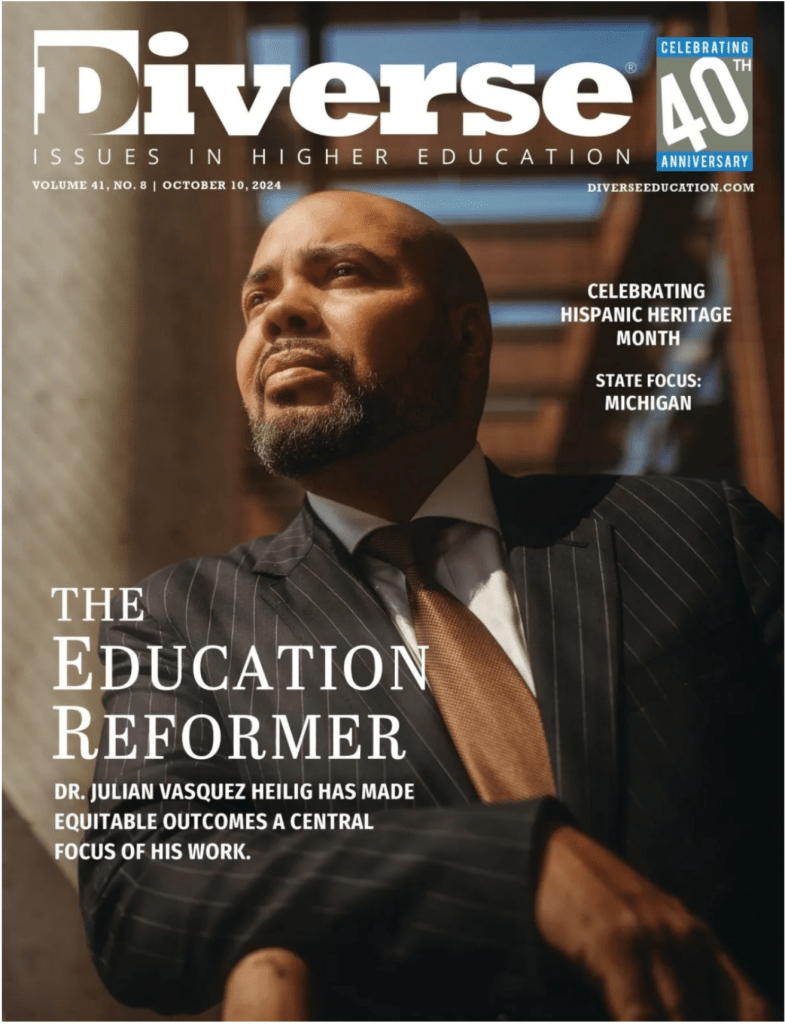
Julian Vasquez Heilig, Ph.D., is a professor of Educational Leadership at Western Michigan University and a former university Provost and Dean. His educational career spans K–12 and higher education, including teaching English as a Second Language (ESL) and fourth grade. He was a founding board member of the Network for Public Education and blogs at Cloaking Inequity and the LinkedIn newsletter Without Fear or Favor. In 2020, he was a finalist for Kentucky Commissioner of Education.




Leave a Reply