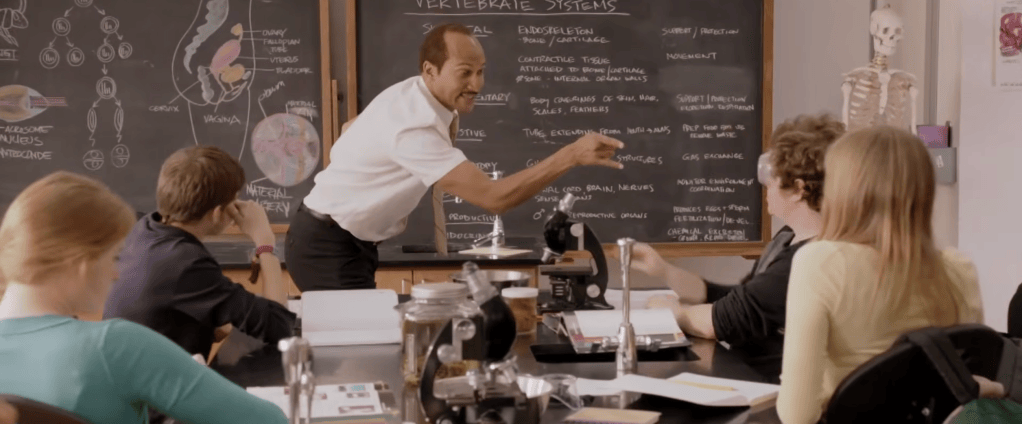
This Thanksgiving, I’m thinking about a teacher who spoke up for me before I was old enough to know I needed her to. I’m also thinking about Gary, a fourth grader who sat in the back left corner of my classroom in East Palo Alto. I can still picture exactly where he sat. I wish I could tell him how often I think about him.
Before I led tens of thousands of students, faculty, and staff as an educational executive and helped plan budgets in the hundreds of millions of dollars, I taught fourth grade and English as a second language to students fluent in Mandarin Chinese. I’ve spent plenty of time in rooms where decisions affect thousands of people. What has always kept me grounded is remembering what those decisions mean for the individual students whose lives they touch. For that perspective, I return to the classrooms where I was first taught.
I am especially thankful for the teachers who inspired me to teach: John Studley, my fifth-grade teacher, and Rose Perry, my eighth-grade teacher. I also think about Linda Darling-Hammond, who chaired my doctoral dissertation at Stanford University and has dedicated much of her life to advocating for teachers and the teaching profession. More than two decades later, Linda continues to mentor me, and we still connect monthly. What a remarkable gift it is to have teachers whose influence extends across a lifetime.
Math, reading, and recess
As a fourth-grade 21st Century Community Learning Center instructor at East Palo Alto Charter School, my favorite parts of the day were teaching math and reading and spending recess with the kids. I could try three ways to explain a math problem, and then a fourth grader would say it in words that made immediate sense to a classmate. One child had finally figured it out. The other got to find out what it felt like to be the person who helped. I loved seeing both faces in that moment.
I remember Gary, with his big brown curls and my father’s first name. Math and reading came easily to him, and he could get restless once he’d finished his work. Sometimes I moved him around to find classmates he worked well with. My own elementary teachers had done much the same with me. I knew the feeling of putting down my pencil and already looking around for the next thing to do. I’d been that boy.
Then one day, Gary was gone. The principal told me he’d been expelled after too many incidents and that there was a waiting list for the charter school. Another student soon took his place. Years later, when I told Congress about Gary, I could still feel how much it hurt to realize he wasn’t coming back. When a charter school is praised for its results, I think about him and ask who got to stay long enough to be counted.
When I first wrote about Gary on my blog in the post My Inspiration and Anger: One day Gary disappeared, my pre-K teacher left a comment. She remembered telling my father to make sure my teachers didn’t put me in the back of the room and overlook me. She thought I was smart and funny, and she worried other adults might see all that energy and miss what she saw. I was a grown man when I learned she’d had that conversation. It made me wonder if anyone had spoken up for Gary.
What confidence sounds like
My ESL students could tell a good story, make their friends laugh, or get a spirited disagreement going in Mandarin Chinese. Doing those things in English took practice and a willingness to get a word wrong in front of other people. As an ESL teacher, I had to learn to sit with the silence. Sometimes, when I resisted the urge to finish a sentence for a student, I heard something I never would have guessed they were about to say.
What I loved most was hearing their confidence grow. A student would volunteer before they’d worked out every word or lose their place halfway through a story and find another way to keep going. I loved hearing somebody land a joke in English and the whole room laugh. It takes courage to try out your sense of humor in a language you’re still learning. My ESL students taught me how much it matters to be in a room where people give you time to finish and are glad you tried.
What my students teach me now
This semester I am teaching Exploring Leadership in a Changing World and Leadership and Advocacy for a Diverse Society. In the first course, an undergraduate wrote a graduation speech for people completing an education program while incarcerated at Folsom Prison. It was an honor and an opportunity I once had. I wanted the student to imagine what it would feel like for someone in that audience to hear somebody take their future seriously.
In the second course, a student drafted congressional testimony about keeping teachers in the profession. The student asked how much say teachers have in the decisions that shape their work. They also asked for stronger evidence on shortages, burnout, and retention so the people hearing the argument would have a reason to act. We spend considerable time discussing why teachers leave, but this student was asking us to listen more closely to those who stay.
The Vasquez Heilig language
For eight years, I taught statistics to future Texas superintendents. Some still call it “the Vasquez Heilig language,” which makes me laugh. A superintendent can look at an improving districtwide average while a parent stands at a school board meeting asking why her child’s school is still struggling. I wanted my students to know how to look closer and explain what they found.
One Texas superintendent I taught sent me this message yesterday:
You were a great professor who was NOT going to “just let us get by” – just like when we were in grade school, even as adult learners we ALWAYS remember the great ones! Thank you for pouring into me.
That message made me think about the teachers who poured into me and had the highest standards. John Studley, Rose Perry, and Linda Darling-Hammond may never meet many of the students I have taught, but their influence is present in every classroom I enter.
A Thanksgiving thank-you to teachers everywhere
Rev. Charles Foster Johnson, founder of Pastors for Texas Children and a longtime friend and champion of public education, recently closed a text message to me with these words from Isaiah: “Here I am, Lord. Send me.” To teachers everywhere, thank you for answering that call and dedicating your lives to the promise and potential of others.
Education is the compass of our democracy, and teachers help us find our way. They are on the front lines of the challenges we face together, helping young people learn to ask for evidence, understand experiences different from their own, and find the courage to speak up when something is unfair. This Thanksgiving, we owe teachers more than our gratitude. We owe them our respect, our trust, professional autonomy, fair compensation, and the resources and support they deserve to carry out their vital work.
To John Studley and Rose Perry, thank you for inspiring me to teach. To Linda Darling-Hammond, thank you for continuing to teach and mentor me long after I graduated from Stanford. To my pre-K teacher, thank you for seeing something in me worth protecting. And to Gary, wherever you are today, I hope life gave you the opportunities you deserved.
Whatever professional titles I will ever hold, I will always be grateful for the privilege of being a teacher. Perhaps the greatest tribute we can offer the teachers who changed our lives is to carry their influence forward. Every time we encourage a student or see potential where others see a problem, we extend the legacy of the educators who once did those things for us.
Even as we acknowledge the sordid and painful history of colonization and Indigenous dispossession associated with this holiday, Thanksgiving offers an opportunity to express gratitude to those who have shaped our lives. Happy Thanksgiving to teachers everywhere. Thank you for the lives you change, the confidence you nurture, and the possibilities you help others discover. Your influence lives on in generations of people you may never meet, and I am forever grateful that my teachers inspired me to become one of you.
Please share. This lesson goes well beyond charter schools.
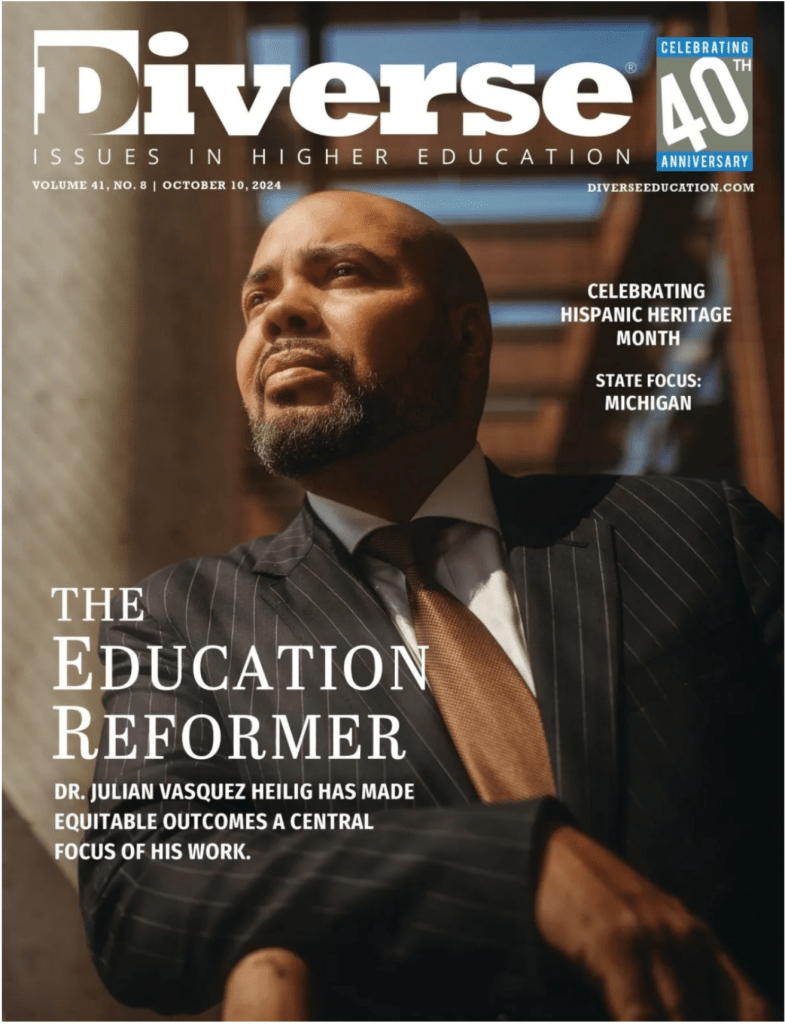
Julian Vasquez Heilig is a nationally recognized public scholar, commentator, and civil rights advocate whose Cloaking Inequity blog and Without Fear or Favor LinkedIn newsletter have garnered nearly 2 million views since 2025. Featured on Democracy Now!, MSNBC, Al Jazeera, NBC News, PBS, and Univision, he brings clarity and urgency to education, policy, and leadership. For consulting, speaking, and collaborations, contact jvh@alumni.stanford.edu
and this:




Leave a Reply