
When a family already sends its child to private school, what new choice does a school voucher law actually create? Often, the only thing that changes is who pays the bill: you and me. After Florida expanded its voucher program in 2023, 69% of first-time recipients were already attending private schools. In Texas, comptroller data obtained by Axios showed that at least 70% of students awarded vouchers were already enrolled in private schools or being homeschooled.
To be clear, I am not criticizing families for choosing private education or homeschooling. Parents have every right to make those educational decisions for their children. What I am questioning is the expectation that everyone else should pay for those decisions. For the vast majority of voucher recipients, the educational choice isn’t new. The only new choice is choosing to have someone else pay for it.
What do taxpayers get for the money?
Let’s start with Louisiana. Atila Abdulkadiroğlu, Parag Pathak, and Christopher Walters used randomized lotteries to study the state’s voucher program. Their peer-reviewed study found that participation “LOWERS math scores by 0.4 standard deviations” and also REDUCED achievement in reading, science, and social studies. After one year, voucher use INCREASED the likelihood of a failing math score by 50%, a rise of about 22 percentage points.
Other statewide studies found math losses too. In Indiana, Joseph Waddington and Mark Berends found “an average achievement loss of 0.15 SDs in mathematics” in the first year for voucher students who transferred to private schools, and the LOSS persisted during the study. In Ohio, David Figlio and Krzysztof Karbownik found that the voucher users they could credibly study “tend to perform considerably WORSE than observationally similar students who remained in public schools.” These studies give the public all the reason to question the assumption that the taxpayer paying for private schooling buys better academic results.
Then there’s the bill. After Florida opened voucher eligibility statewide, an audit found “a funding shortfall of $398 million for the voucher program” in 2024–25. Florida’s voucher system has since reached about $4.5 billion, and its education commissioner wants to lift a remaining district-level funding limit. Arizona’s education department projects that its voucher program will cost $1.264 billion in fiscal 2027 and $1.423 billion in fiscal 2028. Those are the kinds of bills any state should have considered before it committed to school vouchers.
I also talked about these issues extensively on this FREE podcast episode.
Now the pendulum swings back in Texas
For years, Democrats and rural Republicans in Texas blocked vouchers. Outgoing governor Greg Abbott used the power of his office and his political influence to push the issue, backing primary challengers against members of his own party who opposed vouchers. By attacking pro-public education members of his own party, he changed the votes and in 2025 he signed a $1 billion program into law. Then Texans elected Gina Hinojosa, who campaigned on ending it. The raw political power Abbott used to make vouchers a priority is passing to a governor with priorities of her own.
The evidence on student achievement, rising costs to taxpayers, and how little new educational choice vouchers often create gives Gina Hinojosa good reason to take Texas in a different direction. It also raises a question for leaders in other states: What can they do once a voucher program is already on the books?
The five strategies that follow offer a playbook, with Texas as a working example. The options available in each state will depend on its constitution, statutes, budget process, and the authority it gives governors and state agencies. Some steps may be available to a governor directly, while others will require lawmakers or the courts to act. Texas shows how state leaders can identify which tools they have and use them to rein in, roll back, or ultimately end a voucher program.
1. Veto the money. If the 2027 budget includes a separate voucher appropriation, Hinojosa can strike it and sign the rest of the budget. That bypasses a Senate vote on repeal. Overriding her veto would take two-thirds of the members present in both chambers. The current appropriation runs through August 31, 2027, so the next budget is where she can cut off fresh funding.
2. Rebuild the coalition and repeal the law. Sen. Royce West has already filed SB 294 to repeal the program. Hinojosa could work with Democrats and rural Republicans who know how much their communities depend on the local public school. That coalition held off vouchers for years.
3. Negotiate a phaseout with a firm end date. If immediate repeal lacks the votes, Hinojosa could use the veto as leverage to close the program to new applicants and give current families time to adjust. Families of children with disabilities who have already made schooling decisions deserve particular attention in that transition.
4. Test the law against Texas’s constitutional duty to public schools. A challenge could ask whether the voucher program undermines the state’s obligation to maintain an efficient system of free public schools. The case would need evidence tying vouchers to a constitutional failure. The SB 2 voucher bill sends appeals over constitutional injunctions directly to the Texas Supreme Court, so the Democratic sweep of the Fifteenth Court of Appeals gives that court little leverage over a ruling that would block the program.
5. Put the question to Texas voters. Then-Rep. James Talarico proposed a public vote during the 2025 voucher fight. Hinojosa could champion a constitutional amendment barring state-funded private school vouchers. It would take two-thirds of the elected members of each chamber to get it on the ballot and a statewide majority to adopt it.
When you build and use political power as aggressively as Abbott did, you have to reckon with what happens when voters hand that power to someone else. For Hinojosa, the first real test will come when the budget lands on her desk. Texas can spend the next two years picking up the giant tab for more private tuition bills, or it can put those dollars to work in the public schools that serve its communities.
Please share.
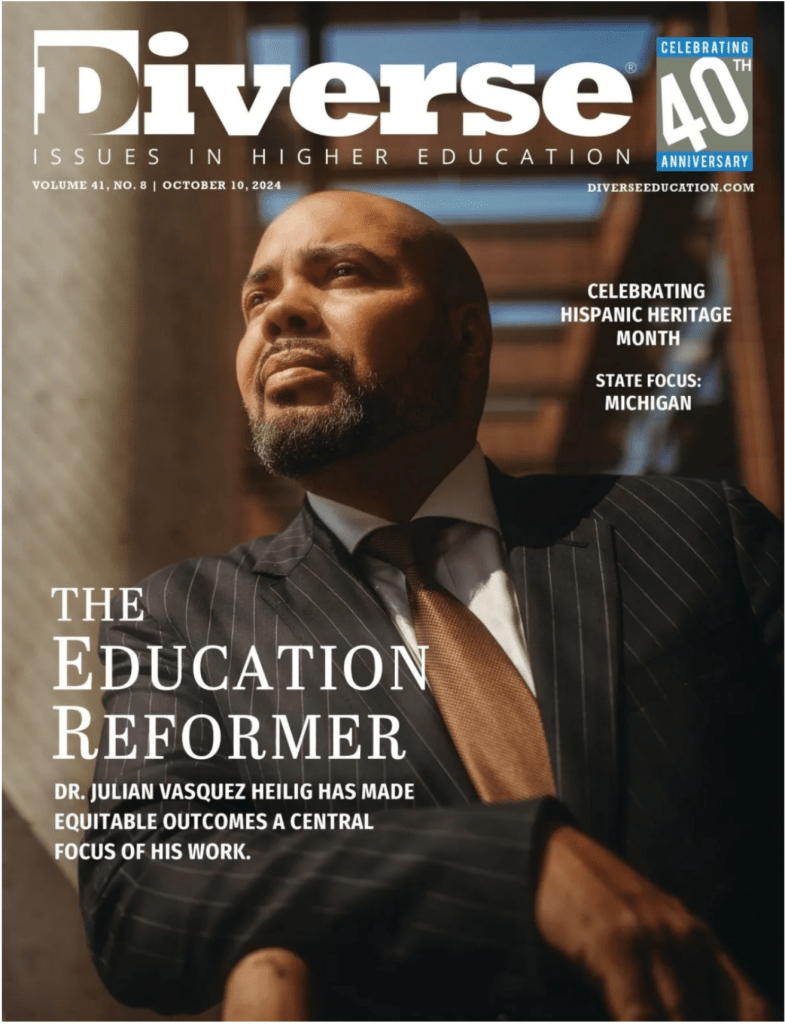
Julian Vasquez Heilig is a nationally recognized public scholar, commentator, and civil rights advocate whose work has appeared on Democracy Now!, MSNBC, Al Jazeera, NBC News, PBS, and Univision. He brings clarity, urgency, and public relevance to complex issues in education, policy, and leadership. For consulting, speaking opportunities, and collaborations, contact jvh@alumni.stanford.edu.


Leave a Reply