At my core, the reason why I chose educational policy as a profession is because I care about children.
Today I’d like to take up some of the critics of the policy brief that I included in the post Flood of Lies: Education reform crescendo at #Katrina10 Then I would like to humbly share some very cool kudos that happened this week. Be warned, this post has a certain randomness to it, kind of like my favorite blog MGoBlog.
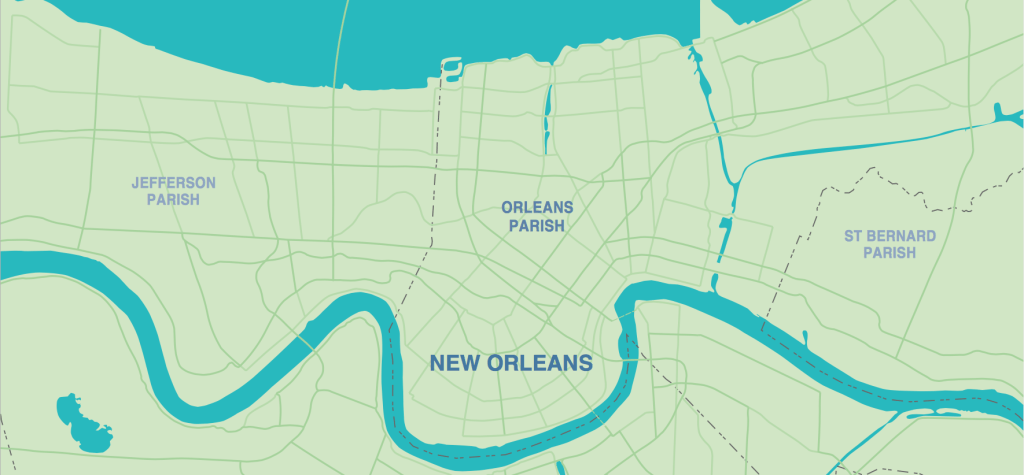
First let me start with some background. I have never lived in New Orleans, however, I did live in Houston— which is about a five hour drive from NOLA at the speed that I drive. So I have been to New Orleans about ten times in my life. Half of the trips to New Orleans were related to schools and communities.
https://twitter.com/ProfessorJVH/status/628317386379251712
Recently I spent almost a week in New Orleans meeting with stakeholders and others. I also attended a community-based education reform conference. I was interested in understanding the perspectives parents, students and activists about education reform in the city. They relayed that the focus on “improvement” didn’t match up with the reality of Black students and families. One parent put it this way, “Improvement for Whites, not Blacks.” Recent surveys have supported the predominance of that perspective.
The Wall Street Journal reported,
Looking across the results of surveys conducted in 2006, 2008, 2010, and 2015, a trend is striking: the widening gulf between blacks and whites when it comes to residents’ sense of opportunities for younger people in the city, something our surveys began tracking in 2008.
Honestly I was incensed after the bus tour that Karen Harper Royal took me on that i described in the post “Slave” market education reform in NOLA? #NOLAEdWarning. When you hear and see the perspectives of Black residents of the city, you are surprised by the lack of the representation of their counternarrative about education reform in the media and from other sources (nationally and locally).

I didn’t want to be a colonial researcher, by that I mean someone who goes in and takes then leaves. I also didn’t want to be an outsider projecting my perspectives on a community where I have never lived. In fact, these are two common critiques of “education reform” in NOLA that were discussed at the community-based reform conference. (See also Colonizing the Black Natives: Reflections from a former NOLA Charter School Dean of Students)
So, first I decided to take a look at readily available public data from Louisiana and the Recovery School District (NAEP, ACT, Dropout, etc). I was troubled. So, I organized a conference call with four parents and a teacher from New Orleans to discuss the data I was seeing. They were not surprised. It was at that point that thought it would be important to collate a brief based primarily on the perspectives of Louisiana residents. A brief that my mother and sister could read. Not the typical unintelligible academic piece.
They liked the idea. So I then asked them to send me resources that they felt should be included in a policy brief.
As can be expected, there are critiques of the brief. So I’d like to address a few of those here. Briefly, and with a little humor.
Click here for the NPE NOLA policy brief.
1. What about Doug Harris’ single study? (mentioned in footnote 6) No matter how you slice it, the study uses state tests and compares the lowest performing district to schools in one of the lowest performing states. So that is comparing bad to worse. Bad did slightly better than worse. I think the more telling last and nearly last ranking of Louisiana and the RSD in the data are located in the NPE brief (NAEP, Dropout, Pushout, Graduation, ACT etc.)
2. You mentioned CREDO before on Cloaking Inequity. How about CREDO’s study on New Orleans? First, I should say I was converted by NEPC on CREDO’s charter studies.
https://twitter.com/ProfessorJVH/status/638150163404472320
I think it’s actually okay to change your mind based on new evidence.
Second, I am concerned about the internal validity of the studies based on the fact that apparently CREDO excluded 15% of the data in Louisiana.
3. So “New Orleans is NOT one of the districts that participates in NAEP’s Trial Urban District Assessment” Even if New Orleans participated in the NAEP TUDA, it would be not be valuable because data from charter schools is conveniently (or inconveniently) excluded by the federal government.
Why am I talking about the NAEP TUDA anyways? Because one critic briefly liked the idea. That data wasn’t used in the charter vs. traditional school comparisons or pre- and post- Katrina tables because the analysis was of Louisiana as a state. The point being made is that 46 states perform better than Louisiana. That’s fact. It was fact before Katrina, it’s fact now. That’s the data. So about the NAEP sample for the traditional schools versus charter schools in Louisiana. NCES says they sample of be representative:
…charter schools are selected along with other public schools, as part of the sample for each state. Charter schools are therefore sampled to be representative within each state. However, since they are only proportionately sampled, in some states there may not be enough schools and students in sample for them to be reportable, and this could vary over time. 2003 is the only assessment for which a special effort was made to add additional charter schools in some states so that the results would be reportable. However, there are now many more charter schools in most states than there were in 2003, so that the sample sizes of charter schools have grown naturally over time.
So, in the Louisiana sample, charters were sampled by NCES to be representative. A critic of the brief has argued for a series of cross-sectional analyses…but the samples have changed over the years and would invite just as much criticism (Thank you Dr. Francesca Lopez for this point).
4. Does this brief prove causality? I did a search for the following words in the NPE NOLA education reform brief (click on photo of it above to see it): cause (0). causality (0). relationship (0). sidetrack (0). etc. This brief is a collation of data from Louisiana and RSD. Folks can draw their own conclusion on causality, but the conclusion that Louisiana and the RSD are last and nearly last in all of the data discussed is FACT (regardless of year). It is also fact that a decade of test-score-driven, state-takeover, charter-conversion model has occurred over the past ten years in NOLA. No, we did not conduct a randomized experiment or a regression discontinuity etc. However, to the average non-snarky person, the Louisiana and RSD last and nearly last position in the (NAEP, ACT, Graduation, Dropout, Pushout) data speaks for itself.
5. I would loved to have conducted a project like Doug Harris’ study. But, something to be understood is that Doug Harris is politically connected and was given special access by the state of Louisiana to the data for the past several years. He was hand picked to receive the data. In 2013, here is what I wrote in the post LA and the Recovery School District approach (SB1718): A P.T. Barnum Circus
Here is what is interesting about Louisiana that many people don’t know. They are desperately trying to control who accesses public information (data) to examine their “educational miracle.” I have been holding on to this story since 2012 because we have made friendly attempts to gain access to Louisiana data for 10 months. In fact, we have made requests to Louisiana on seven separate occassions since August 2012. When this did not yield data, we made a public information request for an existing dataset already given to CREDO. Louisiana is required by law to respond to public records requests within 3 days, its been more than 90 days and Louisiana has not responded.
ONLY CREDO and Doug Harris received the student-level data from the state of Louisiana. Until this happened in March of 2015: Appeals Court Reverses District Court: Department of Education Must Release CREDO Data to Research on Reforms So now research conducted with student-level by those NOT HANDPICKED by Louisiana politicians and “reformers” is going to start trickling out. Including some that I am participating in currently. More on the peer-reviewed NOLA research soon.
So up until now, the Dude Really? was a surly reference to the critiques of the NPE NOLA brief. But, now I want to segue into a surprised Dude Really? I just want to stay that I was honored by the recognition on two fronts recently. First being named one of the top ten education policy voices (tied for 9th) on social media in the US by Harvard’s Education Next— and the #2 ranked professor behind Dr. Diane Ravitch. I have to be honest, I am not a fan of the publication. They acknowledge as much by calling me an education reform “critic”— a badge of honor in my mind.
Secondly, I was asked to appear on the cover of Diversity in Education magazine October 2015 issue. I think my grandmother will be pleased. I am hoping for a call from GQ or Travel and Leisure (because I need a vacation).
https://twitter.com/ProfessorJVH/status/638814021764841472
I work the hours that I do for children. Thank you for reading Cloaking Inequity. See you soon.
Please Facebook Like, Tweet, etc below and/or reblog to share this discussion with others.
Want to know about Cloaking Inequity’s freshly pressed conversations about educational policy? Click the “Follow blog by email” button in the upper left hand corner of this page.
Twitter: @ProfessorJVH
Click here for Vitae.
See also the following Cloaking Inequity posts on education reform in New Orleans:
- “Slave” market education reform in NOLA? #NOLAEdWarning
- Colonizing the Black Natives: Reflections from a former NOLA Charter School Dean of Students
- Al Jazeera includes silenced NOLA ed reform perspectives @AJStream
- LA and the Recovery School District approach (SB1718): A P.T. Barnum Circus
- Who Dat Say?: New Orleans Ed Reform Unmasked






Leave a Reply