
Sometimes your phone rings, and your life can change in an hour. It does not announce itself as a turning point. It feels ordinary at first, just another moment in a long line of moments. But then something shifts, and you realize that what you are hearing is connected to something that has been building quietly in the background. Those moments remind you that the path you are on is not random, even when life feels uncertain.
And sometimes, it is not a phone call at all. Sometimes it is an email that arrives without warning and carries a very different kind of weight. I get those emails too, all the time in fact. They hurt in a way that is both immediate and lingering. There is a feeling of sadness, followed by emptiness, and then a deeper sense of disappointment that is hard to shake. It is not just about the opportunity itself, but about everything you had imagined it might become.
That feeling stays with you longer than you expect. It shows up in quiet moments, in between meals, in the space where your mind starts replaying what could have been. It forces you to sit with the reality that not every opportunity will unfold the way you hoped. It also asks you a harder question about whether your commitment is tied to outcomes or to purpose. That question does not have an easy answer, but it is one you have to confront.
Why I Applied in the First Place
The Fulbright Program is one of the most well-known international exchange initiatives in the world. At its core, it supports scholars and educators working across countries to collaborate, teach, and conduct research together. It is about building relationships, sharing knowledge, and being in community with institutions and people in different parts of the world.
A few years earlier, I had spoken at a forum with a university in Brazil. We had stayed in contact since then and they reached out to me directly to solicit a Fulbright proposal last fall. They saw alignment with the challenges they were navigating in their own educational context. They were not responding to an application. They were initiating the conversation and inviting the work into their space.
That moment is what led me to apply for the Fulbright. It was about responding to an invitation grounded in purpose and community. The focus on rebuilding education in Brazil after the Bolsonaro era was rooted in conversations with people who were navigating those challenges every day. It gave the work a sense of urgency that extended far beyond academic interest.
It was also a reminder that people are paying attention, even when you cannot see it. The work travels in ways that are not always visible or immediate. Last year, more than two million readers engaged with my public scholarship. That reach is not just a number. It represents opportunities for relationships, conversations, and possibilities.
The Fulbright That Did Not Happen
The proposal itself focused on rebuilding education systems in the aftermath of political disruption. It asked what it means to restore trust, equity, and democratic purpose in schools after sustained periods of division and harm. It connected research to lived experience and sought to contribute to a broader global conversation about education and recovery. It was work that felt both timely and necessary.
The application moved through peer review and was approved at that stage. That validation mattered because it reflected the strength of the ideas and the relevance of the work. It suggested that others saw value in what I was proposing and believed it could make a meaningful contribution. For a moment, it felt like the universe was aligning in a way that made sense.
But in early April, the US State Department did not approve the application. That decision landed with weight because it represented more than a single outcome. Being honest with myself about that matters. It does not diminish the importance of the work, but it clarifies the context in which it exists. It reminds me that meaningful scholarly work is not always aligned with political priorities. And it challenges me to remain committed even when the systems that distribute opportunity move in a different direction.
What the Disappointment Really Was
In many ways, that earlier outreach is what made the disappointment deeper. It was not simply about an application being denied. It was about the gap between what communities recognize as valuable and what political systems choose to prioritize. That gap is not abstract. It shapes what work gets supported and what work gets delayed.
If I am being honest with myself, the biggest disappointment was not the Fulbright itself. It was the loss of the opportunity to be in community with that university in Brazil in the coming year. It was the conversations that will not happen in person, the relationships that will not be built in the same way, and the shared work that will take a different form.
There is something powerful about being physically present in a place. About sitting together, listening, learning, and building trust over time. That kind of engagement cannot be replicated from a distance. It is built through presence, through everyday interactions, and through the kind of shared experience that deepens understanding.
That is what I was looking forward to most in Brazil. That is what made the moment land the way it did. Not just as a professional outcome, but as a missed opportunity for connection and collaboration. In work that is grounded in community, that loss carries a deeper meaning for me.
The Call That Followed
And then, soon after, the phone rang.
On the other end was an invitation to join the Michigan Black Student Project, an initiative led by the Michigan Education Justice Coalition. The alignment was immediate. This was work rooted in community, focused on real challenges, and committed to producing meaningful change. It was not abstract or distant. It was grounded in the issues that have shaped my scholarly and community work for years.
Moments like that do not happen by accident. They are connected to the accumulation of effort over time. They are shaped by writing, research, engagement, and a consistent commitment to showing up. There is a clarity that comes with this kind of opportunity. It is about alignment with purpose and the chance to contribute to something meaningful. It is about being invited into work that matters and being trusted to help move it forward.
To understand the significance of the Michigan Black Student Project, it is important to understand the vision of the Michigan Education Justice Coalition. MEJC is a statewide network committed to advancing equitable public education policies and funding to create safe, healthy learning environments for all students.
Their vision centers on Healthy and Healing Community Schools. This approach recognizes that education is about more than academic outcomes. It is about the full well being of students, families, and communities. It includes mental health supports, culturally affirming curriculum, and the resources necessary to create meaningful and inclusive learning environments.
The coalition also emphasizes that students and communities must be central to decision making. This includes advocating for equitable funding systems, rethinking discipline practices, and ensuring that schools reflect the values and needs of the communities they serve. It is a vision that connects policy, practice, and community in a way that is both ambitious and necessary.
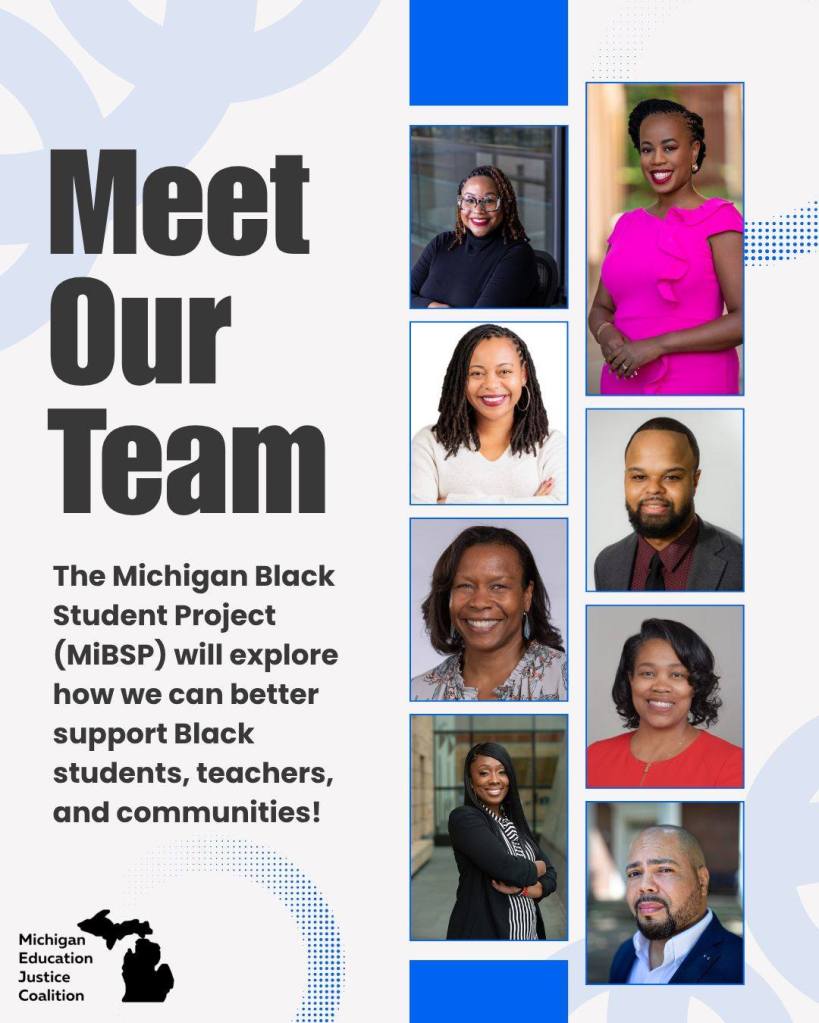
Dr. Dorinda Carter Andrews: Michigan State University
Dr. April Baker-Bell: University of Michigan
Dr. Julian Vasquez Heilig: Western Michigan University
Dr. Naomi Mae W.: University of Wisconsin-Madison
Dr. Alaina Jackson: University of Michigan
Dr. Vanessa N. Louis: University of Michigan
Dr. Daris McInnis: West Chester University of Pennsylvania
The Work of the Michigan Black Student Project
Within that broader vision, the Michigan Black Student Project focuses on specific and urgent challenges. One area of focus is culturally responsive and culturally sustaining pedagogy. This work asks how teaching can better reflect and affirm the identities and experiences of Black students. It is about moving beyond surface level change and engaging with deeper questions of belonging and representation.
Another central focus is the recruitment and retention of Black and Brown educators. The gap between student demographics and the educator workforce continues to shape educational experiences in profound ways. Addressing that gap requires intentional strategies that support educators over time. It is about building systems where educators can thrive and remain in the profession.
The project also addresses the school to prison pipeline. This includes examining disciplinary practices that disproportionately impact Black students and identifying alternatives that are more restorative and community centered. It is work that connects research to action and seeks to create environments where students are supported rather than excluded.
In the coming weeks, there will be opportunities for Michigan-based community organizations to engage directly in this work. Public requests for proposals will be released focused on the latter two areas, strengthening the pipeline of Black and Brown educators and addressing the school to prison pipeline through community-based strategies. These opportunities are designed to support partnerships that center lived experience, local knowledge, and sustained engagement. If you are doing this work in communities across Michigan, or are interested in building capacity in these areas, stay tuned.
Conclusion: What It Means to Keep Going
When I think about the email that brought disappointment and the phone call that brought opportunity, I do not see them as separate stories. They are part of the same process. Both are shaped by the same commitments, the same work, and the same belief in what our world can be. That is true for me, and it is true for anyone doing meaningful work. Life does not unfold in a straight line, and purpose is not confirmed only by success.
All of us, in different ways, are asked to hold both realities at the same time. There are moments when things go exactly the way we hoped, and there are moments when they do not. The challenge is learning how to carry both without losing ourselves in either. That is where growth happens, even when it feels uncomfortable or uncertain.
This week I have been thinking a lot about something I blogged recently. The idea that the journey is the reward. Maybe not as a phrase you put on a wall, but as something you come to understand through experience. The early mornings, the long days, the missed opportunities, the unexpected invitations, and the people who show up along the way. All of it becomes part of something larger than any single outcome.
The Fulbright did not happen. The community I hoped to be physically present with this year in Brazil will not happen in the way I imagined. But the work that led to that moment still matters. The relationships still exist. The invitation that started it all still carries meaning. And the purpose behind the work has not changed. That is a reminder that no single negative decision gets to define the value of what you are building.
Yesterday, I posted on my social channels the 1895 poem If— by Rudyard Kipling without any explanation. I did that intentionally. Sometimes there are moments when explanation gets in the way of reflection. The poem speaks to something deeper about endurance, integrity, and the quiet discipline of continuing forward when things are uncertain. It captures the emotional terrain of holding steady when others doubt you, rebuilding when things fall apart, and continuing when there is nothing left except the will to keep going.
If— is connected to everything I have been processing this week. The disappointment, the opportunity, the uncertainty, and the clarity that comes from all of it. The poem is about learning how to meet both triumph and setback without losing your center. It is about staying grounded in who you are, even when outcomes shift around you.
And that is where this becomes bigger than one story. Because everyone reading this has their own version of that moment. The email that did not go your way. The opportunity that slipped. The plan that did not unfold the way you expected. Those moments do not mean you are off track. They are part of the journey.
Sometimes your phone rings, and your life can change in an hour. Sometimes an email arrives and reminds you how far there is still to go. What defines you is not either moment alone. It is whether you continue to do the good work that matters, even when no one is watching. As Martin Luther King Jr. reminded us, “If you can’t fly then run, if you can’t run then walk, if you can’t walk then crawl, but whatever you do you have to keep moving forward.”
That is the work. That is the calling. That is the journey.
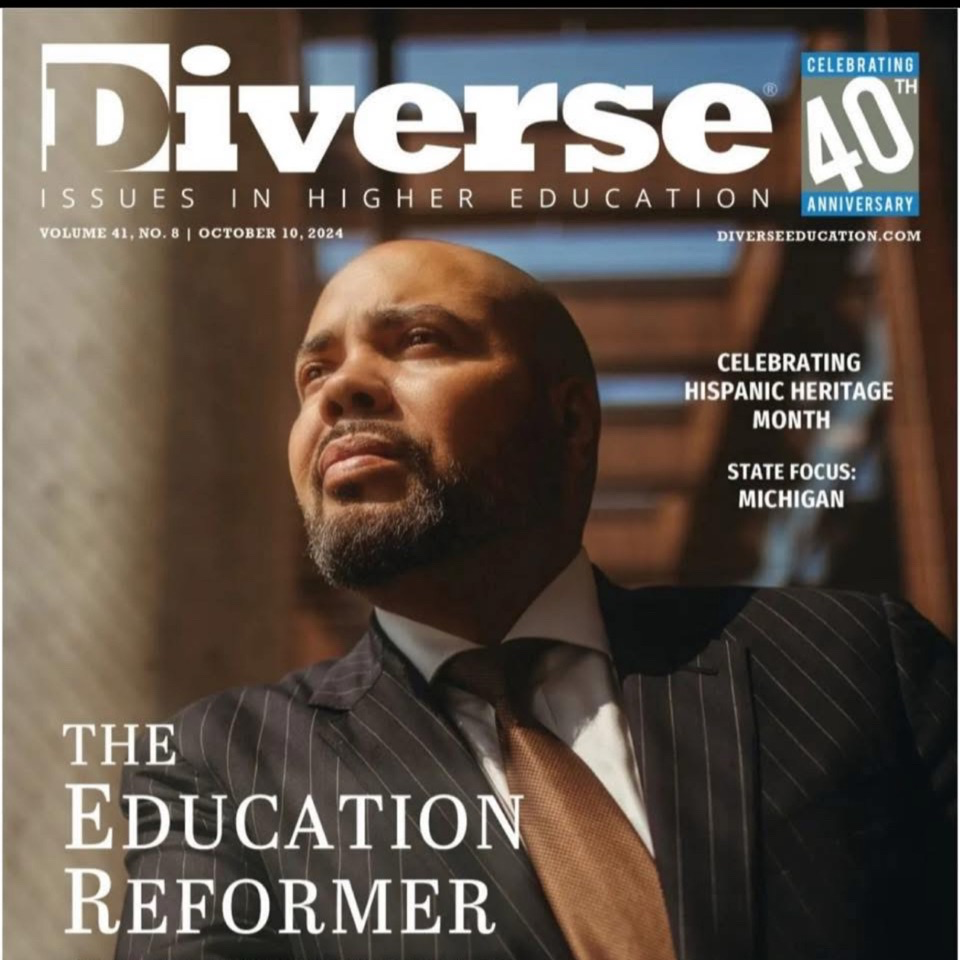
Julian Vasquez Heilig is a nationally recognized public scholar, commentator, and civil rights advocate. He has appeared on major media platforms including Democracy Now!, MSNBC, Al Jazeera, NBC News, PBS, and Univision. His media work reflects a longstanding commitment to making complex policy issues accessible, urgent, and meaningful for the public.




Leave a Reply