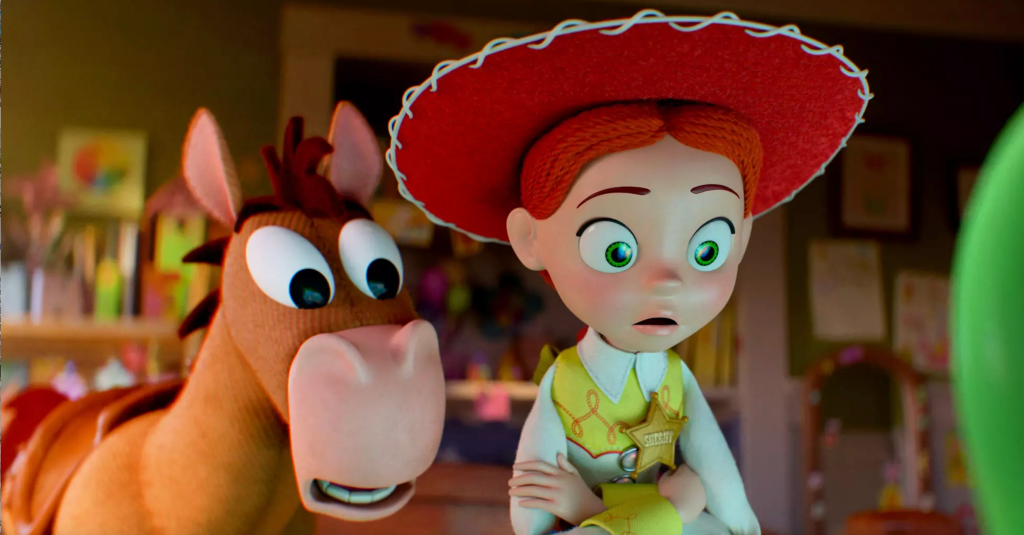
Some films entertain us for two hours. Others quietly measure the passage of our lives.
There are very few film franchises that can honestly claim they have accompanied an entire generation from childhood into parenthood, but Toy Story is one of them. I still remember watching the original Toy Story in the 1990s, and I probably watched that VHS tape on my square Sony Trinitron tube tv more times than I could ever count.
It became one of those movies that wasn’t simply entertainment but part of the rhythm of growing up, always ready to be played one more time. As the years passed, the technology changed, and I found myself watching later installments on DVD and streaming instead of VHS. This week, I experienced something I never could have imagined back in the 1990s: sitting in a theater with my adult daughter to watch Toy Story 5, sharing characters that have been part of our lives together since she was born.
More Than Another Sequel
Whenever a beloved franchise releases another installment, there is always a question hanging over it. Is this movie being made because there is still a meaningful story to tell, or because audiences will buy tickets regardless? Too often, Hollywood chooses the latter, producing sequels that feel more like products than stories. I honestly walked into Toy Story 5 wondering whether Pixar had finally reached that point. Instead, I walked out convinced that this is the best film in the series since the original.
That is not a statement I make lightly because the Toy Story franchise has consistently ranked among Pixar’s strongest and animation’s finest. While I have enjoyed every installment, this one felt different from the moment it began. The pacing was confident, the emotional beats landed naturally, and the humor never felt forced or recycled. Rather than relying solely on nostalgia, the film gives its characters a fresh challenge that feels relevant to modern problems families have with technology. It reminded me why these characters have endured for more than three decades while so many movie franchises have faded away.
Technology Becomes Part of the Story
The central issue facing Buzz(es), Woody and the gang is not simply another toy villain determined to destroy them or separate them from their child. Instead, the challenge is much more familiar because it is happening in modern homes around the world every single day. Children now grow up surrounded by smartphones, tablets, artificial intelligence, streaming services, and other devices that compete for every spare moment of attention. Toys no longer occupy the same place they once did in childhood. Pixar uses that reality not simply as background but as the central conflict of the film, making Toy Story 5 feel especially contemporary.
What I appreciated most is that Pixar resisted the temptation to preach. The movie never argues that technology is evil or that children should throw away every screen in their homes. Instead, it presents a far more nuanced message that technology becomes harmful when it replaces relationships, imagination, and meaningful play with others rather than supporting them. That distinction is important because technology itself is simply a tool. Like every powerful tool, it can either strengthen our humanity or rapidly diminish it depending on how we choose to use it.
As someone who spends much of my professional life thinking and writing about education, leadership, policy, and technology, I found myself paying close attention to the film’s underlying message. Schools across the country are wrestling with many of these same questions as they decide how AI and digital technologies should fit into learning. Parents are asking similar questions every day as they wonder how much screen time is too much. The movie doesn’t pretend to have simple answers because there aren’t any for us. Instead, it encourages viewers to think about balance, intentionality, and the importance of finding the human relationships that technology should never replace.
Loneliness Is the Real Villain
One of the film’s most interesting themes is that loneliness is the true danger. Technology often receives the blame for the isolation many people young and old experience today, but Pixar suggests something more nuanced. Devices become problematic when they substitute for friendships, family conversations, outdoor adventures, and imaginative play rather than complementing them.
The film reminds us, with quite a bit of nostalgia, that people need friends and connection in the current tech drenched environment. That sharp insight and execution in the plot elevates Toy Story 5 beyond the typical animated adventure and gives adults something meaningful to discuss with their children and each other after watching the film.
Pixar Still Understands Adults
Pixar has always mastered the rare ability to make children laugh while simultaneously entertaining their parents. That tradition continues throughout Toy Story 5, with jokes that work on multiple levels depending on the age of the audience.
One of my favorite moments involved Woody’s bald spot reflecting sunlight and temporarily blinding everyone nearby. The children laughed because the situation was funny, while the adults immediately recognized the joke about aging. Those small moments are reminders that Pixar has never forgotten the parents sitting in the audience beside their children.
Bring Some Tissues
It also would not be a Toy Story movie if there were not at least a few moments that caught me emotionally off guard. I’ll admit that I shed a couple of tears during the film because Pixar continues to excel at telling stories that connect with life experiences. The emotional moments never feel manipulative because they grow naturally out of the relationships on screen that audiences have invested in for decades.
Woody and Buzz, still voiced by Tom Hanks and Tim Allen after all these years, have become more than animated characters to many of us; they are companions who have quietly accompanied different stages of our own lives. Watching them again with my daughter, who may still have all the Toy Story toys in a box in the garage, made those moments even more meaningful than they might have been otherwise.
Final Verdict
I give Toy Story 5 4.5 out of 5 stars, making it the strongest installment since the original.
As the credits rolled, I looked over at my daughter and realized something. She is 18 now, and she brought her boyfriend with us to the theater. There is a real chance this was the last Toy Story we’ll watch together. 😭 If another film comes along, I may be watching it with my grandchildren. 😊 Somehow, that feels exactly right.
For a movie that spends so much of its time exploring the glow of screens, the moment that stayed with me happened after the lights came up. The silver screen gave us a story, but it also gave us two uninterrupted hours together before life carried us into its next season. Maybe that is the film’s quietest insight. Technology is at its best not when it replaces our relationships, but when it creates space for them.
When I got home, I found myself scrolling through more than 15 years of photos. I wasn’t looking for Toy Story. It found me. There were my children dressed as Woody, Jessie, and Buzz. Toy Story birthday cakes and piñatas. Christmas mornings with Toy Story wrapping paper, stockings, and presents underneath the tree. Shelves filled with Buzz Lightyears, Woodys, and nearly every other character imaginable. We rode Toy Story Midway Mania at Disneyland, laughing as we tried to outscore one another. I lost. At Tokyo Disney, we shared Little Green Men mochi inspired by the aliens forever devoted to “the Claw.” Looking through those photos, I realized these characters hadn’t simply appeared in our lives every few years. They had quietly become part of birthdays, holidays, vacations, traditions, and countless ordinary moments that became lifelong memories.
I first met Woody and Buzz as a college student. I watched the first two films on my own. The last three, I experienced through the eyes of my children. Every sequel arrived at a different chapter of life, and each one meant something different because I had become someone different. That’s the rare gift of Toy Story. For so many of us, it becomes more than a movie. It becomes part of the memories we create with the people we love.
Julian Vasquez Heilig is a scholar, former provost and dean, and public commentator whose work explores leadership, equity, social justice, and the ways institutions shape human lives. He approaches film with the same analytical lens he brings to education and public policy, viewing cinema not simply as entertainment but as a space where questions of identity, community, technology, and moral choice are explored. That perspective was shaped during his undergraduate years at the University of Michigan by Professor Margarita De la Vega-Hurtado, who taught him to read film as social critique, historical argument, and an inquiry into the human condition. Whether writing about Toy Story 5 or contemporary public issues, Julian is interested in how stories illuminate the choices individuals and societies make, and how those choices shape the lives we build together.






Leave a comment