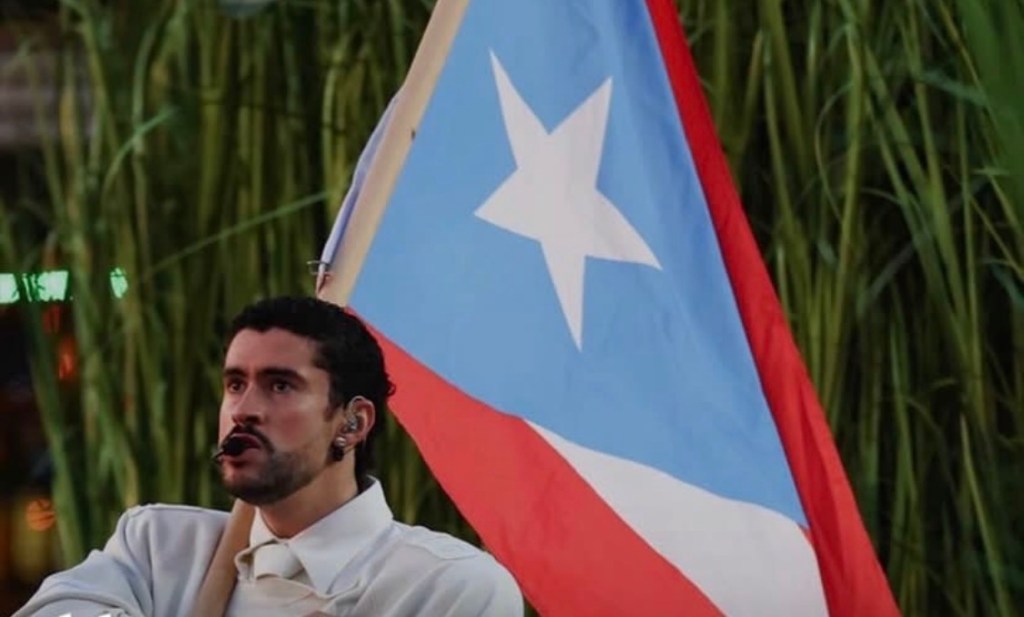
The world noticed Bad Bunny because he refused to disappear inside it.
I first discovered Bad Bunny for myself in December 2019 at Fifty Eight, the downstairs oceanfront lounge at La Concha Resort. A song came through the speakers that immediately caught my attention, so I pulled out my phone, opened Shazam, and learned that it was “Vete” by someone called Bad Bunny. I remember looking at the name confused and thinking, Bad Bunny? What kind of name is that? I had no idea that almost seven years later, I would be standing in a Puerto Rican stadium with nearly 20,000 people, watching that strangely named performer close a historic world tour as one of the most popular artists on the planet.
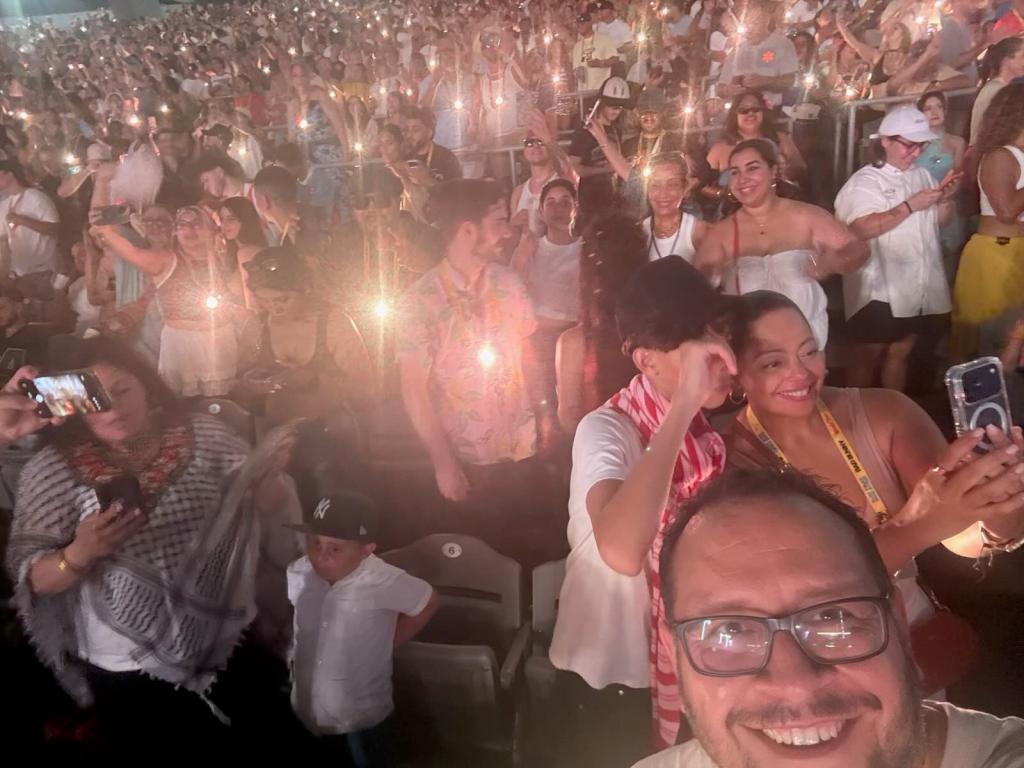
Can you spot me in the crowd?
I later learned that Benito Antonio Martínez Ocasio had initially considered concealing his identity behind a costume or mask, following the example of anonymous electronic performers. The name Bad Bunny came from a childhood photograph in which he was wearing a bunny costume and looked visibly unhappy about it. It is a brilliant stage name because it’s funny, contradictory, universally understandable, and nearly impossible to forget. Those same qualities have helped define his music and public identity: playful but serious, accessible but rebellious, emotionally vulnerable but politically confrontational.
In 2019, I was simply curious about the performer behind “Vete.” Today, the more interesting question is how an artist who records primarily in Spanish and builds so much of his work around Puerto Rico became a global phenomenon. After seeing Bad Bunny perform in Mexico City in December of 2025 and then attending the final show of his world tour in Puerto Rico in August of 2026, I might understand the answer. Bad Bunny became universal by refusing to become generic and assimilated.
He Never Asked Permission to Be Global
For decades, international success often required artists from outside the continental United States to translate themselves for American audiences. They were expected to sing in English, soften their accents, explain their cultural references, and make their identities legible to the largest possible market.
Bad Bunny did almost the opposite. He continued recording in Spanish, used distinctly Puerto Rican language, placed Puerto Rico at the center of his work, and trusted listeners elsewhere to come along. Millions of them did. People around the world now sing his lyrics even when they do not understand every word. That might seem surprising, but music has never depended entirely on literal translation. Listeners can recognize desire, heartbreak, confidence, grief, loneliness, joy, defiance, and longing before they understand every phrase.
Bad Bunny’s music is deeply Puerto Rican, but the emotions inside it are widely shared. You do not have to be Puerto Rican to understand what it means to miss someone, watch your community change, regret taking a moment for granted, or fear losing the place that made you who you are. This is the first reason for his international popularity: he offers people something culturally specific but emotionally recognizable. Instead of trying to represent everyone, he tells the truth about where he comes from so vividly that people from many different places find themselves inside the story. 🥹
I Booked Puerto Rico at the Last Minute
I had seen Bad Bunny perform the DeBÍ TiRAR MáS FOToS tour in Mexico City, and the show was spectacular (See Why Bad Bunny Scares People (and Inspires Millions). When the tour’s Puerto Rico finale was announced only days before it was scheduled to occur, I booked the trip the day before in the middle of the night because I knew this would be more than another concert. I wanted to witness what it would mean for Bad Bunny to close the tour at home. I felt honored to celebrate alongside the Boricuas as their native son returned to the island that had given his music its language, rhythms, identity, and purpose.
In Mexico City, I watched a global superstar command a stadium filled with people from another country who knew his songs almost word for word. In San Juan, I watched Benito come home carrying everything the world had given him and place it before the people who had first given him so much.
Calling what happened at Hiram Bithorn Stadium a concert feels inadequate. A concert is something you watch, but this was something you entered. Nearly 20,000 people sang every lyric with their whole hearts, as though the songs belonged not only to Bad Bunny but to everyone who had carried Puerto Rico through migration, struggle, separation, grief, and joy. A massive Puerto Rican flag moved above the crowd while fireworks overtook the sky.
The stadium became part celebration, part political assembly, part family reunion, and part classroom. The audience was not simply watching Bad Bunny tell Puerto Rico’s story; it was answering him. You could see via the tired satisfaction in his face that he was finishing something important. He was not merely completing another date on an international tour but closing a chapter of his life in the place where the story began.
Bad Bunny Makes the Local Feel Universal
Many artists achieve worldwide popularity by sanding away the qualities that make them culturally distinct. Bad Bunny has followed the opposite path by making Puerto Rico not just the setting for his work but one of its central characters. That commitment is especially clear on DeBÍ TiRAR MáS FOToS. The title translates loosely as “I should have taken more photos,” but its meaning extends beyond regretting the pictures we failed to take.
The album is about how rarely we recognize the significance of a moment while we are still living inside it. We assume there will be another gathering, another conversation, another dance, another visit home, or another opportunity to appreciate the people and places that formed us. Then someone moves away, a loved one dies, a neighborhood changes, or a familiar place disappears. What once seemed ordinary suddenly becomes irreplaceable.
That experience is Puerto Rican, but it is also Mexican, Jamaican, African American, Palestinian, Appalachian, Indigenous, immigrant, and simply human. Communities around the world are struggling with migration, gentrification, cultural erasure, and the painful realization that development sometimes benefits newcomers more than the people who already live there.
Bad Bunny gives those feelings a rhythm and makes them joyful enough to carry. His music allows celebration and seriousness to occupy the same song. That combination is intoxicating and central to his appeal. People do not experience love, politics, pleasure, grief, identity, and memory as separate subjects, and neither does his music.
The Politics Were Part of the Music
At the Puerto Rico finale, Bad Bunny spoke directly about the island’s water shortages, electrical failures, displacement, gentrification, corruption, and colonial condition. These were not political remarks awkwardly inserted between songs because they formed the intellectual and emotional architecture of the entire performance. “You don’t need me; I need you,” he told the audience. He reminded the crowd that artists depend upon the people and declared that Puerto Rico would be saved “by you, by us.”
It was a remarkably democratic message from one of the world’s biggest celebrities. Instead of presenting himself as Puerto Rico’s savior, he reminded Puerto Ricans of their collective power. He also described a system designed to exhaust people until they surrender or leave. He warned about those who would sell the island piece by piece and create a Puerto Rico without Puerto Ricans.
For example, before the concert began, stadium screens opposed Esencia, a proposed luxury development in Cabo Rojo, and encouraged people to march. The crowd responded with chants of “¡Esencia no va!” meaning “Esencia will not happen.” The music carried that argument forward. “La Mudanza” remembered people who had been persecuted for daring to display the Puerto Rican flag, while “El Apagón” answered displacement with the declaration “no me quiero ir,” meaning “I don’t want to leave.”
Also, an enormous Puerto Rican flag flew above the stadium (see my video above). In a history in which displaying that flag and advocating independence were once criminalized, the image became more than concert theater. It was a giant lesson about survival, sovereignty, memory, and belonging.
Why People Around the World Recognize Themselves in Him
Bad Bunny’s international popularity cannot be explained only by catchy songs, clever marketing, or collaborations with other stars. Those things helped him reach people in the media ecosystem, but they do not fully explain why people feel so connected to him. People respond to his refusal to be embarrassed by where he comes from. They recognize the confidence, courage, and boldness it takes to enter the world without asking permission to speak your language, defend your community, or carry your history with you.
They also recognize the fear beneath that confidence. Nearly everyone has something they are afraid of losing: a family member, a language, a neighborhood, a tradition, a relationship, or an earlier version of themselves. Bad Bunny turns that fear into music people can dance to. He makes nostalgia feel urgent rather than sentimental and transforms cultural pride into an invitation rather than a wall. His popularity demonstrates that cultural specificity does not prevent human connection. Cultural specificity is what makes genuine connection possible rather than the distraction of division.
What Bad Bunny Is Teaching Us
Bad Bunny’s significance extends beyond music because his work teaches history to people who may never enroll in a college course about colonialism. His images demonstrate the relationship between land and identity, while his public statements connect infrastructure failures to political power and displacement. His success also challenges the assumption that worldwide influence requires cultural surrender.
The learning taking place around his work does not resemble “school.” It dances, repeats lyrics, shares videos, waves flags, discusses political messages, and turns memory into a form of resistance. We have always learned through popular culture. We learn from the music, the language that’s defended, the artists we admire, and the communities in which we see ourselves reflected. However, not everyone listening to Bad Bunny will interpret his work in the same way. Some people may simply hear a song they love, but I believe that popular culture often teaches us before we realize we are learning.
Introducing “Bad Bunny Pedagogy”
That realization led Margarita Bianco of the University of Colorado Denver, Nallely Gecik of the University of San Diego, and me to coedit a forthcoming special issue of Urban Education titled “Bad Bunny Pedagogy: Decoloniality, Popular Culture, and Urban Education.”
I am also honored to announce for the first time in this article that former U.S. Secretary of Education Miguel Cardona has agreed to write the foreword for our special issue. His participation will help connect the collection to larger conversations about culture, language, identity, and the education of young people.
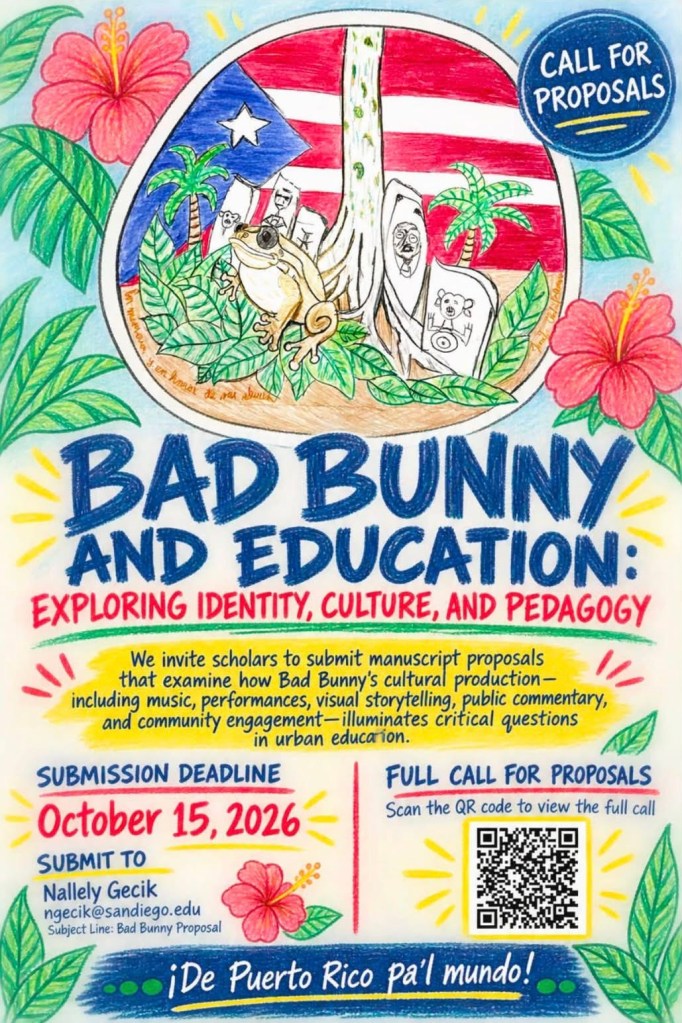
The special issue will examine how Bad Bunny’s music, performances, visual storytelling, public commentary, and community engagement function as educational texts. We are seeking scholarship about how young people use popular culture to understand identity, language, race, colonialism, migration, belonging, and social transformation. Manuscript proposals are due October 15, 2026. We welcome interdisciplinary contributions from education, ethnic studies, curriculum studies, bilingual education, educational leadership, sociology, cultural studies, and related fields.
We should be clear about what this special issue is and what it is not. Academics are not granting legitimacy to cultural work that requires our approval. We are trying to understand educational work that is already happening in stadiums, neighborhoods, headphones, classrooms, and conversations around the world. My experience in Puerto Rico made that truth undeniable.
Conclusion: Returning Home
By the final song, every lyric carried the weight of goodbye and the promise that the moment would endure after the stage went dark. When fireworks filled the sky, it felt like the closing of an era that Bad Bunny and the audience knew could never be repeated.
Home means something different to everyone, and for some, it is complicated or painful. Yet part of our heart often remains in the place, language, people, or traditions that first taught us who we were. Returning home does not always mean going backward. Sometimes it means remembering what formed us and deciding what we are prepared to protect.
Bad Bunny became universal by refusing to become assimilated. He reached the world without disappearing inside it because he never left Puerto Rico behind. By carrying Puerto Rico with him, he showed us that the surest way to touch the world may be to remain faithful to the place that first gave us a voice.
If this story moved you, please share it and help others understand why Bad Bunny’s homecoming mattered far beyond the finale.
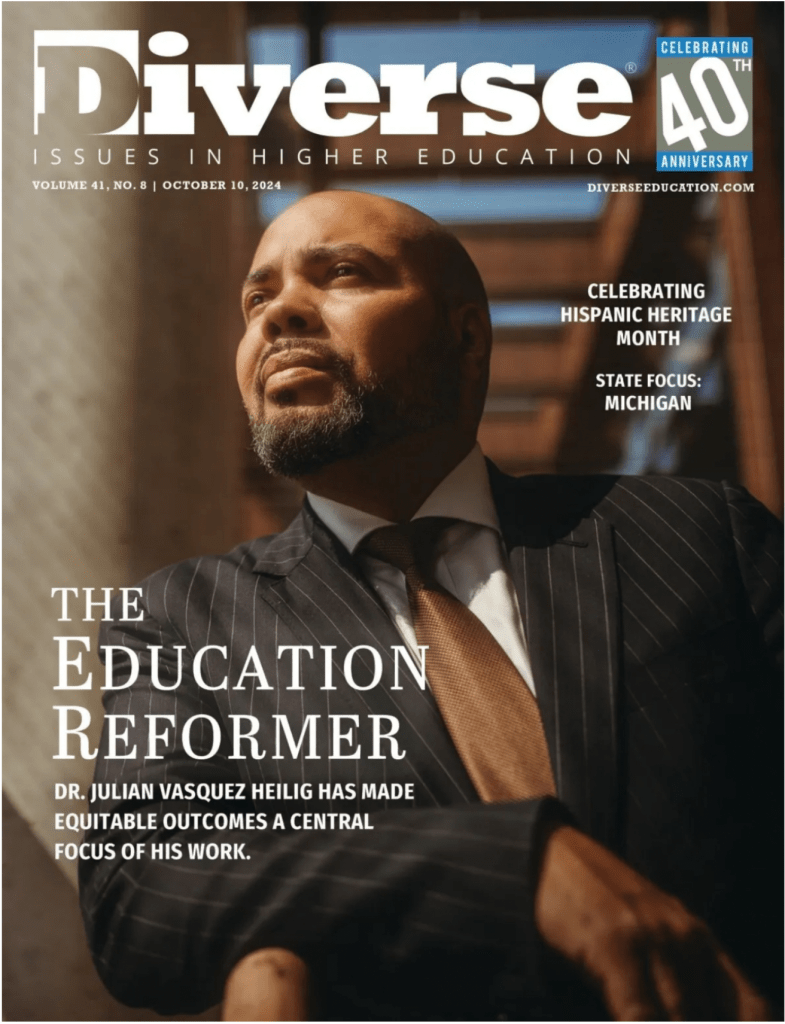
Julian Vasquez Heilig is a nationally recognized public scholar, commentator, and civil rights advocate whose work has appeared on Democracy Now!, MSNBC, Al Jazeera, NBC News, PBS, and Univision. He brings clarity, urgency, and public relevance to complex issues in education, policy, and leadership. For consulting, speaking opportunities, and collaborations, contact jvh@alumni.stanford.edu.


Leave a comment